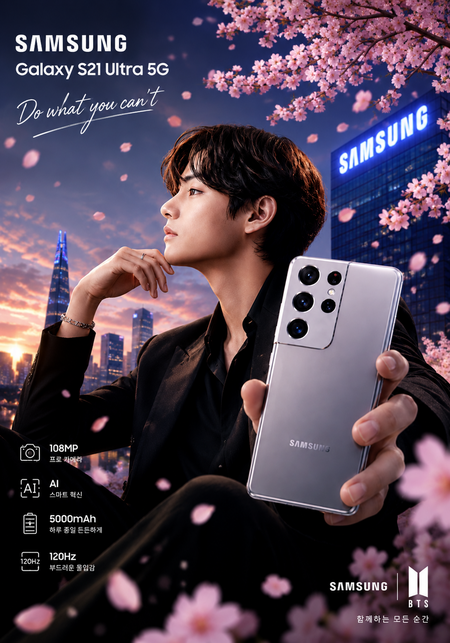
> Сontents
> 1. Brand Description > 2. Communication channels and PR strategies > 3. Theoretical Framework of the Study > 4. Analysis of the Samsung Brand Using Chosen Theories > 5. Recommendation > 6. Conclusion > 7. Bibliography > 8. Image sources
> Brand Description
Samsung is one of the world’s largest technology brands and a leading player in the consumer electronics market. The company’s history began in 1938 in South Korea, when entrepreneur Lee Byung-chul founded a small trading firm called Samsung Sanghoe. Initially, the company exported food products, dried fish, and other goods, but by the second half of the 20th century, it began actively diversifying its business, entering the insurance, construction, heavy industry, and electronics markets.
A turning point for the brand was the creation of the Samsung Electronics division in 1969. It was this division that subsequently became the foundation of Samsung’s entire global ecosystem. Over the course of several decades, the company has evolved from a manufacturer of home appliances to a global leader in mobile technology, displays, semiconductors, artificial intelligence, and smart home solutions. Today, Samsung operates in more than 180 countries worldwide and produces a wide range of products.
Samsung’s corporate philosophy is based on its official slogan: «Inspire the World, Create the Future»
This idea is central to the brand’s communication strategy. Samsung practically never talks about its products solely as technical devices. Instead, the company shows how technology can transform people’s lives, making them more convenient, productive, and exciting. That is why the brand’s advertising campaigns often focus on the user experience rather than the device itself.


The founding of Samsung Electronics in 1972|Samsung Office in South Korea
> Communication channels and PR strategies
To promote its products and build long-term relationships with its audience, Samsung employs an omnichannel communication strategy that integrates digital platforms, social media, owned media, events, and public relations tools. Unlike many brands that focus primarily on advertising, Samsung approaches communication as an ongoing dialogue with the user throughout the entire journey of interaction with the brand — from first encountering the product to its daily use.
Samsung’s key PR strategy centers on building an image as an innovative brand that produces technological devices, shapes the future and transforms people’s daily lives. One of the most important elements of this strategy is an ecosystem-based approach. The company promotes an interconnected digital environment in which smartphones, tablets, smartwatches, TVs, and home appliances work as a single system. Thanks to this, Samsung builds long-term relationships with consumers and increases their engagement with the brand.
New product launches play a special role in the company’s PR activities. The Galaxy Unpacked series has become one of Samsung’s most recognizable communication tools. Each presentation turns into a global media event covered by the world’s leading media outlets, technology publications, and bloggers. This approach allows the company to generate a significant amount of organic media coverage and foster a sense of consistent technological leadership.
Collaborations and partnership projects are a key part of the brand’s communication strategy. Samsung regularly partners with photographers, filmmakers, athletes, musicians, and digital content creators to showcase the capabilities of its devices through real-world creative projects. This approach allows the brand to speak to its audience in a language that resonates with their interests and strengthens the emotional connection between the user and the product.
Samsung actively positions itself as a visionary and thought leader in the field of technology through Samsung Newsroom, executive interviews, research, and conference presentations, where it discusses the future of artificial intelligence, sustainability, and digital transformation. This allows the company to shape the global technology agenda, rather than simply manufacturing electronics.

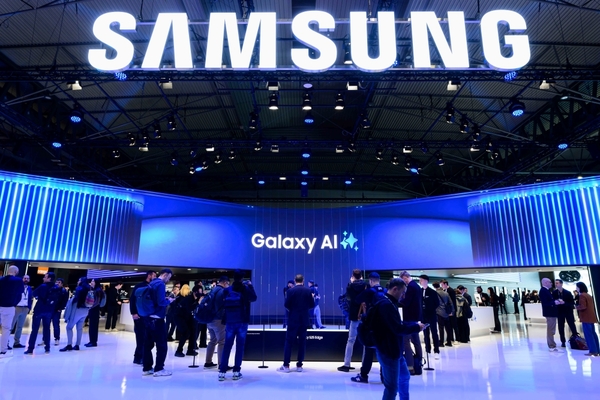
Galaxy Unpacked 2026 was held at Palace of Fine Arts in San Francisco.|Entrance to Samsung’s booth.
> Theoretical Framework of the Study
Inside the «Samsung Design Is an Act of Love» exhibition at Milan Design Week 2026.
For Samsung, we selected the Cybernetic Tradition and the Semiotic Tradition from Robert Craig’s typology, as these best explain the communication strategy of this technology brand. The first allows us to analyze Samsung as a complex system of information transmission across multiple communication channels, while the second helps us understand how the brand creates meanings and associations through visual and symbolic elements of communication.
Cybernetic Tradition
Inside the «Samsung Design Is an Act of Love» exhibition at Milan Design Week 2026.
According to Robert Craig, the cybernetic tradition views communication as a process of transmitting information through a specific system of channels. The focus is on the sender of the message, the receiver, the communication channel, potential noise, and feedback. Within this tradition, communication is always a goal-oriented process: the sender seeks to convey a message to the audience and achieve a specific result. Feedback is of particular importance, as it is precisely what allows messages to be adjusted and the communication strategy to be adapted based on the audience’s reaction.
The cybernetic approach is particularly relevant for analyzing modern international brands, as they utilize multiple channels of communication simultaneously: websites, social media, events, the media, mobile apps, and other tools for engaging with the public. In this case, the brand acts as the sender of the message, and consumers are the recipients, who constantly generate feedback through purchases, reviews, comments, and user activity.
Semiotic Tradition
The semiotic tradition views communication as the process of creating and transmitting meaning through a system of signs and symbols. People perceive the world through symbolic constructs, and communication is an exchange of meanings that are encoded and decoded by the participants in the interaction. Particular attention is paid to how signs, visual images, colors, names, and cultural symbols shape the perception of certain objects and phenomena.
For brands, the semiotic tradition is particularly significant, as most marketing communications are built precisely on symbols. Advertising rarely conveys information directly. Instead, companies use images, colors, slogans, design, and cultural codes that allow the audience to interpret the brand’s message on their own. Advertising and branding are prime examples of conveying meaning through a system of signs and symbols.
Inside the «Samsung Design Is an Act of Love» exhibition at Milan Design Week 2026.
> Analysis of the Samsung Brand Using Chosen Theories
Cybernetic Tradition
1. Sender
Within the cybernetic model, Samsung acts as an active sender of communication messages. The company crafts strategic narratives related to innovation, artificial intelligence, sustainable development, and technological leadership.
The brand’s key messages can be summarized as follows:
technology should improve people’s lives; innovation should be accessible to everyone; Samsung devices are part of a unified digital ecosystem; Artificial intelligence can make everyday life more convenient.
All of the company’s communication materials are built around these themes, regardless of the specific product.
2. Channels
From the perspective of the cybernetic tradition, communication channels are of particular importance.
Samsung uses a large number of communication channels simultaneously:
official website; Samsung Newsroom; Instagram*; TikTok*; YouTube*; X (Twitter*); Facebook*; LinkedIn*; email newsletters; Samsung Members; SmartThings; Galaxy Unpacked; media and technology publications; collaborations with influencers.
Thanks to this, the brand is able to reach diverse audiences and tailor its message to the specific characteristics of each channel.
* — prohibited in the Russian Federation.
3. Receiver


Samsung’s new advertising campaign featuring Natalia Vodianova brings together technology and beauty.
The recipients of Samsung’s communications are:
consumers; investors; journalists; tech enthusiasts; business clients; partners; government organizations.
The company uses different communication formats for each audience while maintaining a consistent brand positioning.
4. Feedback
One of the key elements of the cybernetic tradition is feedback. It is feedback that transforms communication from a linear process into a two-way one.
Samsung actively collects feedback through:
user reviews; comments on social media; beta testing programs; Samsung Members; consumer experience surveys; sales and user behavior data.
Based on the information gathered, the company regularly updates software, refines device interfaces, and adapts marketing messages.
5. Noise
Cybernetic theory also takes into account the presence of communication noise.
For Samsung, such noise may include:
Intense competition in the technology market; information overload among the audience; negative reviews; crisis situations; differences in cultural contexts across various markets.
To minimize the impact of such factors, the brand localizes its content and adapts its communications to the specific characteristics of each country.