Rubricator
(1) Introduction (2) Target Audience (psychographics) (3) Communication Channels (4) PR strategies (5) Theoretical Framework & Analysis (6) Recommendations & Conclusion (7) Bibliography and image credits
(1) Introduction

Vkusvill logo
«VkusVill» is a grocery brand that positions itself as a «guide in the world of healthy and natural nutrition.» [11]
This is a neighborhood store where there is no Coca-Cola or chips, but there are farm products, gluten-free shelves, and eco-friendly goods. [11]
Its key slogan is: «Helping you be healthy and happy without extra effort.» [11]
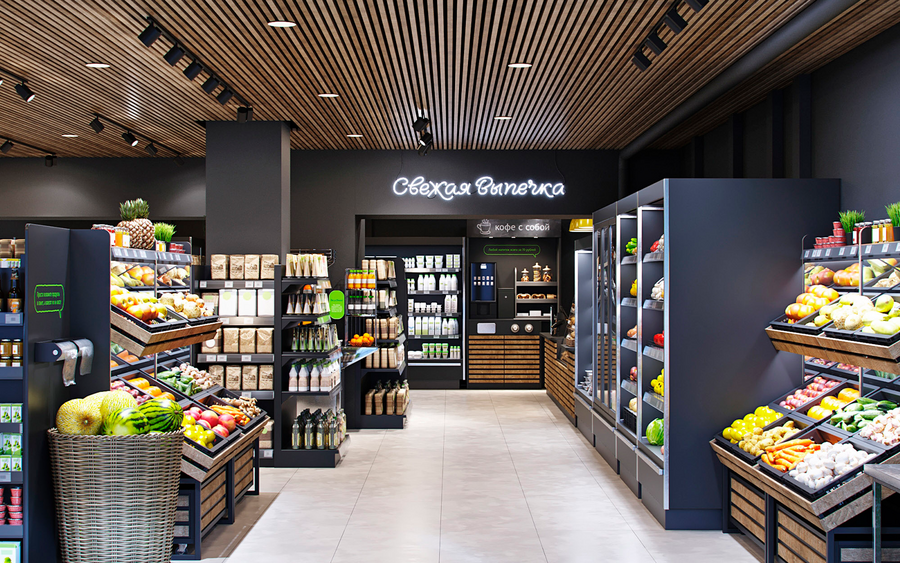
Inside the VkusVill store
(2) Target Audience (psychographics)
Analyzing a brand’s target audience is essential for understanding its communication strategies. VkusVill’s target audience can be divided into two core segments:
(1) Conscious parents (30–45 years old, 60% core): Family and children. They value safety and the right ingredients for children. They choose VkusVill because they believe that its products are healthy and will not harm their child.
(2) Millennial hedonists (25–35 years old, «VkusMill»): They are tired of cooking, seek emotional experiences and variety [6]. It is important for them to enjoy food without guilt. The motivation of this audience is to buy products that are tasty, fast, and involve no shame. [11]
Target audience profile
(3) Communication Channels
Main social media: VKontakte (VK) — the most active in terms of feedback Telegram — where the main scandals currently take place Yandex.Zen — content marketing Instagram — blocked, but may be mentioned in older cases
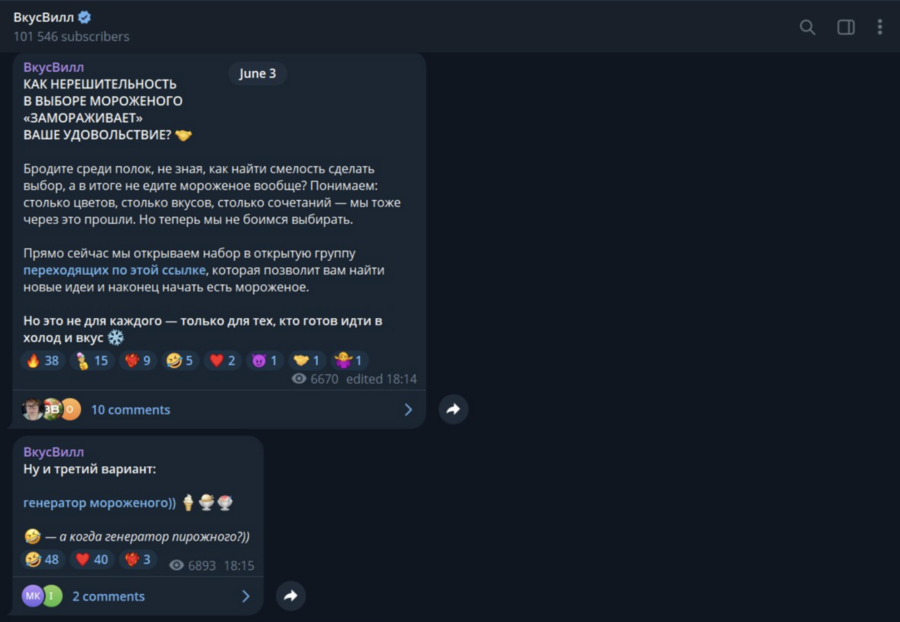
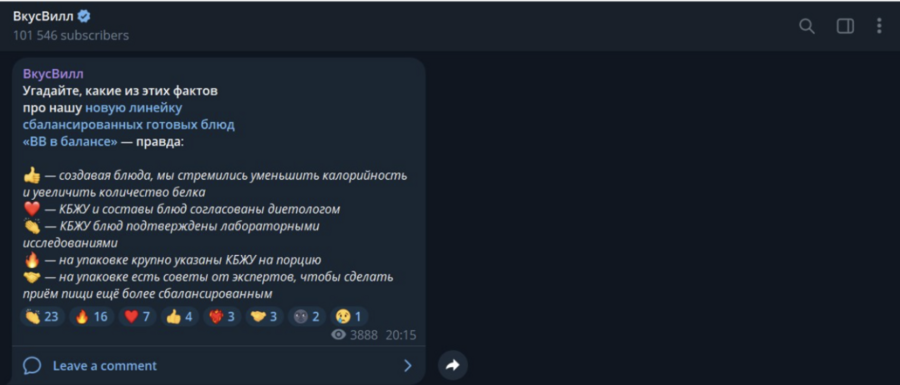
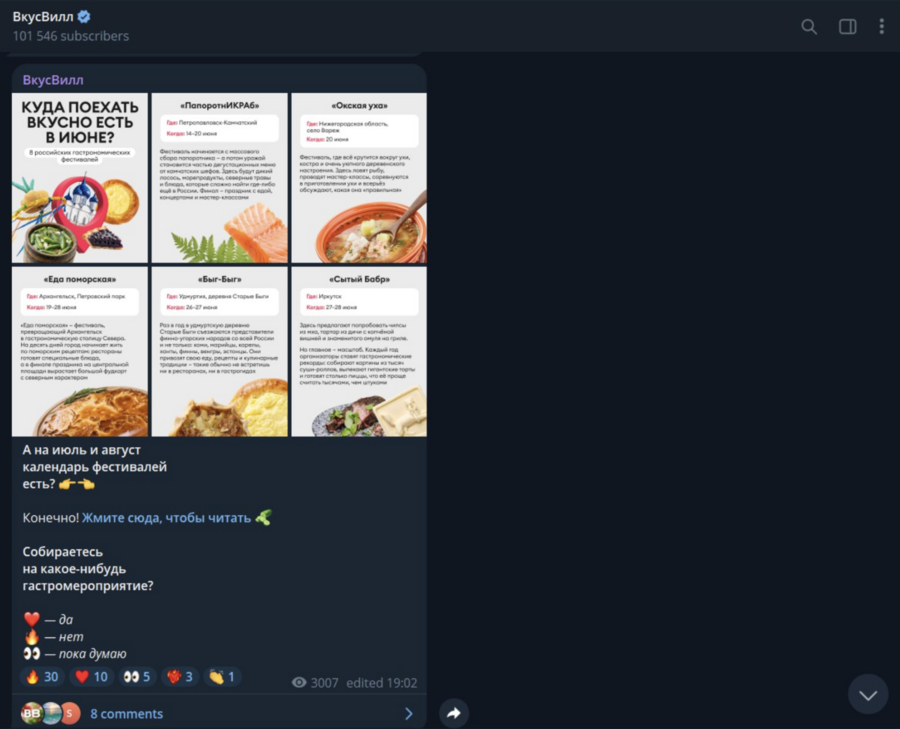
VkusVill Telegram channel posts
PR & Website:
Website: vkusvill.ru (blog named «Zhivoy» / «Alive») Press service: provides comments for RBK, Lenta, and other media
Owned channels: Mobile app — the strongest channel (bonuses and feedback system) Email newsletters
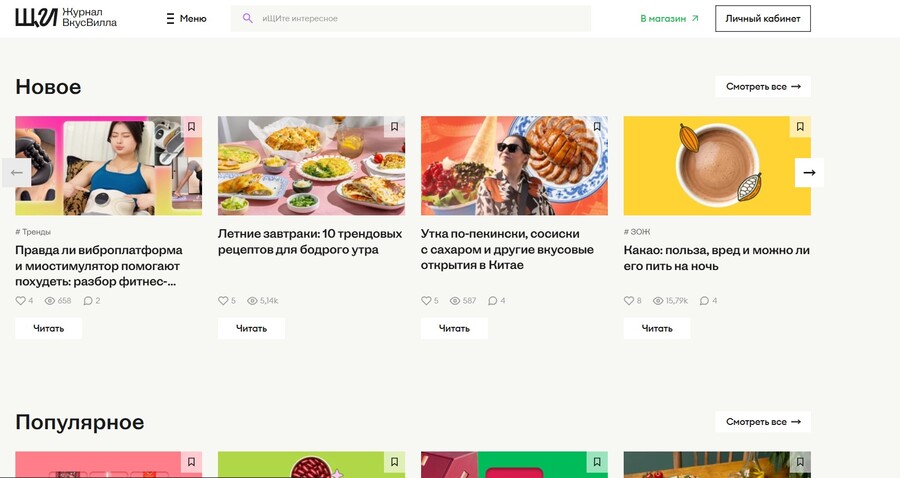
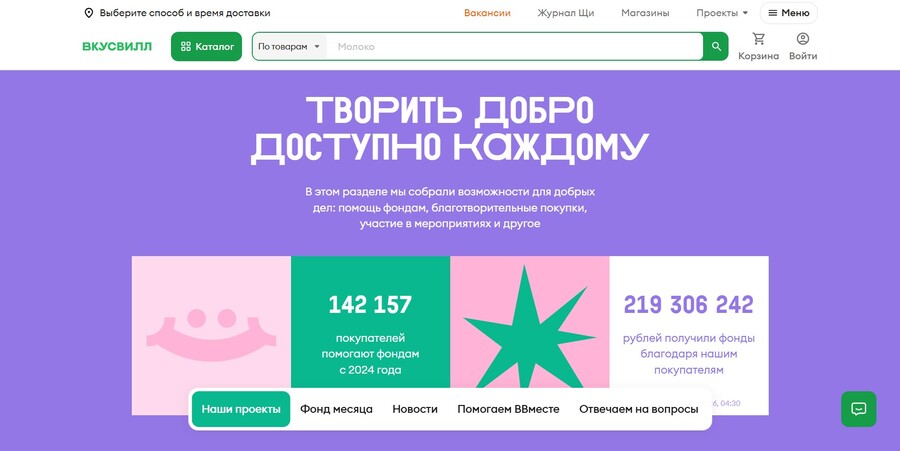
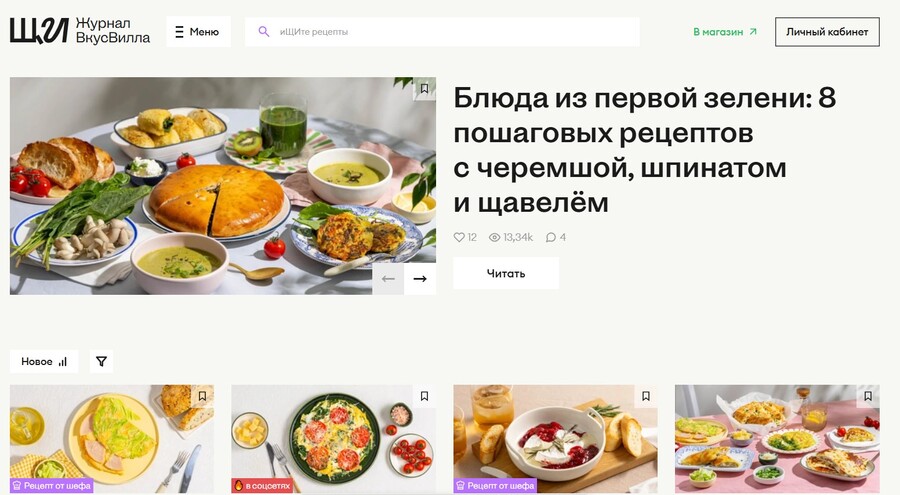
Screenshots from the website «VkusVill»
(4) PR strategies
VkusVill posters
VkusVill adapts its PR strategies to fit different contexts. In daily communication, the brand follows the public Information model by sharing recipes and helpful content in its e-journal.
VkusVill demonstrates elements of two-way symmetrical communication when the stakes are low. For example, the brand collects reactions on a post asking who is willing to visit any gastro-event.
VkusVill posters
In these minor interactions, VkusVill actually seems completely open to dialogue. However, in crises, the brand shifts to press agentry by denying things, making legal excuses, or using threats.
VkusVill also uses two-way asymmetrical strategies in critical situations. This model shows up when the brand deletes posts, apologizes, and creates a complete illusion of dialogue with users in the comment section.
This mismatch between acting friendly day-to-day and turning aggressive when a crisis hits. These inconsistencies lead to PR failures and ruin the brand’s credibility. To see this in action, the upcoming analysis applies Grunig & Hunt’s four models of public relations and Dialogic Theory to specific examples from VkusVill’s communication.
(5) Theoretical Framework & Analysis
The first example demonstrates a dialogue for the sake of loyalty. According to Grunig & Hunt’s four models of public relations, this represents the two-way model. VkusVill responds to criticism but takes no action to solve the asymmetrical customer’s problem. The brand’s reply aims to reduce anger and maintain the relationship on its own terms.
In contrast, If VkusVill followed the symmetrical model, it would investigate the issue, implement solutions and report its progress. Through the lens of Dialogic Theory, this situation between brand and customer violates the principle of dialogic loop.
VkusVill Telegram channel chat
In this example, the brand makes no effort to maintain the conversation publicly. The response functions as a dead end rather than a loop.
The second example reveals that the scandal did not come from the article but from VkusVill’s fear of conversation. In 2021 VkusVill published an advertisement titled «Recipes for Family Happiness» featuring a family of two LGBTQ women raising daughters together.
The public reaction was completely divided between support and criticism. Facing pressure from conservative critics and threats against the featured women, VkusVill ended up deleting the article. The brand apologized and called the article a «mistake», which pissed off the progressive audience [8].
Trends in public reaction to the VkusVill advertising campaign: daily mention counts
In terms of Grunig & Hunt’s four models, brand behaviour again illustrates the two- way asymmetrical model. VkusVill created an illusion of change by deleting and apologizing, however it did not shift its position. VkusVill’s initial goal was not mutual dialogue but persuasion to forget the issue. This approach goes against the ideas of the two-way symmetrical model, which requires shared understanding, respect and open communication.
From the perspective of Dialogic Theory, VkusVill failed multiple core principles. First of all, the brand chose deletion over dialogue, breaking the dialogic loop entirely.
Secondly, the principles of useful and transparent information were ignored. Brand values were contradictory and unclear. VkusVill refused to explain why the article was published in the first place, and why it was later removed.
Thirdly, according to the conservation of visitors, VkusVill definitely failed to keep followers on its own platforms.
As a result, by deleting the controversial article, the brand destroyed the space for conversation, forcing customers to seek answers on other websites.
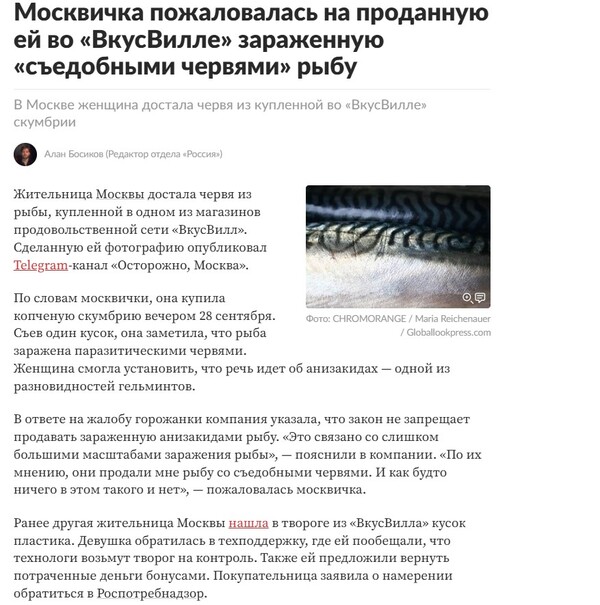
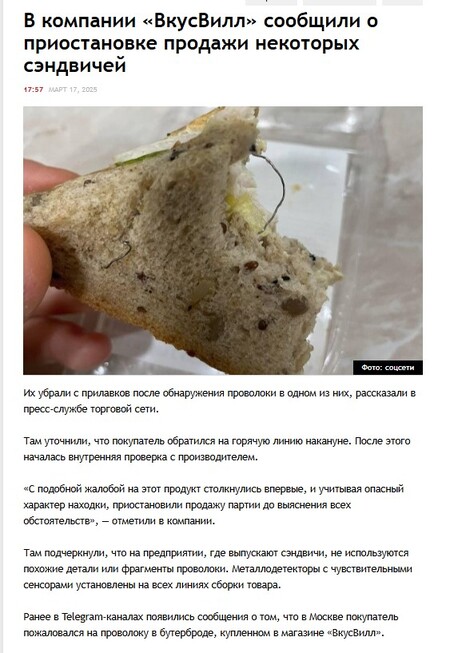
Media coverage of incidents involving customer complaints regarding the quality of VkusVill products