What happens when culture becomes interactive?
OTHERWISE — media at the intersection of games, digital art, design, technology, and cultural spaces. It explores how interactivity changes the ways humans engage with culture—from video games and online communities to immersive exhibitions and generative art.
The focus is not just on the objects and technologies themselves, but on the experience generated through interaction. What changes when the viewer becomes a participant? How do interfaces influence our behavior? Can play be a method of knowing, and can a museum be a space for action?
Editorial Approach
Phenomenon → observation → context → multiple perspectives → personal inquiry.
Core Themes
- Games and game mechanics.
- Interactive and digital art.
- Digital culture and online communities.
- Technology and new interfaces.
- Interactive spaces and architecture.
Audience
Individuals interested in contemporary culture, games, art, and technology, including students and professionals in the creative industries.
Distinction
OTHERWISE connects disparate cultural phenomena through interactivity as a means of human interaction with the environment. The media explores not only what is created, but the experience it generates and the new forms of participation it enables.
Data sources for media
The primary sources of information for OTHERWISE include existing media operating in adjacent fields, independent authors and artists, as well as thematic online communities.
Other media and publications play a vital role by allowing tracking of the current agenda, finding interesting projects, and observing industry development. Independent authors and artists serve as a source of original ideas, experimental practices, and alternative perspectives. Online communities enable the study of user experience, discussions, and audience reactions to various cultural and technological phenomena.
Thus, sources are utilized not only for gathering information but also for uncovering new themes, trends, and perspectives that can form the foundation of original editorial content.
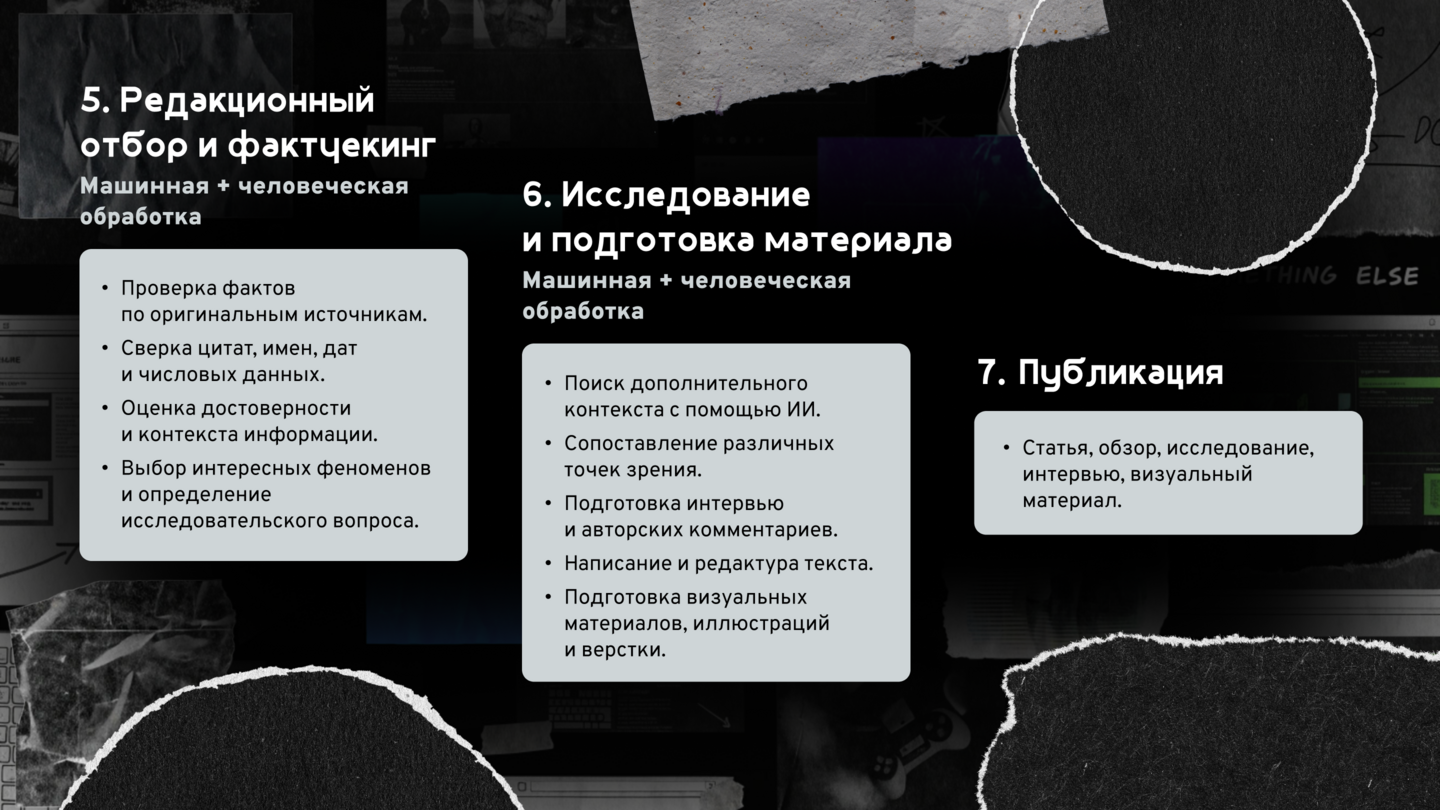
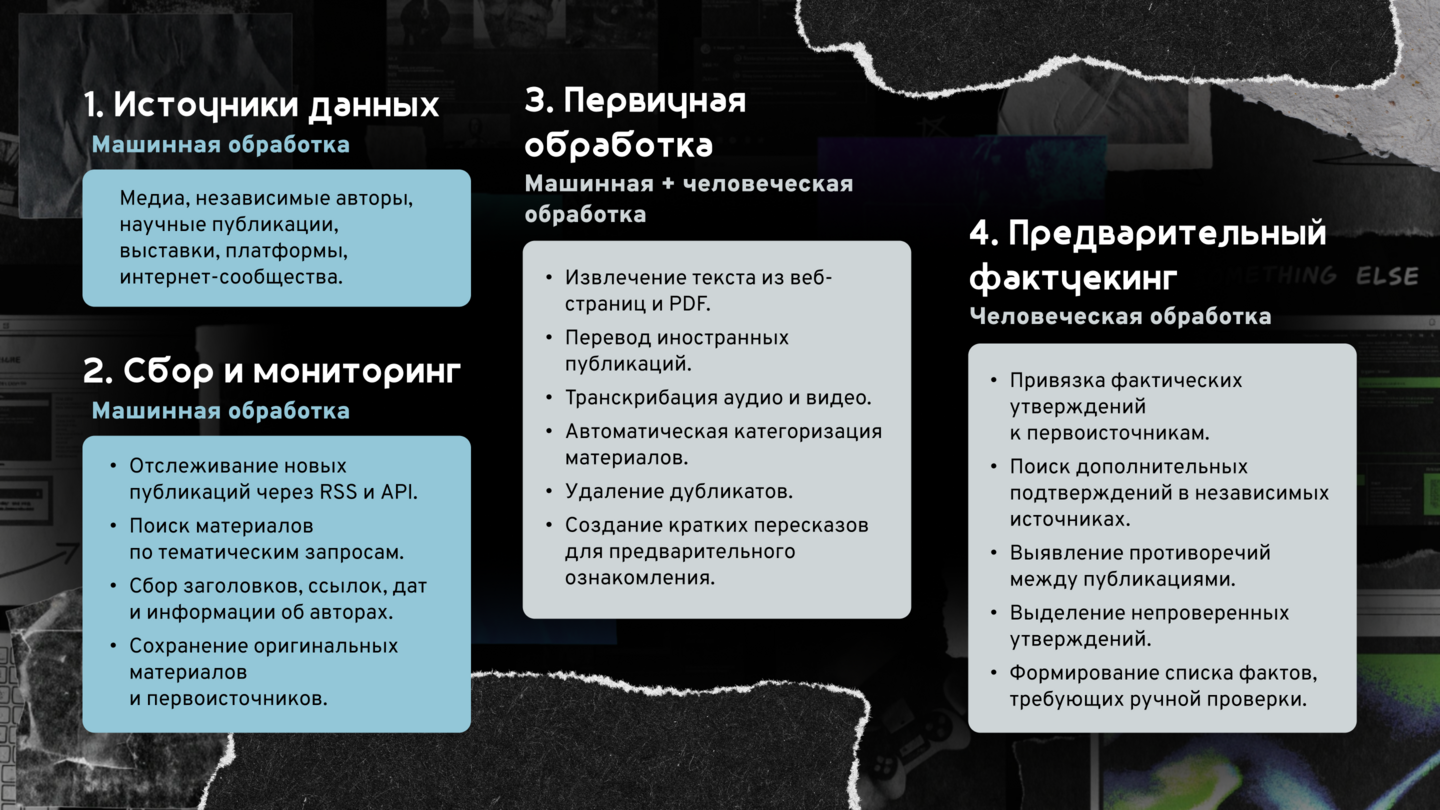
Data schema with separation
Core principle: the machine is responsible for gathering, processing, and preliminary analysis of information. The human is responsible for verifying accuracy, interpretation, and editorial decisions. No material should be published based solely on the automated system’s output.
Guidelines for Automated Services
The OTHERWISE guidelines define the rules for interacting with automated services and artificial intelligence. They are designed to ensure the veracity of published information, respect for copyrights, protection of personal data, and transparency in the use of AI.
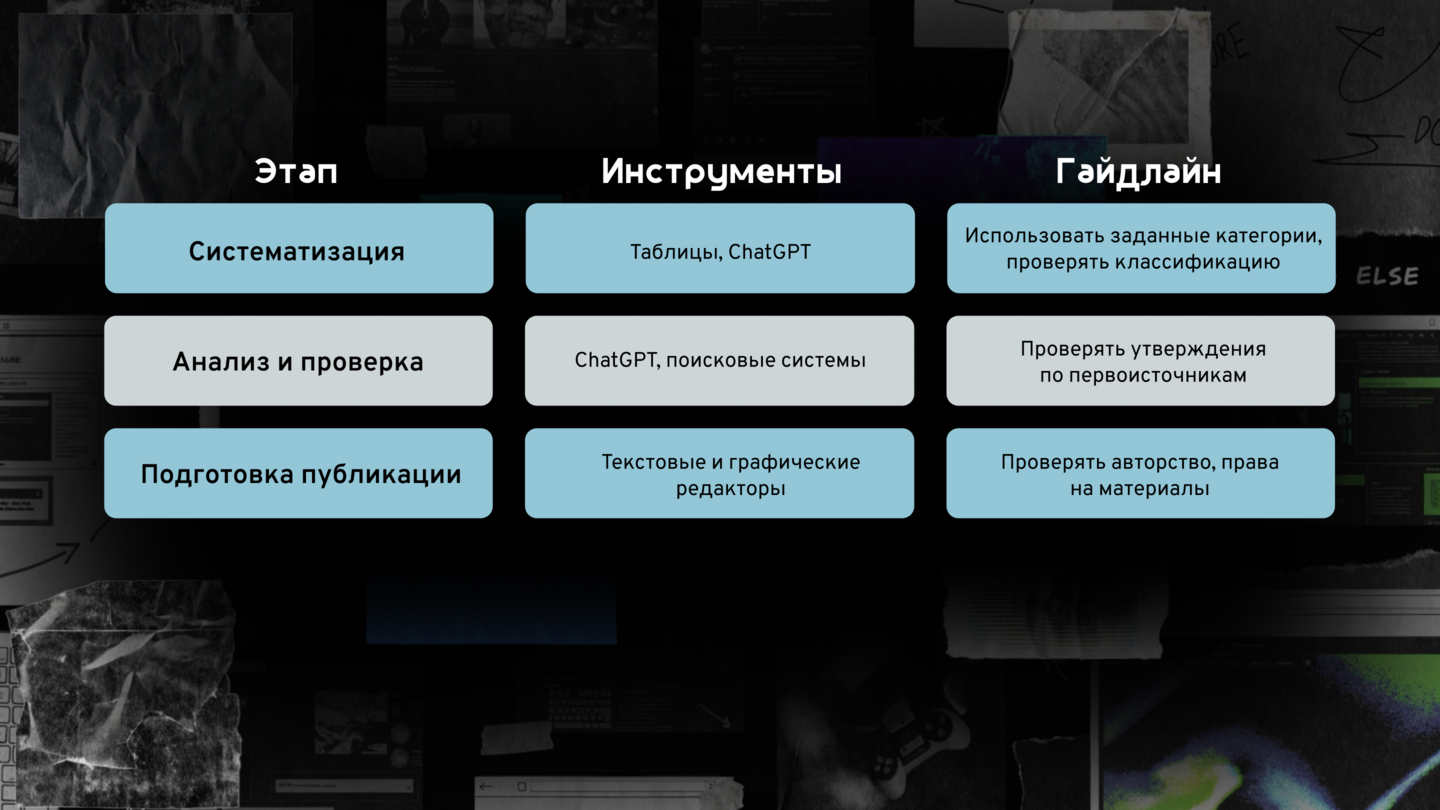
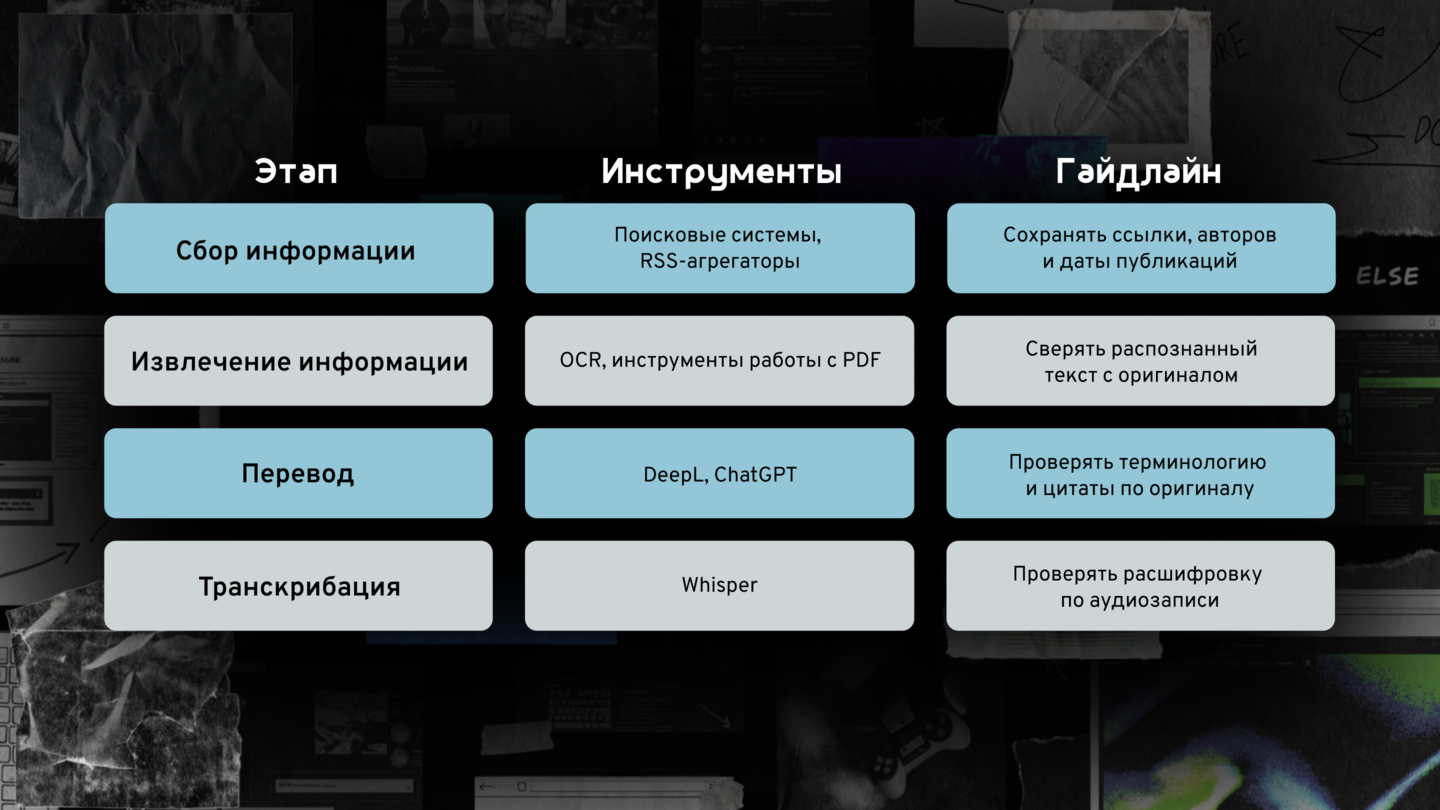
Particular attention is paid to verifying the results of automated processing and maintaining authorial control—the final fact-checking, information interpretation, and editorial decisions always remain with the human editor.