Rubricator
— Introduction — Communication Channels and the Public Field — Theoretical Framework — Analysis — Conclusion and Recommendations — References and Image Sources
Introduction
MIXIT is a Russian beauty company that began in 2014 as a website where customers could blend their own face cream from plant extracts. Since then it has grown into a brand available at roughly thirty-two thousand points of sale. The engine behind that expansion was never only the chemistry inside the jar. MIXIT was founded by Oleg Pai and Elena Nazarova; its name also works as an instruction, because the first product was a kit that invited buyers to mix their own formula. Today the brand sells skincare, body care, haircare, decorative makeup, and a widening family of sub-brands. But MIXIT’s identity depends less on any single product category and more on a promise about who the customer is allowed to become.
Core positioning grows from one claim the brand repeats wherever it speaks: there is no single correct standard of beauty. In the same way, there is no single correct way to live a life. The company frames its mission as inspiring and supporting women who choose their own path. These women decide for themselves despite the expectations and stereotypes others press on them. Products are presented not as instruments that dictate how a face should look. Instead, they are tools that widen the room for self-expression. This approach lets an affordable mass-market object carry emotional and identity-level meaning that its price tag alone could never justify. Pricing keeps that promise accessible: most items sell within a band of roughly two hundred to nine hundred rubles.

That places the brand firmly in the democratic, rather than the luxury, tier.
The target audience follows directly from this positioning. MIXIT speaks first to women who skew young and digitally native. These women treat a daily beauty routine as a small act of self-care and self-definition, not as an obligation imposed from outside. Because the products are inexpensive and sold mostly online, the audience behaves like value-conscious marketplace shoppers. They compare ratings, read reviews, and follow beauty bloggers before deciding. The brand reports a community above one million followers and a loyalty club above one and a half million members. Those two numbers describe an audience large enough to behave like a mass market while still engaged enough to act like a fan base.
Spa Rituals Gourmet
That dual character — mass reach fused with fan intensity — is precisely the asset the communication strategy is built to exploit.
Reading MIXIT through communication theory is therefore not a decorative exercise. The brand is, in a real sense, a communication product before it is a cosmetic one. This research takes two lenses from the course and applies each to a different face of the brand. The Theory of Planned Behaviour shows how MIXIT moves a viewer from a favourable attitude to an actual purchase. It does this through images, packaging and endorsement, which answers the visual-research side of the task. Dialogic Theory examines whether the brand truly converses with its publics or merely broadcasts at them. That answers the public-relations side. Together, the two lenses let the analysis judge both how MIXIT turns willingness into a purchase and whether it sustains a relationship once that purchase is made.
Communication Channels and the Public Field
MIXIT operates across a broad owned-media footprint that it controls directly, a layer of earned attention generated by others, and a history of paid promotion that produced its fastest growth. The site functions both as a storefront and as a content hub. It carries the catalogue alongside a beauty blog, a skin-diagnostics service, a cream constructor and a loyalty programme. Social platforms extend that owned presence into the feeds where the audience already spends its attention.
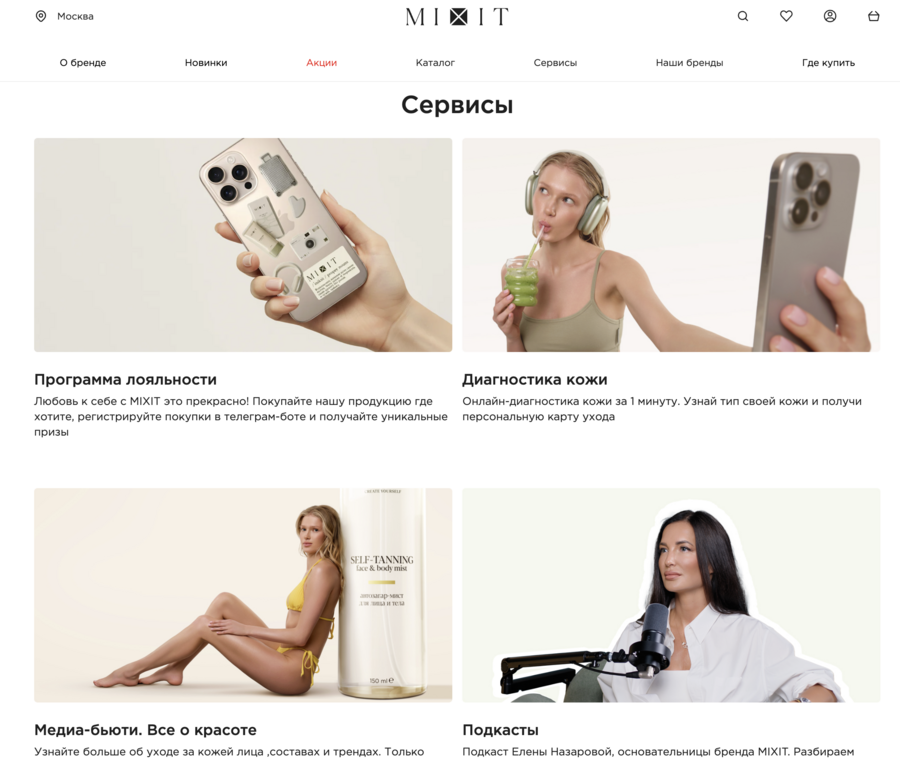
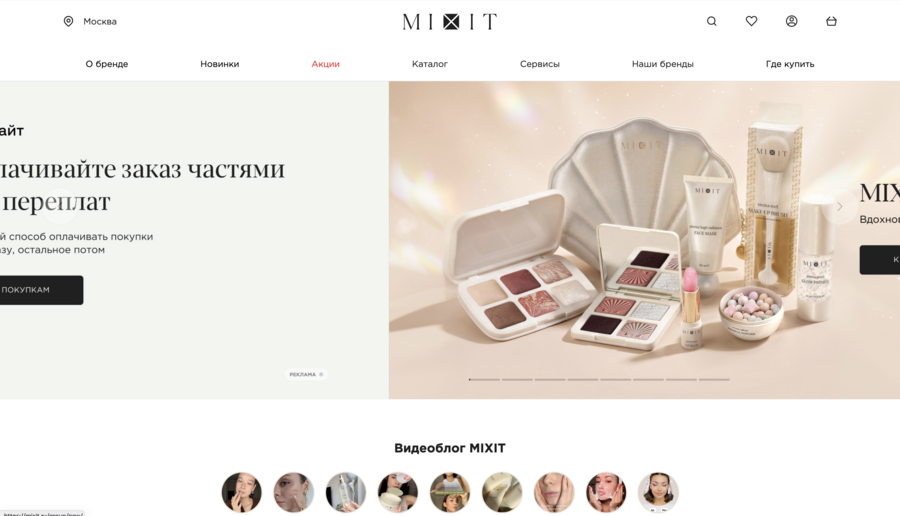
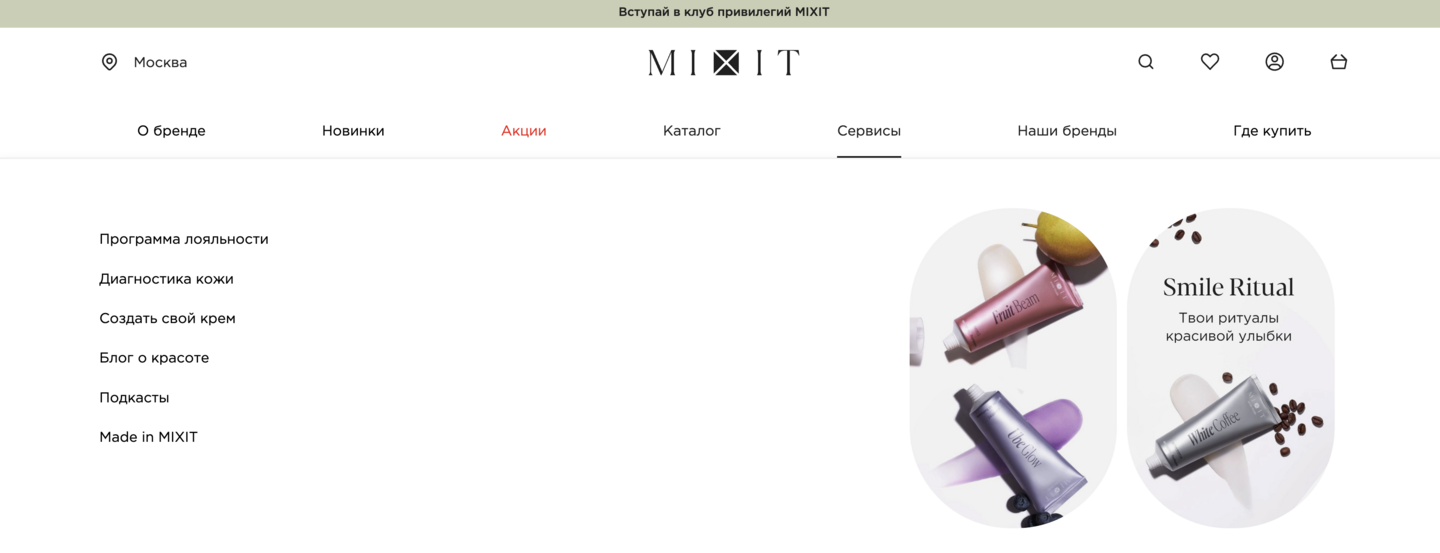
MIXIT’s website
The brand keeps an active community on VKontakte. It runs a Telegram channel for mood and product content, plus a separate Telegram care service and a loyalty bot. The brand also maintains an account on TikTok, a blog on Dzen and a channel on YouTube. This mix means a single campaign can be recut into the format that each platform rewards. Platform mix matters more than platform count, because each surface carries a different communicative job. VKontakte hosts community conversation and even a podcast. Telegram handles fast updates and direct support. TikTok and YouTube carry short and long video respectively. Dzen carries longer editorial that search engines can index.
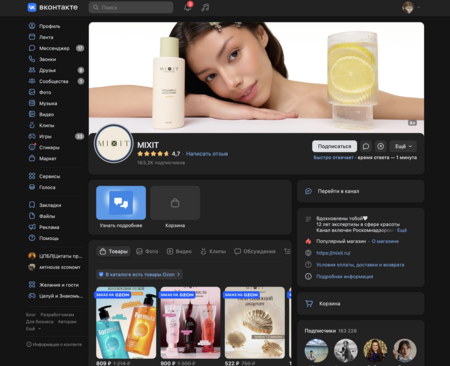
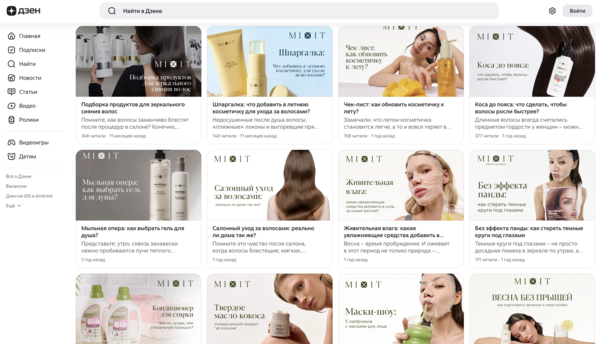
MIXIT’s VK and Dzen
Paid promotion and influencer marketing built the brand before its owned infrastructure matured. The earliest growth came from a deliberate wager on bloggers and on a then-inexpensive, mass-reach social network. Forbes credits much of the commercial breakthrough to advertising that placed products in the accounts of a long roster of Instagram* celebrities, including TV personality Olga Buzova (Borodina & Mitkevich, 2019). The mechanics were simple and repeatable. The company seeded products with influencers and ran giveaway boxes that paired bestsellers with new launches. It then converted the resulting attention into orders that spiked after each wave of placements.
Video from MIXIT’s YouTube channel
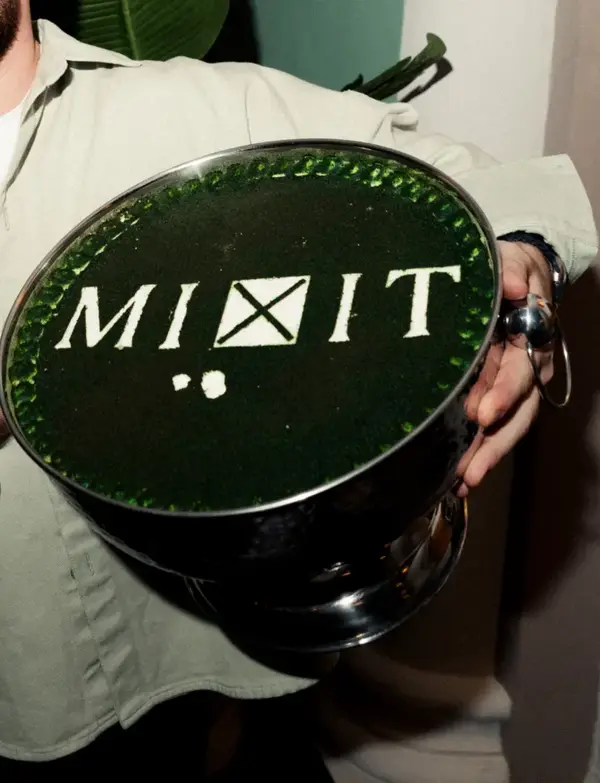
Public-relations work beyond influencers leans on spectacle, awards and earned media. The 2019 Guinness World Record for the largest jar of body cream, weighing more than two and a half tonnes, is the clearest example. That event was engineered to be photographed and shared. Industry recognition reinforces credibility: the brand has collected beauty-industry awards across several years and led Russian media mentions by volume in 2023. Retail ubiquity performs a quieter kind of PR. A presence at tens of thousands of sales points and a leading rank on the marketplace Wildberries signals scale to shoppers.


The 2019 Guinness World Record for the largest jar of body cream
Two interactive services deserve separate mention because they blur the line between a sales tool and a communication channel. The cream constructor at mix.mixit.ru revives the founding idea by letting a visitor assemble a personalised formula. The skin-diagnostics service at skintype.mixit.ru offers a guided questionnaire that returns a tailored routine.
Both services turn a one-way catalogue into something closer to a conversation. Both will matter when the analysis turns to dialogue.
The loyalty programme, delivered through a Telegram bot and the Beauty Club, closes the loop by giving customers a reason to return after their first purchase.
Theoretical Framework
Two theories from the syllabus structure the analysis, and they were chosen because they answer two different questions that a single lens could not address at once.
The first question concerns action, namely how MIXIT moves people from a favourable attitude through to an actual purchase by means of its visual communication. The second concerns relationship, namely whether the brand builds genuine two-way ties with its publics or simply talks at them. The Theory of Planned Behaviour speaks to the first, and Dialogic Theory speaks to the second.
MIXIT’s Team
The Theory of Planned Behaviour
Icek Ajzen built the Theory of Planned Behaviour on the earlier Theory of Reasoned Action that he had developed with Martin Fishbein. Its governing assumption is that human action is broadly rational, so what people do flows from what they intend to do.
The pivotal concept is behavioural intention, the plan to act in a particular way, because intention is the immediate antecedent that the theory places just before behaviour itself. Where a simpler persuasion model stops once an attitude has shifted. This theory insists that a changed attitude is rarely enough on its own. The move from intention to action depends on more than evaluation alone.

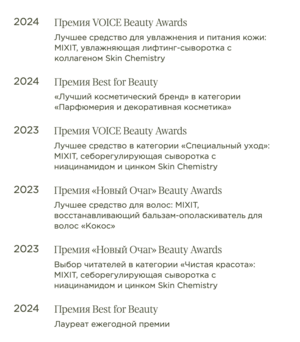
MIXIT’s Awards
Three factors shape intention. A brand that wants action, not opinion, must work on all three.
The first is attitude toward the behaviour. This is an evaluation based on beliefs about likely outcomes. The second is the subjective norm. It is the social pressure a person feels from important people and groups. The third is perceived behavioural control. It is the person’s sense of whether the action is actually within their power.
Behaviour here is the observable response in a specific situation toward a specific target. Intention does not automatically turn into behaviour. A person may have a positive attitude and feel social approval but still not act if cost, knowledge or access gets in the way. The course notes that changing attitude alone is not enough. A communicator who wants action must support attitude, norms and perceived control together.
Background factors shape all three. They include individual traits and values, social variables like age, gender and income, and informational factors like knowledge and media coverage. For a commerce brand that counts purchases rather than opinions, a theory about the leap from intention to action is a stricter and more honest lens.
MIXIT Talk
Dialogic Theory
Dialogic Theory is most closely linked to Michael Kent and Maureen Taylor. It argues that public relations is most ethical and most effective when an organisation builds genuine relationships with its publics through honest two-way exchange, not one-way broadcasting. Dialogue here means a negotiated exchange of ideas based on honesty and positive regard for the other party. The course describes it through five features: mutuality, propinquity, empathy, risk and commitment. Mutuality sees organisation and public as partners. Propinquity means speaking with publics before decisions, not after. Empathy creates a supportive climate where people are encouraged to speak.
Because much of this exchange now happens online, Kent and Taylor turned the principle into five practical criteria for websites and social platforms. The dialogic loop asks whether publics can ask questions and receive answers. This depends on visible contact points and on staff who respond. Usefulness of information asks whether the site offers transparent, valuable content for all publics, not just sales copy. Generation of return visits asks whether fresh content gives a reason to come back. Intuitiveness asks whether the interface is easy and fast to navigate. Conservation of visitors asks whether the design keeps people on the site instead of pushing them away through intrusive links and advertising. Together these criteria turn an abstract ethic into a concrete checklist that a brand’s interfaces can be tested against.
These two theories work together instead of competing. The Theory of Planned Behaviour is an objective theory that sees people as broadly rational actors whose behaviour can be predicted from attitudes, norms and perceived control. Dialogic Theory belongs more to the interpretive and relational tradition and treats the audience as a partner whose voice must be heard, not as a behaviour to be engineered. Holding both views at once keeps the analysis honest. A brand may be very strong at driving action and still weak at sustaining relationship. MIXIT is a clear case of this asymmetry.