This work is divided into two interconnected sections: analytical and conceptual. You can review the first part via the link below.

«An architect must know how to see: and I mean seeing in a way that sight is not overpowered by rational analysis.»
About the Master’s Manifesto
I ask you to set aside rational analysis—learn to see with feeling and emotion. It is these feelings that lead us to truth.
Walls are not enclosures, but expressive decorations: they frame the sky, blur the horizon, and create a perfect backdrop upon which nature begins to sound stronger and freer. Let architecture be woven into the tranquil landscape as brilliant accents.
Let the garden hold an air of mystery. The garden unfolds as a series of revelations, where every step is a discovery and an understanding. The space breathes, inviting the viewer into its rhythm.
Water serves as the soulful beginning of the garden. Visually, it connects earth to sky, enhances the geometry of the architecture and space, and sounds not like noise, but like an instrument for creating perfect silence.
Nature speaks, and the human, holding their breath, merely observes. Plants are monumental sculptures, «frozen in expressive poses.»
The garden is a place for solitude, contemplation, and meeting the eternal. It is a stage where a drama unfolds, where light, shadow, and color are the main actors. Listen to your heart and to nature. They will suggest the rhythm. I believe you can catch their voices and transform the space into a garden that is not merely seen, but experienced.
With faith in your dialogue with silence, Luis Barragán
{In Search of an Idea}


Emotional Moodboard for the Garden / Location Moodboard / References
About the Garden Concept
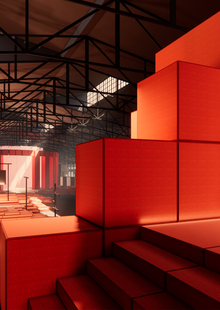
The «Species Catcher» Garden, situated high up and out of reach, is viewed as a place of discovery: a dynamic space—a labyrinth where a person can control the composition by disrupting familiar paths.
The investigation of space occurs through touch, much like in childhood: a person can feel like a child again, letting go of all adult anxieties and savoring the moment.
A search for harmony, tranquility, and silence—qualities so lacking in adult life.
The concept is built on contradiction. The city center, with its new modern construction—a symbol of the metropolis characterized by noise—presents an inaccessible garden, whose rooftop location creates a sense of quietude. We rise above the world, drawing closer to the sky while moving away from daily life’s problems.
Location
Silence must be found even in the heart of a chaotic city.
The location serves as an antithesis to a tranquil, serene garden.
The noisy, fast-paced life of the metropolis is contrasted with quiet contemplation and the search for one’s place in the here and now: adults can escape their problems and finally focus their attention on the eternal.
On Plan Formation
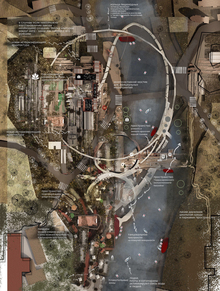
Garden Layout Composition
Junction points (circles) — spaces for silence and contemplation.
Straight lines — movable partitions that allow one to enter any part of the garden, breaking the familiar rhythm of the pathways.
Garden master plan sketch


About the Concept of Plants
The base plantings are formed by decorative grasses, which evoke childhood fields and create the effect of a soft, free-flowing landscape.
For roof landscaping, woody species with neutral green foliage and calm canopies are also utilized—those that do not create color accents. Their role is to form a foundational green volume and soft shade without visual dominance.
Trees — Stasis Grains — Movement
1. Narrow-leafed Cowslip 2. Maneed Oat-grass 3. Hairy Mulenbergia 4. Wiry Sculpin 5. Giant Couch Grass 6. Vaginal Downy Plant 7. Heart-shaped Linden 8. Field Maple