In the museum card for the Moderntone mug, the handle is described as an ear-shaped detail, and the dimensions are provided including the protruding part. This is sufficient for collection storage; however, to understand the human element, I must ask a different question: what action connects the vessel and the hand? Descriptions of the construction and developer testimonials help reconstruct the object’s mechanism, while user stories reveal its function in practice. Beginning the investigation at this boundary—between the measurable object and the experienced action—is particularly beneficial.

The Moderntone mug from the Corning Museum of Glass collection dates to 1934–1942. It is pressed blue glass, featuring a cylindrical body with horizontal lines and a separate saucer. The catalog preserves the material, manufacturing technique, dimensions, and provenance of the piece. It allows us to identify the object, but it does not include results from grip testing. From the photograph or card, I cannot deduce how many fingers a specific person would comfortably place in the handle or how the feel would change once filled.
For me, this kind of entry raises a crucial distinction. Form exists in a document as a set of attributes, but action requires a participant and specific circumstances. Therefore, the phrase «comfortable handle» must signify more than just an attractive contour. Within this analysis, I believe it can only be verified alongside a description of the user, the task, and the observed outcome. The museum catalog is not obligated to answer these questions—the limitation arises when I attempt to convert its data into a statement about another person’s experience.
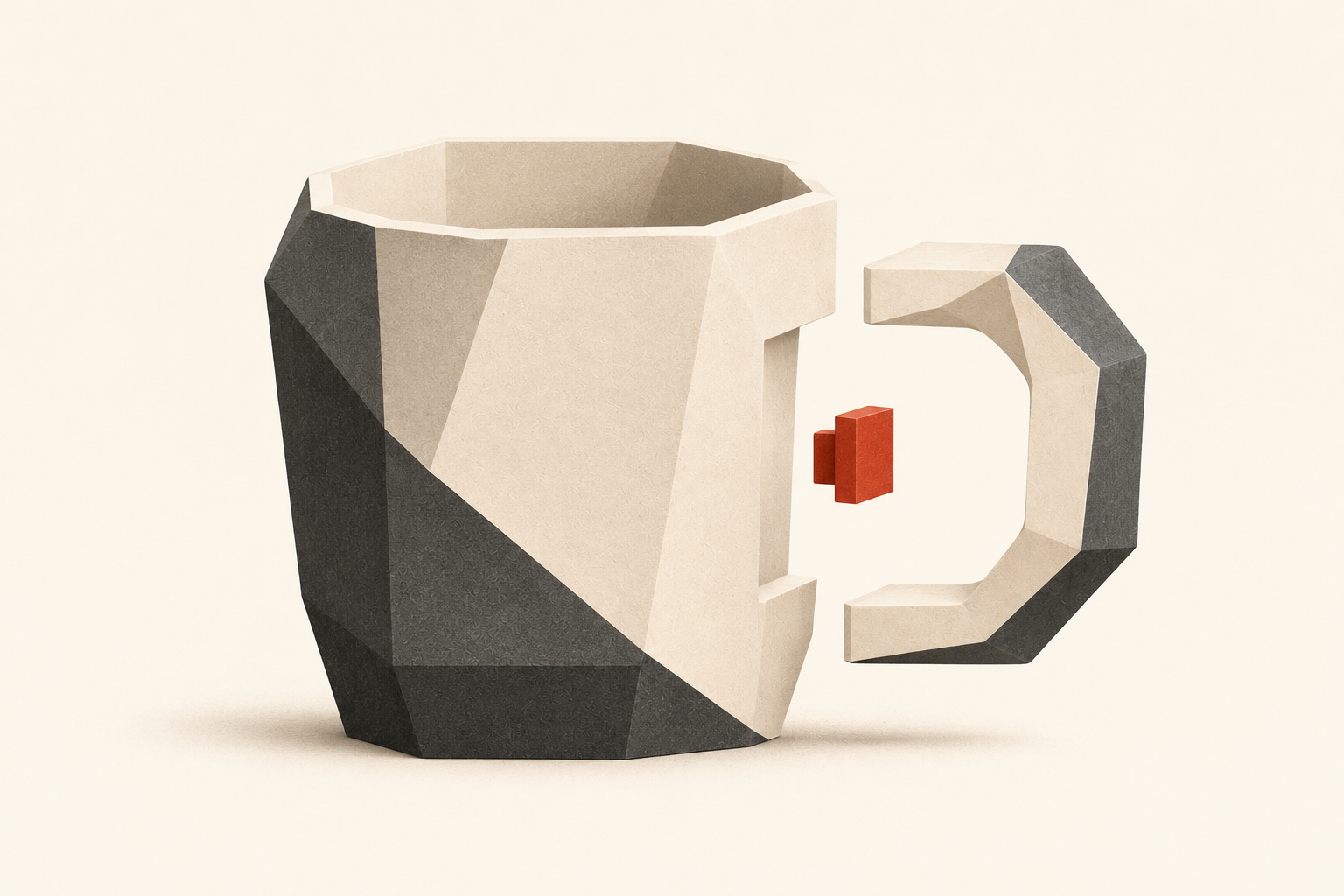
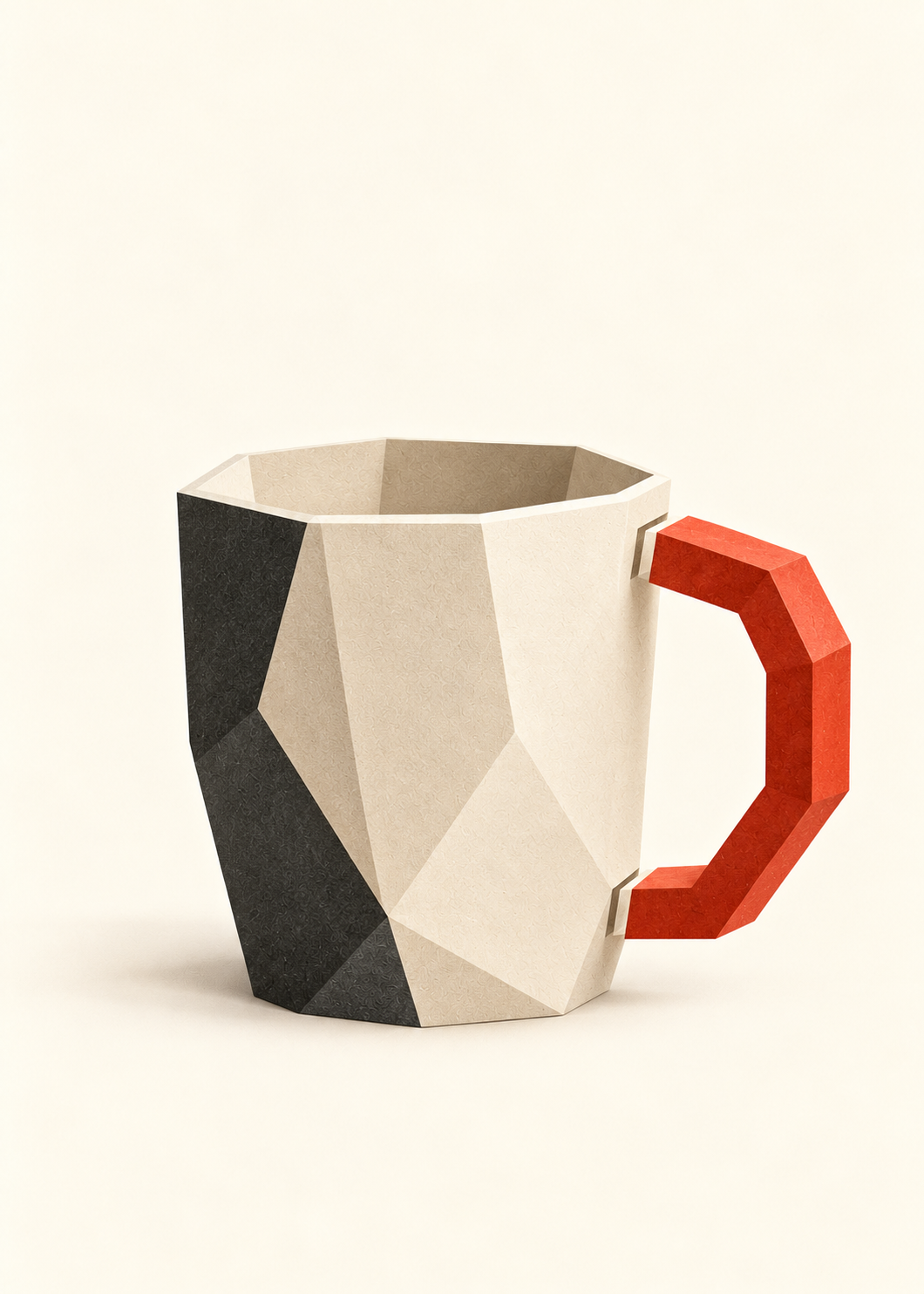
Original AI-generated illustration. A conceptual reconstruction, not a depiction of a specific product.

The Metropolitan Museum curator, Jeffrey Mangher, analyzes a Sevres teacup and saucer from 1822–1823. The model features a tall, curved handle, and the surfaces are adorned with miniature painting. According to the researcher’s interpretation, the decor of this specific set suggests a commemorative purpose, although related forms were also used in tea and coffee services. Determining its application requires historical evidence—the external similarity to a drinking vessel alone is not sufficient to ascertain the piece’s function.This example compels me to refine my research objective. I must not judge every object solely by its efficacy in daily use. If an object was intended for memorializing or displaying an image, the functional requirements could have been different. This is not an excuse for any inconvenience but a method for first establishing the criteria for evaluation. In Mangher’s article, the conclusion regarding the object’s purpose arises from comparing its form, decoration, and history; it is important to retain this as an argued interpretation rather than presenting it as the definitively known intention of every owner.

The manufacturer of handSteady describes a mug with a handle that rotates a full circle. The instructions state that the body can be tilted using the thumb, the other hand, or by contact with the lips; the handle can also be stabilized with a finger. According to the manufacturer’s specifications, the volume is 250 milliliters, and the weight with the lid is 109 grams. This is a description of the design and the proposed ways of use. It does not allow me to guarantee the same result for people with different abilities, nor is it a medical recommendation.
It is particularly noteworthy that the manufacturer’s responses to questions discuss training for a new grip. Habituation to a stationary handle may hinder the mastery of a rotating one, and suitability should be assessed individually. I see here not just a change in the component, but a change in the distribution of labor: part of the task is transferred from the wrist to the mechanism and the sequence of actions. This interpretation is based on the instructions; how well it corresponds to specific use must be demonstrated through independent observation and human experience.
Original illustration created with AI. Conceptual reconstruction, not an image of a specific product.
A helpful neighboring example offers Smart Design: the studio relates the OXO Good Grips vegetable peeler, developed with Sam Faber in 1990, to inclusive design. Since this case concerns a different tool, I will not extrapolate its findings to mugs. It helps frame the direction of the comparison—to investigate not an abstractly beautiful handle, but the relationship between a specific form, an action, and the diversity of users. Professional recognition of a project alone does not substitute for examining an individual object.
Based on the four documents, I have a preliminary impression: the handle doesn’t merely provide a way to grasp the vessel. It proposes a certain sequence of interaction that might be familiar, modifiable, or even secondary to the object’s function. Therefore, for the next mug, I would suggest studying it alongside questions about grip, filling, and intended use. A person’s response can alter this reconstruction; a detailed object card helps initiate a conversation but cannot conclude it for the owner.
The next stage could begin with a detailed recording of several ways to use a cup. I would ask the participant to state the goal of the action and explain what changed when transitioning between objects. It is important to separate recognizing a familiar form from mastering a new mechanism: handSteady directly addresses the learning curve in its responses. Such a question does not require pre-judging whether a new variation is better than the old one. Instead, it allows you to test which part of the action a person is genuinely willing to change for the proposed possibility. Parallel to this, the designation of each item should be preserved. The history of the Sevres cup illustrates why a memorial object and an everyday vessel cannot be assessed by a single task without reservation. Therefore, in my future record, next to the dimensions, there would be the origin, the presumed use, and the owner’s words. The latter might not be in the museum card. Their absence must remain visible so that the reconstruction does not gain unwarranted confidence simply because the remaining fields were neatly filled out.