Keynote paper at 2023 Dress and Body Association Conference 'Climate Change: Implications for Dress and the Body'.
I would have normally asked you to bring one clothing object with holes, tears, stains, or other kinds of damage which you would like to repair alongside the talk. This practice-based or led format is exactly how we have been organizing Mendit Research Lab sessions since its launch be it a museum workshop or a conference panel or a fun mending dating mend-together.
First I would like to contextualize mending practices within history, geography, look at repair from gender and age perspective and try to explain the reasons for the recent mending revival both on the sidewalk and the catwalk. Let’s start with some vocabulary check. What does the word mending mean?
According to Merriam Webster dictionary mend was originally used as a religious term, meaning to free a person from sin, usually through repentance and good deeds. Mend has come to refer to fixing something that is broken. A mechanic might mend a broken car, or a seamstress might mend a torn dress. The word also frequently relates to health and healing. Someone recovering from a long flu is said to be «on the mend.»
What can we mend? Practically anything. We can mend things, clothes, bodies, health, relationship, broken heart (?) Thus mending is a multidisciplinary concept which requires a variety of research tools and optics.
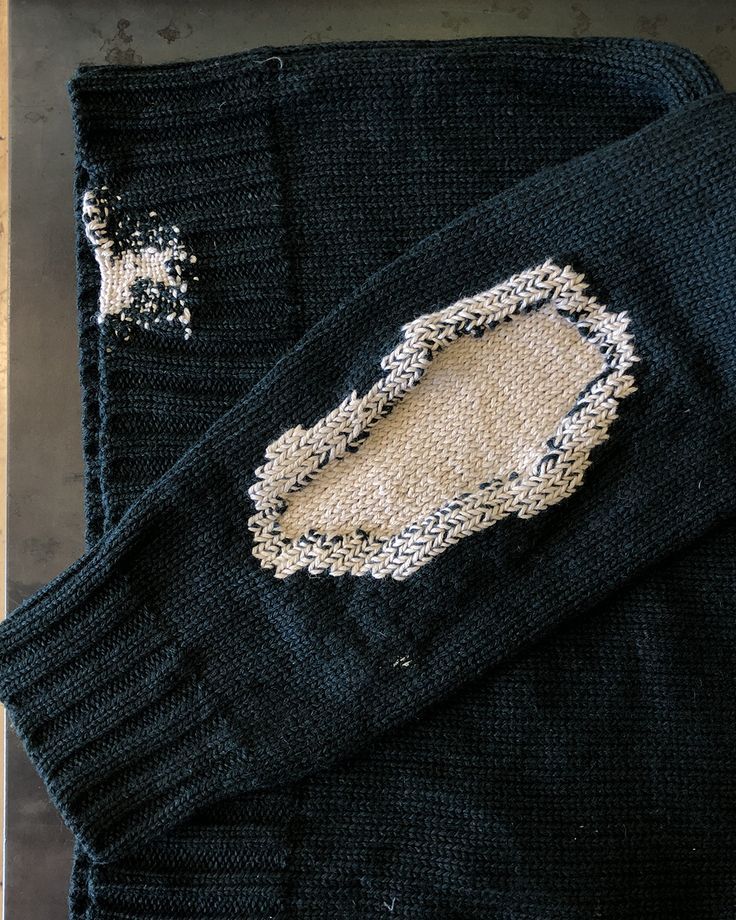
Mending revival which we have seen recently both in everyday clothing practices and on the catwalk with designers exploring all sorts of mending techniques from patching and embroidery to Japanese sashiko and boro and proudly exhibiting all sorts of visible mending (the process which in its turn can be linked to the growing fascination with all kinds of imperfection).
Anna Konig in her article A Stitch in Time: Changing Cultural Constructions of Craft and Mending notes that ‘hand- mended object also raises the rather more philosophical question of how to deal with imperfection. Industrial processes have all but eliminated the very concept of imperfection: we rarely accept ‘seconds’ in the world of mass-produced consumer goods. Mended commodities might therefore be seen as a thorn in the side of that contemporary tenet — they puncture illusory perfection and reveal both the labour of the mender and the patina of life’.
In the times when the world around is literally falling apart and there seems to be less and less things we feel in control about mending presents a meaningful form of work making us feel good about the process and the result and giving sense of achievement and control.
Richard Sennett writes: ‘The slowness of craft time serves as a source of satisfaction… Slow craft time also enables the work of reflection and imagination — which the push for quick results cannot.’ Richard Sennett, The Craftsman, 2008
Following Sennet I would like to draw your attention to the Temporalities of mending which challenge the concept of fashion emphasizing novelty and change offering a time paradigm which is focused on cyclicality and duration, conservation and care.
Care for clothes and as a result care for those who wear them. If we look at the very poses people take while mending (and doing most of the handwork) they remind us of those we take while cradling a baby or comforting someone who is in either physical or emotional pain.
Amy Meissner, Alaska-based artist and repairer: ‘With repair as purpose, it’s possible to address ethical elements and phases of care Tronto [Joan Tronto’s ethics of care in Moral Boundaries: A Political Argument for an Ethic of Care. — LA] outlines: attentiveness (caring about); responsibility (caring for); competence (care-giving); responsiveness (care-receiving); and communication and respect (caring with). These support an additional approach to repair … as accompaniment –– a caring through transition –– which recognizes an ongoing negotiation with materials and process, not as power struggle or need to overcome, but as a mutual arrangement of care’ (A. Meissner, Repair as Accompaniment: Applying an Ethic of Care to the Craft of Repair // Russian Fashion Theory: the Journal of Dress, Body & Culture. Issue 67. Spring 2023).
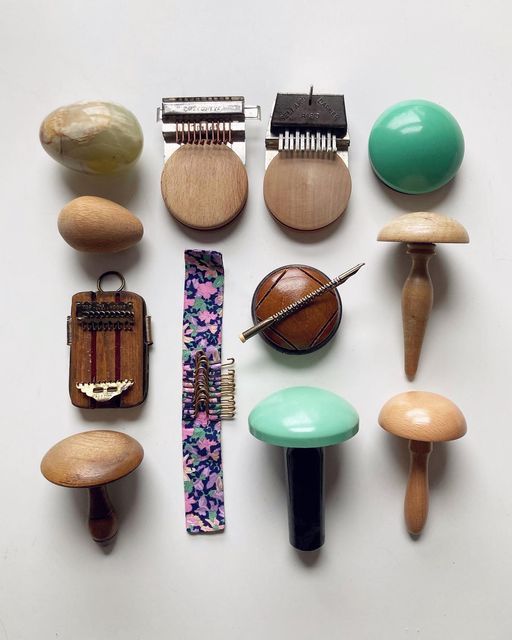
Mending offers a caring sensory experience whose primary sense is the touch (touching the object in a vulnerable state in need of the right care, touching the tools necessary for the task).
The thirst for the touch and growing longing for co-presence became increasingly evident in the pandemic with its distancing and forced transition to online, and led, among other things, to a thriving interest in handcraft practices (sewing, knitting, mending) which were to compensate for the lack of touch.
Traditionally mending and most of the other handcraft practices have been associated with elderly people particularly female. The image of an old woman bending over the family clothes she is repairing sitting silently in the corner has been nearly invisible until recently (it reminds of Agatha Christie’s character Miss Marple who knits silently and harmlessly all the time until she catches a murderer and unravels a criminal scheme. Even though it’s not the example of a repairer but it could be easily adapted to all kinds of handcrafts).
Mending is often seen as a gendered practice. While domestic (and amateur) mending is positioned as a female activity more specialized (and more visible) repair is mostly associated with male labour requiring special skills and education.
Here I would like to refer to the topic which still waits for its researchers: mending in male communities which has been traditionally overlooked in repair studies
On the photograph we see a Union soldier repair his uniform during the U.S. Civil War. At the same time the sewing kit soldiers used was called until quite recently a housewife. The old-fashioned term ‘housewife’ refers to a portable sewing kit, the term was used in print for the first time in 1749 and was in common use until very recently. The name comes from a time when it was common for mothers, wives and sweethearts in the 18th and 19th centuries to embroider these personalised sewing kits for their menfolk to take to war.
Mending is one of strategies within the sustainable paradigm.
Orsola de Castro, author of Loved Clothes Last and the co-founder of Fashion Revolution, states: ‘We aren’t repurposing and mending clothes because we can’t afford to buy something new — we are doing it because we can’t afford to throw something away’.
According to UK charity TRAID by extending the life of a garment by an extra 9 months reduces its environmental impact by 20-30%. 77% of those asked at their clothes repair workshop said that they would keep the item that they had mended for at least another 3 years with a third of people stating that they would keep the item for more than 10 years.
Rachel, one of the mending communities participant «people who sew their own clothes have their own labels. We can say ‘this is made by me’, the exact opposite of the mass manufactured industry» (quoted in https://www.theguardian.com/lifeandstyle/2014/may/19/the-rise-of-mending-how-britain-learned-to-repair-clothes-again
Mending is time/ and very often money investment so we tend to mend the things we love.
Celia Pym, London-based textile designer, noticed ‘that people who come to her mending workshops bring their favorite pieces, the ones they love to tell stories about. Mending is just adding a new layer of storytelling to the piece, like layers of sediment that accumulate on a rock face’ (quoted on www.vogue.com/article/visible-mending).