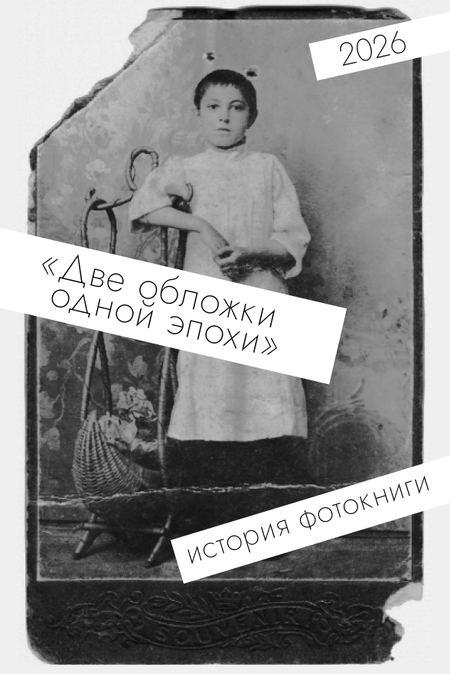
Two forms of Soviet photographic books are compared: the official printed volume («XX Years of the Armenian SSR, ” 1940) and the handmade family album.
1) COVER: Problem Statement Hypothesis Research Methodology 2) ROOT 3) FIELDS Spread Composition 4) MISSING PAGES Zone of Omission 5) SIGNATURES Typographic Signature Handwritten Signature 6) WHAT NOW? 7) COLOPHONS Conclusions Sources
Imagine two tables. On one lies a large book. It has a hard cover made of wood, and a crest is embossed on it. The book is held carefully, with both hands, because it is heavy. It is turned through on the formal table, in the presence of guests. This is a commemorative album. It is seventy years old, but it looks like a monument.
On the other table lies a smaller album. It has a soft fabric cover. It is comfortable to hold in one hand and leaf through while sitting on one’s lap. The inscriptions in it are made with pencil and ink. This is a family album. It is not shown to strangers. It is shown to those considered close.
This work compares two forms of Soviet photobooks. The first form is printed. This is a book that was published in editions and was intended for a mass readership. The second form is handcrafted.
This is an album that a family assembled by hand. Two objects, two ways of remembering, two eras intersecting in the same time.
Why are we comparing these specifically?
Because they are usually not compared. The printed photobook is studied as both art and as a document of the era. The family album is often considered a simple, everyday object. But both objects perform the same function.
They preserve the image of a time. It is just that the image is different.
One book shows what the era was like for the state.
The other shows what the era was like for the home.
We will not proceed chronologically, but rather by the anatomy of the book. We will examine its physical components. First, the spine. Then the page margins. Then what is absent from the pages. Next, the captions. Finally, we will look at how these two modes intersect in the contemporary photo book. Every element of a book carries its own thesis.
For comparison, we are using specific objects: a printed photo book. This is «XX Years of the Armenian SSR» from 1940. It was a large, formal album created by a collective of authors. We also have a family Soviet album—handcrafted, unprinted, and assembled by the family itself. We are sourcing spreads from both from open online observations, from private family photograph archives.
XX Years of the Armenian SSR. Photo Album. Artists: Artuchyan M.A., Bershadsky G.S. Example of a vintage cover, USSR. Photo album
Hypothesis
These two forms do not represent two levels of a single visuality. They are not related as «grand» and «small.» They are two distinct modes of memory. They are structured on opposing principles. The printed book constructs a mass-produced and staged gaze—it opens outward, directed toward the public. The photo album constructs a random and personal gaze—it turns inward, toward the home.
XX Years of the Armenian SSR. Photo Album. Artists: Artuchyan M.A., Bershadsky G.S.
Father Alexei (Gavrilovich) Nogatyrëv of the Pokrovsky Parish, Kargina Settlement, Voshensky Region, along with his wife Nadezhda Mikhailovna (née Dionisieva) and daughter Lidiya. Don Cossack Host, 1903
Family Portrait Moscow, Rembrandt Photo Studio, 1903 Victor Osipov
Vetluga, photo by A. Chibkin, 1903 Elizaveta Zagorskaya
Bicycle Ride Moscow, 1939 Alexei Ivanov
The most interesting things begin where these modes remain silent. The printed book says little about daily life, private existence, or the body. The family album is silent about something else—about those who were cut out of the frame. About those who were erased from memory. About what was not permitted to be shown, even to one’s own. These silences are interconnected. The private album doesn’t just complement the official canon; it serves as its mirror image. What the public book pushes to the periphery, the album elevates to the center. And what is excised from the album often reappears in the public narrative as an official storyline.
Roots
XX Years of the Armenian SSR. Photo Album. Artists: Arutchyan M.A., Bershadsky G.S. Vintage Soviet USSR photo album. Photo album
The way two books are held differs. Any reader picks up and turns the printed photobook. Only a loved one opens a family album. This difference begins not on the page. It begins at the spine. The spine of the printed book, «XX Years of the Armenian SSR, ” is stiff and durable. The format is 34 by 49.5 centimeters. This is a size meant to be held with both hands. This format is designed for a formal display table and for presentation. The book is not flipped through furtively. It is shown.
The size of the family album is more modest. It is comfortable to hold on your lap. The spine is soft, sometimes hand-stitched. The pages in the album are not always uniform. In some corners, there are cardboard sheets, while in others, photos are tucked into the corners. This is an object made by hands, not by a machine.
The difference lies in who assembled the pages. A team compiled the printed book. The editors decided what to dedicate each section to. Artists designed the layout and the cover. Photojournalists captured images from factories, construction sites, and parades. The typography printed the run. None of them knew the reader personally. Everyone worked for the type of reader, for the mass.
A family album was assembled by different hands. His mother, father, and relatives created it. Each inserted their own photos. No one signed themselves as the author. In this album, there is no title page with publication details. There are only dates on the margins and the names of those in the photos.
Here, the concept of collective creativity is at play. In a printed book, a collective of professionals creates an image of the state. In a family album, a family collective creates an image of their life. Both works are collective. However, the meaning of collectivity differs. In one case, it is organized labor commissioned for a specific purpose. In the other, it is shared memory, which no one commissioned.
Fields
It is immediately apparent that the pages are organized differently. Everything begins with the margins and with where the frame is placed. In the printed book «20 Years of the Armenian SSR,» the page functions as a poster. The frame occupies almost the entire sheet. The margins surrounding it are narrow and clean. The image is brought forward, toward the viewer. Such a composition leaves no room for doubt. It demands that you look specifically at this frame and nothing else.
XX Years of the Armenian SSR. Photo Album. Artists: Arutchyan M.A., Bershadsky G.S.
Everything is symmetrical and formal. Retouching removes the superfluous. It conceals shadows, imperfections, and incidental details. The world on the page appears even, clean, and flawless. This spread resembles a stage. The viewer looks at it from a distance, as if in a theater. There is a distance between them and the image. This distance establishes respect and order. The reader does not participate in the frame; they observe it.
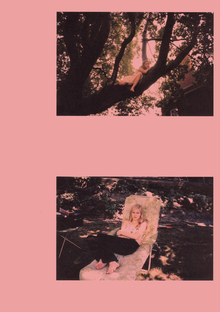
The layout of a page in a family album is different. There are no clean fields and no single large frame. Several snapshots are on the page. They are tucked in at the corners or lying mixed together. Uneven spaces remain between them. The edges are cut with scissors, sometimes crookedly. The photographs are of different sizes and shapes.
The frame in such an album is random. Someone was caught off guard, blinking, or turning away. Someone is partly in the frame. A hand, an angle, a shadow cast by the photographer. Such details are absent from a formal book. Here, they are what matters most. It is precisely these details that make the shot alive and personal.
Vintage photo album, USSR. Photo album
The composition of a family photobook does not adhere to a single order. It resembles memory. Memory does not build a parade; it collects fragments. There is no logical connection between them—there is the connection of life.
The difference between the two formats is visible in the most fundamental way. The printed book observes the world from the outside; it shows how things ought to look. The family album observes the world from within.
Therefore, these books have a different relationship with time. The printed book freezes; its images are eternal and immutable. They exist outside of daily life. The family album breathes. Its pages live, they fade, they bend. The photographs age along with the people they feature.
Pages Not Found
The printed book, «XX Years of the Armenian SSR, ” is entirely focused on display. We see parades, construction sites, achievements, and harvests. The world on these pages is solemn and correct. But much remains unspoken behind the scenes. Everyday life remains—the kitchen, the room, the queues, the fatigue. The body and its vulnerabilities remain. Controversial events and failures remain. They are absent from the book. As if they never happened.
This is the zone of silence within the ceremonial book. It operates on the level of selection. The compilers choose what goes into the album. Achievements are included. Ordinary life is not. The world on the page becomes a pristine model. It shows what the state should look like, not what it actually was.
Kyiv in Leisure, 1920–1930
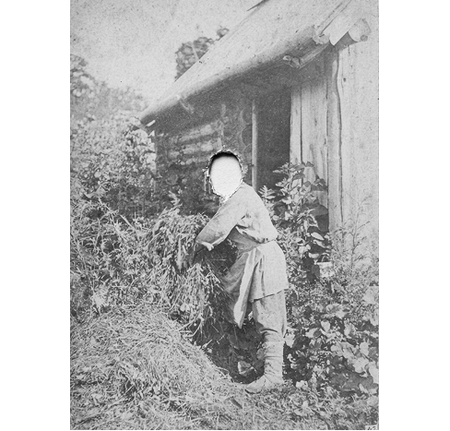
He has a different default zone. Here is daily life. There is a kitchen, a room, family, children. But something is missing here too. Photos are cut from the album. Sometimes the pages are blank, and in the empty corners, you can see where a photograph used to be. Someone has been cut out of the frame with scissors. Some faces are crossed out or covered up.
Who is being removed from family memory? Those who are not deemed appropriate to remember. A divorced relative. Someone who moved away. Someone who was convicted. Sometimes, simply someone the family decided to forget. The album doesn’t speak of this aloud. It shows it through absence. A blank page, a cut-out silhouette, a taped corner. It is a quiet conversation about what was difficult to acknowledge.
This shows the core idea. Every memory has its own silence. Public memory remains silent about daily life and private affairs. Private memory remains silent about what is shameful or painful. Neither book holds the whole truth. They hold the truth they deemed necessary.
These silences are interconnected. What is cropped from a family album often surfaces into the public sphere as an official narrative. What is pushed out of the public record lives only within the home. These two modes of memory don’t simply diverge. They reflect each other, like a mirror. What is hidden in one often emerges in the other.