Introduction: brand description, positioning and target audience
Duolingo logo
Founded in 2011 by Luis von Ahn and Severin Hacker, Duolingo is the most popular language-learning platform and educational app in the world. However, in the realm of brand communication, it has evolved far beyond a simple academic tool. Duolingo has revolutionized marketing by adopting a strategy based on dark humor, guilt-tripping, and manipulation.
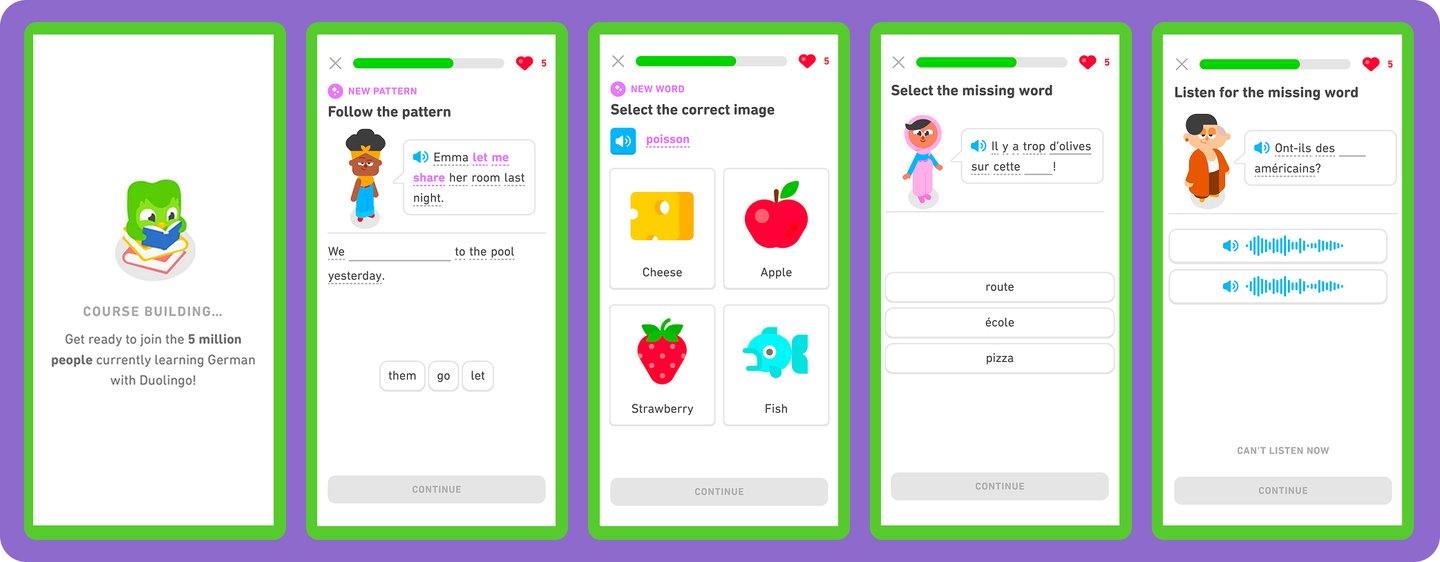
Duolingo application interface
While competitors position themselves as helpful, polite, and academic teachers, Duolingo positions itself as an «smart but slightly terrifying friend». The core promise is not just to teach you a language, but to force you to learn it through comical intimidation and relentless reminders. This takes the brand out of the purely functional educational category and turns it into an active participant in modern meme culture.

Duolingo slogan
The brand’s core identity is embodied in its mascot, an owl named Duo. Duolingo’s communications deliberately break all the rules of corporate politeness. Instead of encouraging users with standard motivational quotes, the brand relies on «fear marketing», passive aggression, and emotional manipulation. Duo portrays itself as a demanding creature who will «kidnap your family» or «haunt you in nightmares» if you interrupt your learning.
The target audience consists primarily of millennials and Generation Z. This audience is believed to be extremely intolerant of traditional corporate politeness, which they perceive as false and boring. They crave emotional release. By exploiting guilt and fear in a deeply ironic manner, Duolingo successfully overcomes the «ad blindness» of modern internet users, making its marketing viral and easily shared.
Communication channels
Duolingo app icon variations
Duolingo uses an omnichannel strategy, but unlike traditional brands, its primary and most aggressive PR and communications channel is its own push notification and email system. Moreover, the Duolingo app icon changes frequently and depends on how well and how recently you completed a lesson.
Push notifications and emails aren’t just functional reminders. They’re tools for storytelling and psychological pressure. Duolingo uses them to induce guilt in users, sending messages ranging from passive-aggressive frustration to outright (but comical) threats that if users ignore their daily lessons, their families will suffer. Duolingo is one of the few apps that still uses email as a communication method in addition to notifications. But to be fair, Duolingo bombards users with emails and notifications not only those who haven’t logged in for a while but also those who complete lessons every day.
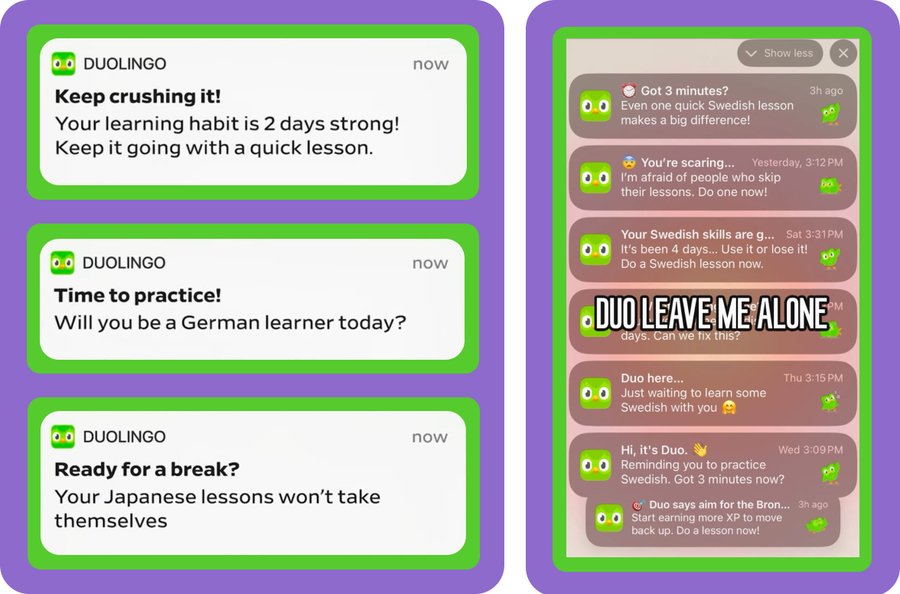
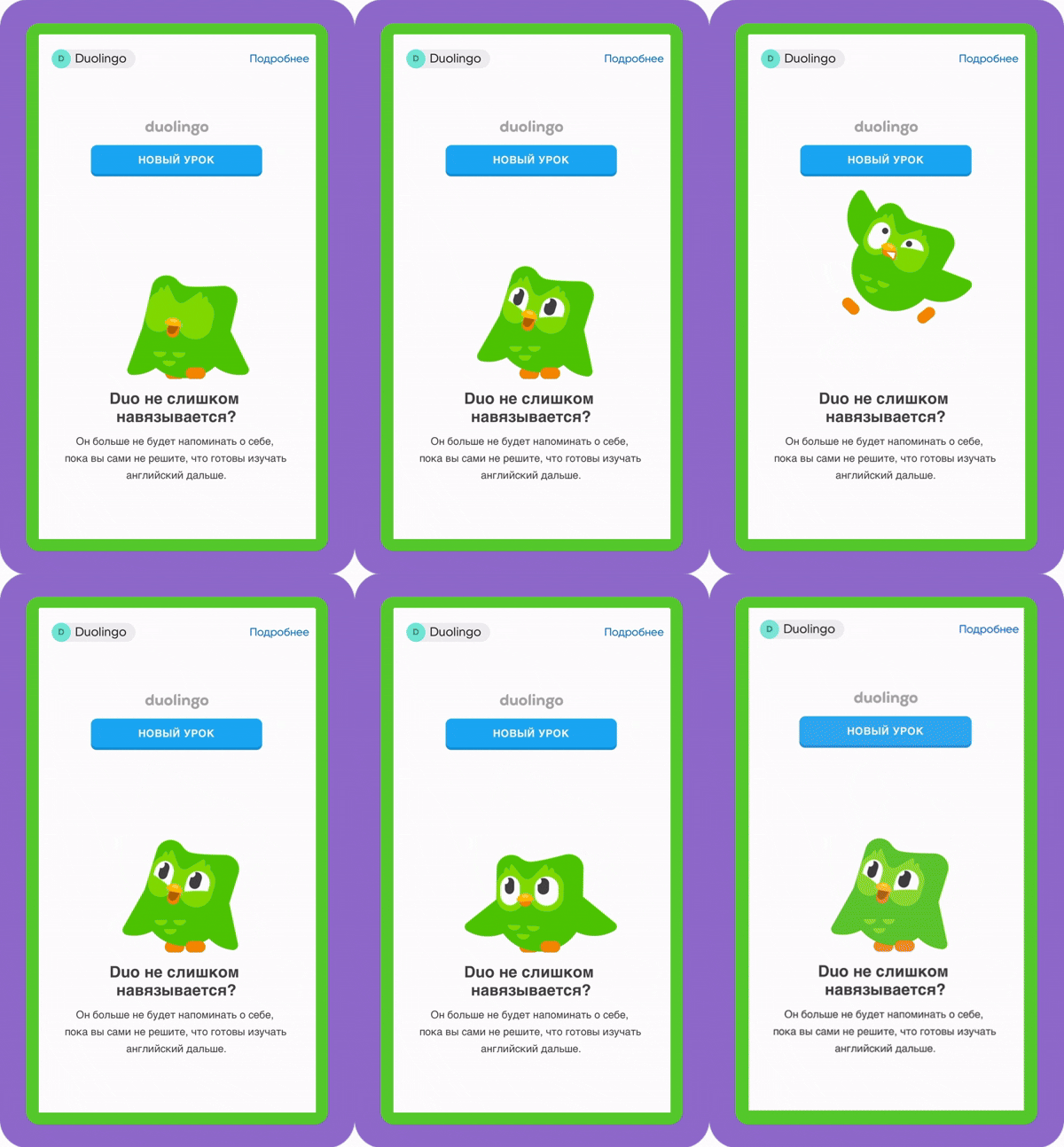
Duolingo push notifications and emails
Duolingo’s strategy on social media platforms like TikTok, YouTube, and Instagram* is heavily focused on vertical video (*Instagram is owned by Meta, which is designated an extremist organization and banned in Russia). Here, the brand completely abandons educational content in favour of chaotic, quickly shared short videos that instantly become internet memes. At the core of this visual content there is the joke of the «Duolingo push» — bringing the Duolingo bird into the real world. These videos often feature a giant Duolingo mascot stalking users in real life, standing ominously outside windows, or threatening them to force them to adhere to daily learning cycles, creating a purely entertaining and myth-based universe.
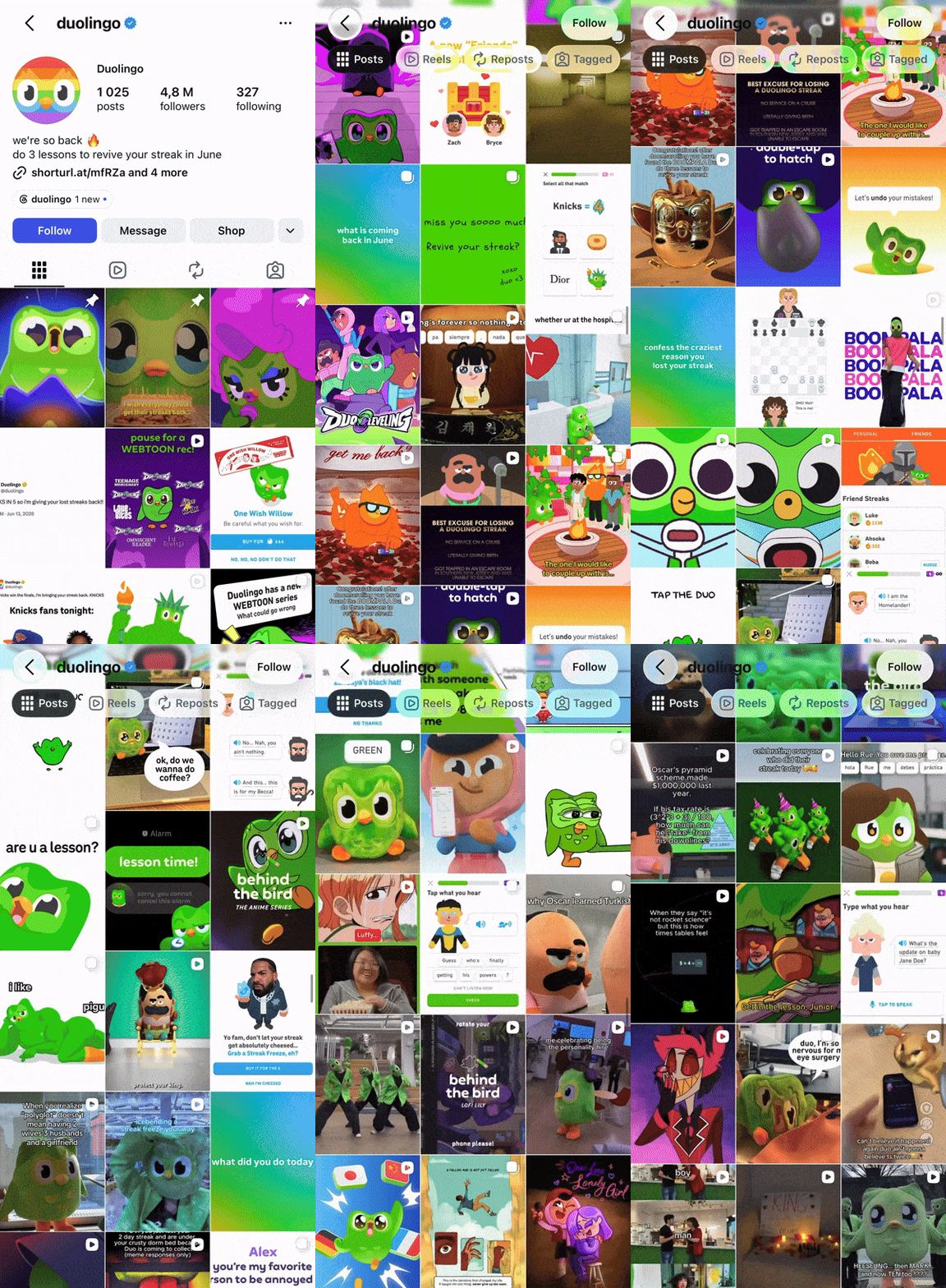
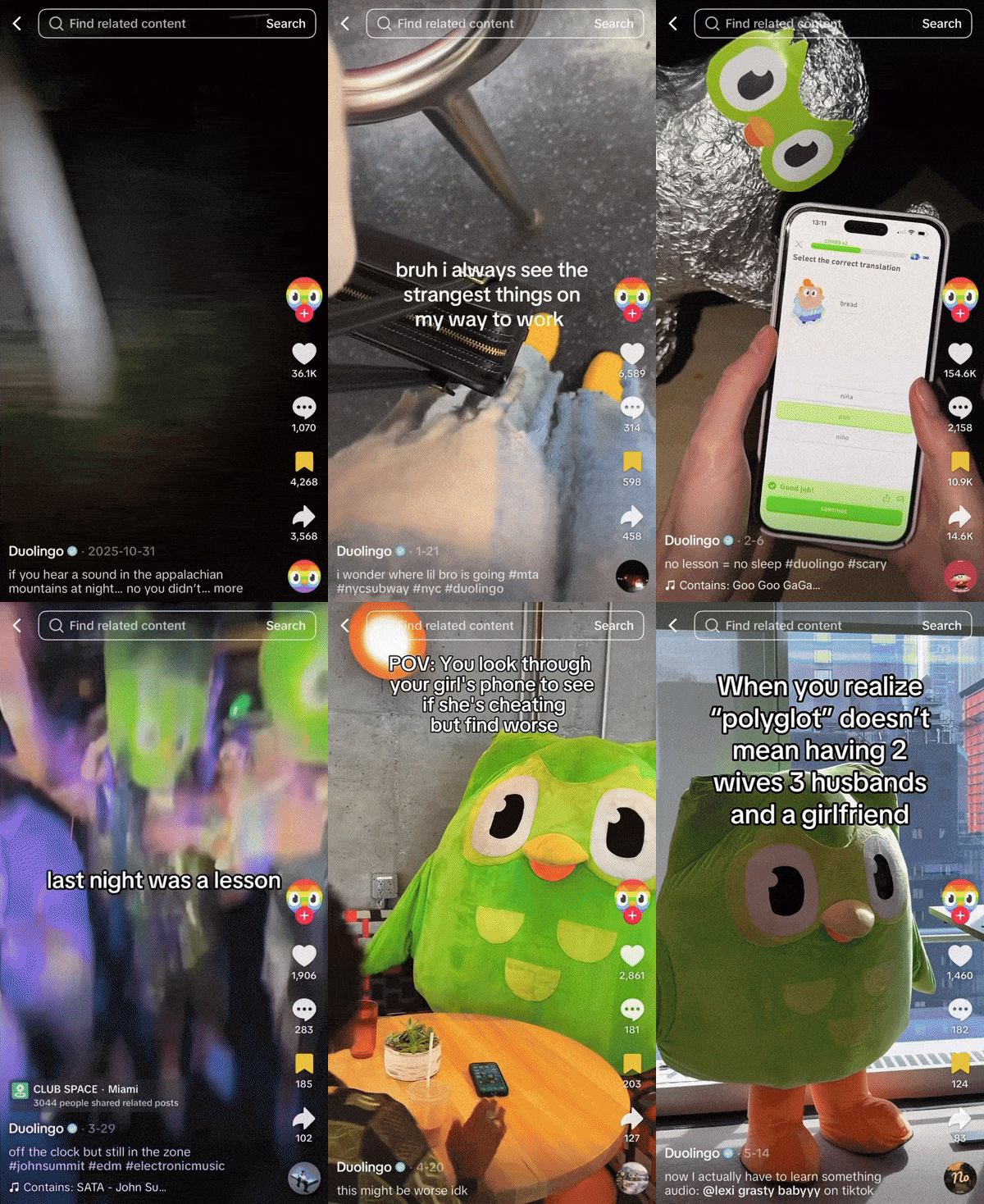
Duolingo posts on Instagram* and Tik Tok
Meanwhile, platforms like X* (Twitter) and Facebook* play a supporting role, used primarily at the end of the communication funnel to maintain this passive-aggressive image through sarcastic replies and tweets (*X and Facebook are owned by Meta, which is recognized as an extremist organization and banned in Russia). Finally, beyond social media, the brand’s public sphere includes Duocon, an annual virtual conference hosted by the company. It focuses on the platform’s mission, technological innovation, and its ongoing expansion far beyond traditional language learning.
Theoretical framework
To analyze Duolingo’s unique and «threatening» communication strategy, two theories from the course are particularly relevant: politeness theory and the narrative paradigm.
Politeness theory, developed by Penelope Brown and Stephen Levinson, explains how people manage their «face» (their public self-image) during communication. The theory distinguishes between positive face (the desire to be liked and approved of) and negative face (the desire to be free from pressure). It also introduces the concept of face-threatening actions (FTA)—actions that infringe on another person’s face. While brands use positive politeness (praising the user) to avoid FTA, Duolingo intentionally and aggressively engages in overt FTA to shock and engage the user.
The narrative paradigm, developed by Walter Fisher, posits that humans are «storytelling animals.» The theory posits that people make decisions not based on dry, rational facts (the rational world paradigm), but rather on how logical and plausible a story seems (narrative coherence and narrative credibility). In the case of Duolingo, this theory explains how the brand not only stopped selling a language learning app but also started selling a story about an angry owl who will scold and haunt you if you «fail a Spanish lesson.» This created a shared narrative in which users willingly participate.
Analysis: Weaponizing Guilt through Politeness Theory
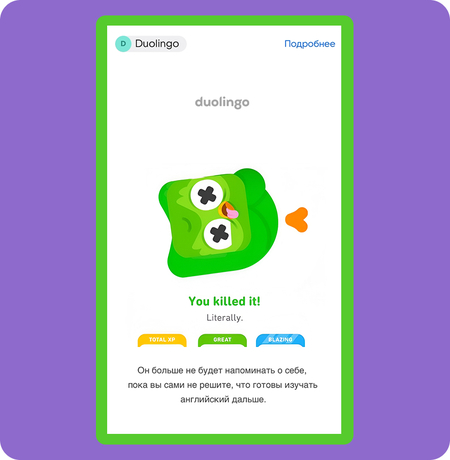
According to Politeness Theory, standard brand communication relies on face-saving strategies — polite, encouraging language that protects a customer’s self-esteem and autonomy. Duolingo completely subverts this model by intentionally using Face-Threatening Acts (FTAs) as its primary engagement mechanism. This radical departure from corporate norms forms the psychological foundation of their «fear and guilt» marketing strategy.
A user’s Positive Face is their desire to be seen as a disciplined, good student. Duolingo targets this vulnerability directly. When a user ignores lessons, the app imposes emotional sanctions — sending notification or emails featuring an upset or even «dead» Duo with captions like, «You made Duo sad». To resolve this cognitive discomfort, eliminate the feeling of failure, and «revive» the mascot (a process known as face restoration), the user is psychologically compelled to open the app.
Negative Face represents the desire for autonomy and freedom from emotional coercion. Duolingo threatens this through highly manipulative, passive-aggressive tactics, most notably the push notification: «These reminders don’t seem to be working. We’ll stop sending them for now.» Instead of a direct command, the brand mimics toxic interpersonal withdrawal. The user experiences a sudden sense of abandonment and logs in simply to «fix» the broken parasocial relationship with the mascot.
Footage from the Duolingo «unignoreable notificatiom» ad
In Politeness Theory, a «bald-on-record» FTA is a blunt command given without any attempt to soften the blow. Duolingo takes this to the extreme with memes and notifications acting as literal threats: «Spanish or vanish», «Beg for your family’s life in Spanish» or «I know where you live.» Confirming this theory, Duolingo is an active commenter on social media, where it displays the same frankly terrifying yet hilarious behaviour.
Duolingo comments on Tik Tok
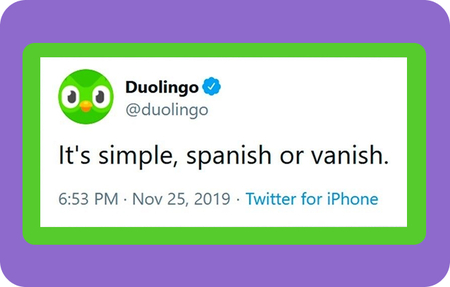
It’s precisely this absurd violation of the expected social contract between a language learning service and its users that makes communication so effective. The shocking effect of receiving a «threat» from a digital owl prompts users to immediately take screenshots and share these interactions online. Thus, Duolingo turns a theoretical violation of communication rules into a powerful tool for organic, viral marketing. For example, Duolingo turned the «Spanish or Vanish» meme into a whole PR campaign, filming a commercial set to the song they created, fuelled by similar social media posts.
Analysis: The «angry owl» universe through the Narrative Paradigm
Walter Fisher’s Narrative Paradigm posits that humans are «storytelling animals» who make decisions based on compelling narratives rather than pure logic. Duolingo completely abandons rational educational arguments (e.g., «Boost your career»). Instead, they have crafted a deeply ironic and engaging narrative universe centered around their mascot.
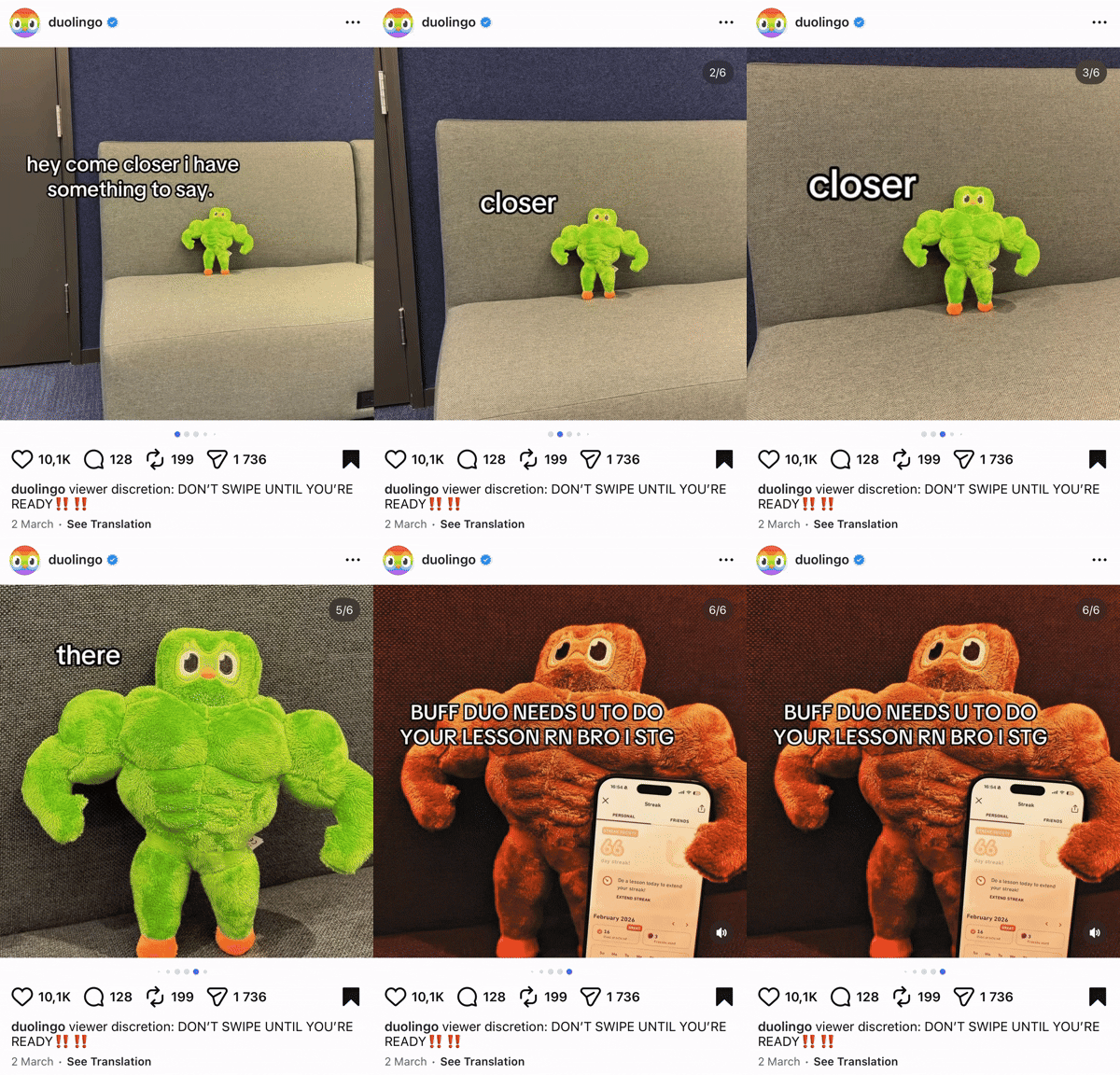
Narrative coherence assesses the internal consistency of a story. Duolingo meticulously maintains a coherent narrative across all touchpoints in a multi-channel environment: Duo isn’t a cheerful tutor, but an omnipresent owl-like ewil, monitoring your progress. Whether it’s a tearful email, an Instagram post, or a TikTok video, Duo’s watchful eye ensures you don’t miss a single day of class.