
Duolingo logo // Official brand identity.

Illustration from Duolingo official website.
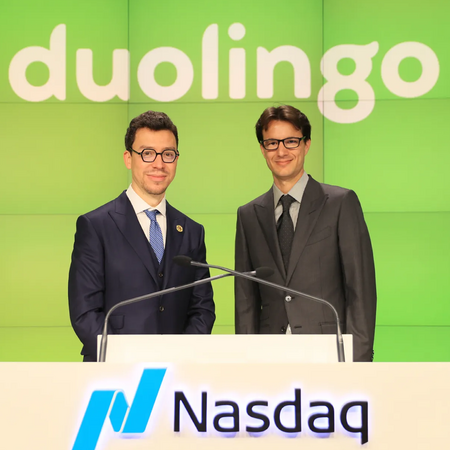
Founded in 2011 by Luis von Ahn and Severin Hacker, Duolingo was created in response to a broader issue of educational accessibility. The founders aimed to develop a digital service that could make language learning available to anyone regardless of geographical location or financial resources.
Over time, the project evolved into one of the most widely used educational applications in the world. Its growth reflects wider changes in digital learning practices, particularly the increasing role of mobile technologies and self-directed forms of education.
Brand Overview
BRAND POSITIONING
Duolingo positions itself as a convenient and engaging alternative to traditional language learning. Rather than focusing on formal instruction, the platform encourages users to build regular learning habits through short, interactive, and gamified lessons that fit easily into everyday routines.
The company describes its goal as becoming «The world’s most effective and enjoyable way to learn languages» reflecting its focus on combining educational value with user engagement.

TARGET AUDIENCE
Duolingo targets a broad international audience of language learners. While the platform is used by people of different ages and backgrounds, its strongest appeal is among younger users who are familiar with mobile technologies and digital platforms.
Users typically engage with the service for personal development, travel, educational goals, or career-related purposes.
FROM EDUCATIONAL PLATFORM TO MEDIA BRAND
Duolingo operates at the intersection of education, entertainment, and social media. Beyond its educational function, the platform has developed a strong online presence through its distinctive communication style and active participation in digital culture. As a result, the brand provides an interesting example of how contemporary organisations use digital platforms to attract attention, engage audiences, and maintain long-term relationships with users.
Channels & PR Strategy
Duolingo’s Main Communication Channels
Mobile App & Website
The mobile application and website remain the central communication environment of the brand. In addition to providing language courses, they encourage regular use through progress tracking, streaks, achievements, and personalised learning goals. As a result, the platform supports continuous interaction with users rather than occasional visits.
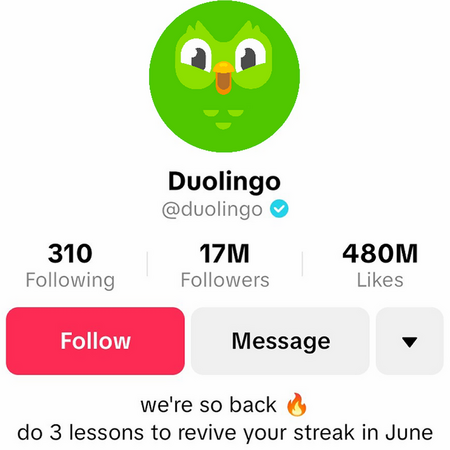
Tiktok
TikTok is currently Duolingo’s most visible social media channel. The company uses humour, trends, and the Duo mascot to participate in online culture and attract attention beyond the educational sector. Rather than promoting language courses directly, much of the content focuses on entertainment and brand personality, helping Duolingo remain highly recognisable among younger audiences.
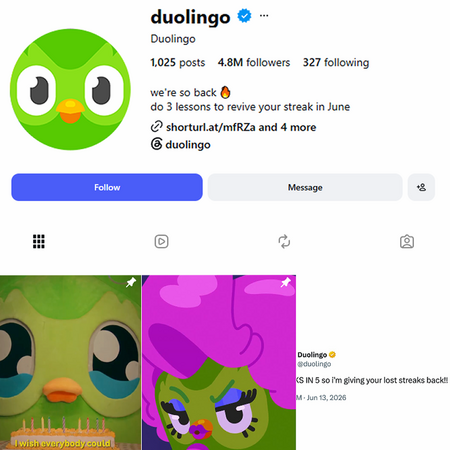
*Instagram serves as a platform for visual brand communication. Through short videos, illustrations, campaign materials, and user-focused content, Duolingo maintains a consistent brand image and stays connected with its audience between learning sessions.
(*Instagram is owned by Meta, which is recognized as an extremist organization and banned in Russia)
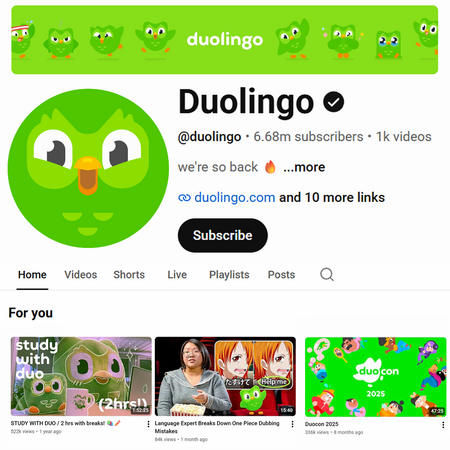
YouTube
YouTube provides space for longer-form communication. The platform is used for promotional campaigns, educational videos, interviews, and brand storytelling. Compared with TikTok, YouTube allows the company to present more detailed content and communicate messages in greater depth.
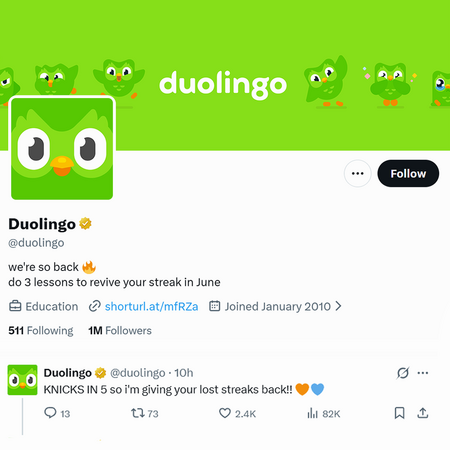
*Twitter (X)
On *X (Twitter), Duolingo engages in public conversations and responds to current events and online trends. The platform is particularly useful for direct interaction with users and for maintaining the informal and humorous tone that has become associated with the brand.
(*Twitter (X) is owned by X Corp., which is recognized as an extremist organization and banned in Russia)
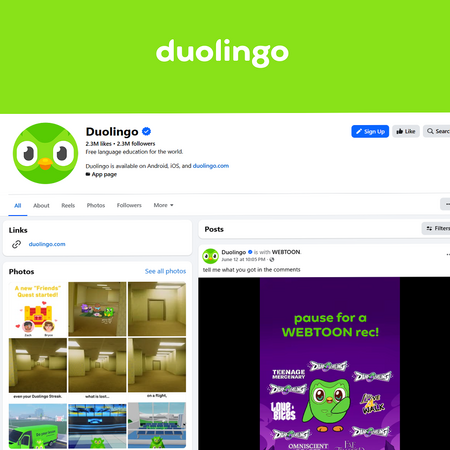
*Facebook functions primarily as an information channel. The company uses it to share updates, educational resources, and promotional materials. Although Facebook is less prominent in Duolingo’s communication strategy than TikTok or *Instagram, it remains useful for reaching broader demographic groups and international audiences.
(*Facebook is owned by Meta, which is recognized as an extremist organization and banned in Russia)
PR Strategy
ANALYSIS
Uses and Gratifications Theory: Why Do People Engage With Duolingo?

Uses and Gratifications Theory, developed by Elihu Katz, Jay Blumler, and Michael Gurevitch in the 1970s, views audiences as active participants who choose media according to their own needs and motivations. Rather than asking how media influence people, the theory focuses on why people choose particular forms of media and what they gain from them. These motivations may include entertainment, self-development, social interaction, and the construction of personal identity.
Duolingo provides an interesting example because much of its audience engagement cannot be explained by educational needs alone.
While the platform was originally designed to help people learn languages, its public communication increasingly resembles that of an entertainment brand. This raises an important question: if users are looking for language education, why are some of Duolingo’s most successful posts completely unrelated to learning?
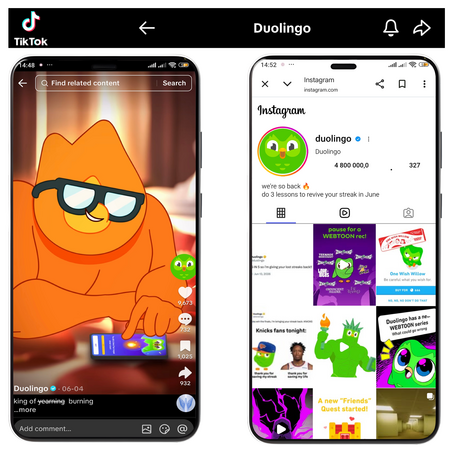
One explanation is that Duolingo understands how people use digital media. Most users do not open platforms such as TikTok or *Instagram with the intention of studying. They come to these spaces to be entertained, follow trends, interact with others, and participate in online culture. Rather than treating social media as a place for direct promotion, Duolingo adapts its communication to these existing audience behaviours (*Instagram is owned by Meta, which is recognized as an extremist organization and banned in Russia).This helps explain why many of Duolingo’s most successful posts contain little educational content. Rather than focusing solely on language learning, the brand relies on humour, trends, and the recognisable personality of Duo the Owl, placing itself within conversations that audiences are already having online.


TikTok videos from Duolingo’s official TikTok account.
Learning, however, remains central to the platform’s appeal. Unlike many brands that gain temporary visibility through viral content, Duolingo has managed to maintain users' interest over time. This is partly because the platform appeals not only to the desire for entertainment but also to the desire for self-improvement.
Language learning is often associated with personal development, career opportunities, travel, and cultural exploration. Users engage with Duolingo not only because the platform is enjoyable to use but also because it offers a practical benefit that aligns with their long-term goals. The brand consistently presents language learning as something accessible, manageable, and rewarding rather than difficult or intimidating.
This balance between entertainment and self-development is particularly important. Educational products often struggle because learning requires effort, while social media tends to reward immediate gratification. Duolingo attempts to bridge this gap by making learning feel less like an obligation and more like a rewarding daily habit.
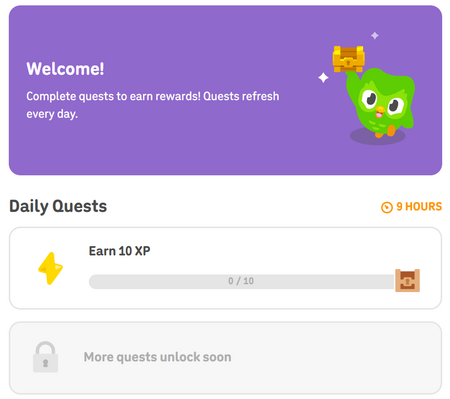
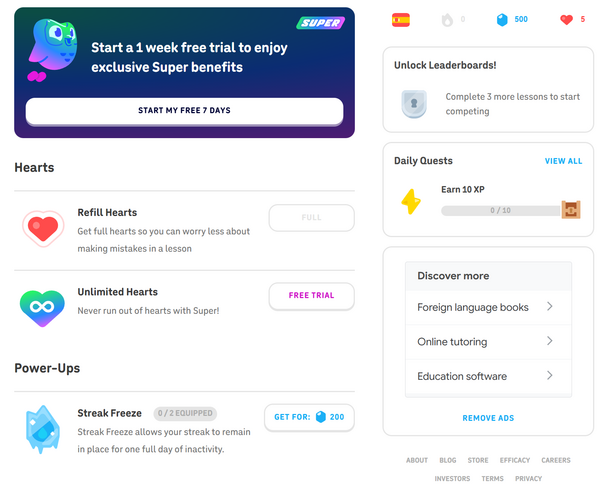
Duolingo interface — quests, rewards, and gamified learning system // In-app learning experience and progression mechanics.
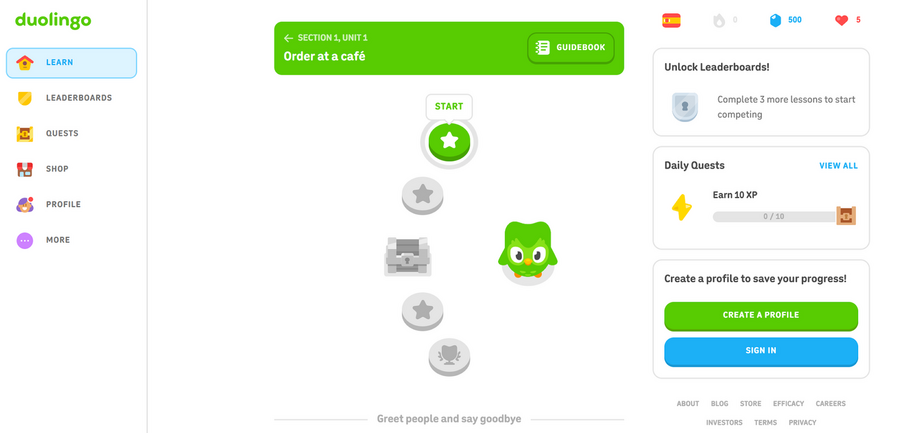
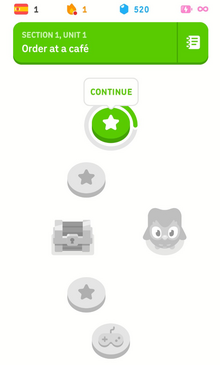
Duolingo’s home page for the web interface and for the mobile application
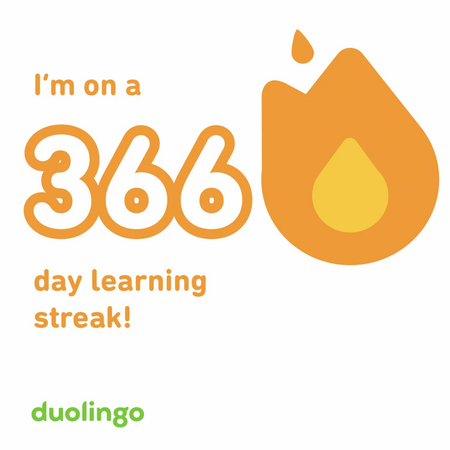
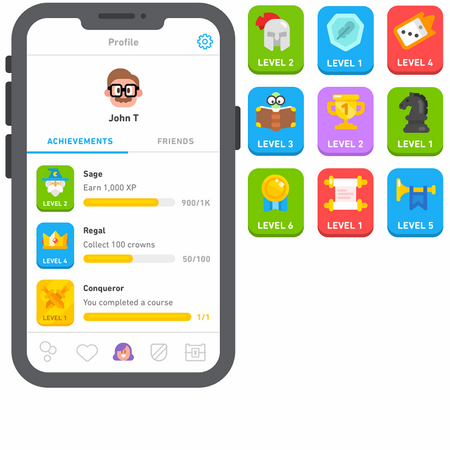
This focus on progress becomes especially visible through the platform’s achievement systems. Streaks, badges, leaderboards, and achievements are usually described as gamification features, but their significance extends beyond simple rewards. They provide users with visible evidence of improvement and encourage them to view learning as an ongoing commitment.
Over time, maintaining a streak can become more than simply completing lessons. For many users, it becomes a reflection of consistency, discipline, and personal effort. Achievement milestones are frequently shared online, celebrated by other learners, and incorporated into discussions within the community. Progress therefore becomes both a personal accomplishment and a social experience.
From this perspective, users are not only seeking educational outcomes. They are also looking for a sense of achievement, competence, and personal growth. Duolingo reinforces these motivations by making progress highly visible and by continuously reminding users of what they have already accomplished.
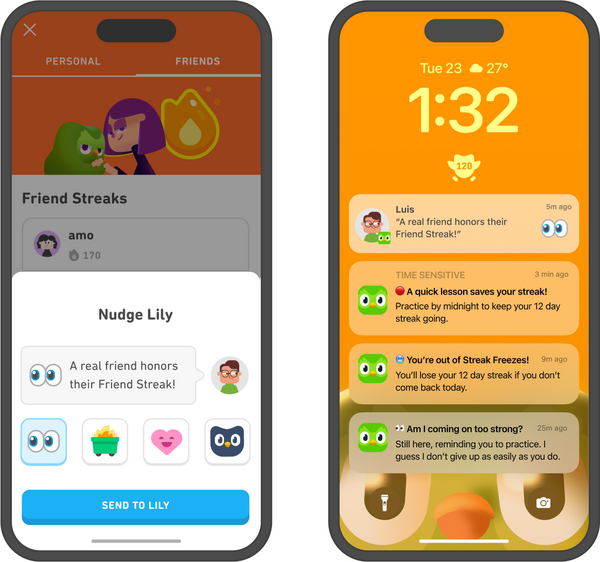
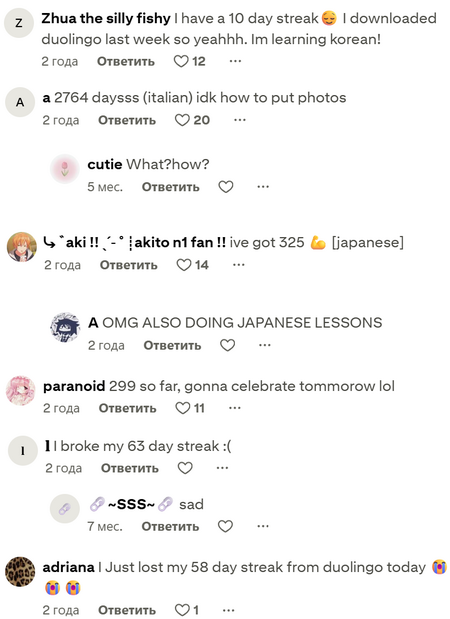
Friend Streak — Duolingo’s Latest Social Feature // User commentary on streaks on Pinterest.

The role of social participation is equally important. Many users interact with Duolingo beyond the learning platform itself. They comment on social media posts, create memes, share screenshots, discuss Duo’s behaviour, and participate in conversations surrounding the brand. Collaborations with franchises such as Genshin Impact further extend these interactions by connecting Duolingo to existing fan cultures.
These collaborations illustrate that Duolingo is not only competing with other educational platforms. On social media, it competes alongside creators, influencers, games, films, and entertainment brands that are all competing for audience attention. By embedding itself within popular online culture, Duolingo creates opportunities for interaction that go far beyond language learning.
People are often drawn to media that connects them with communities and identities that already matter to them. Duolingo benefits from this dynamic by linking language learning to broader forms of online participation. As a result, the brand remains relevant even in moments when education is not the audience’s primary motivation.


Duolingo × Genshin Impact collab // Comments under the official trailer on Duolingo’s YouTube channel.
Duolingo × «Squid Game» collab // А screenshot from Duolingo’s official YouTube channel.