
Communication Theory in the Field of Design
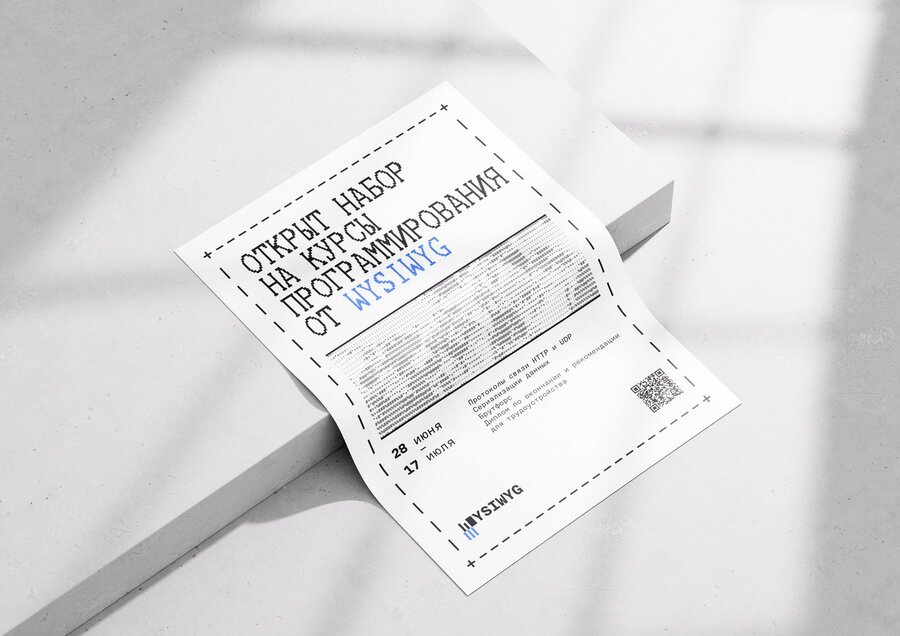
Design is often perceived as a visual or aesthetic activity, focused on form, style, and novelty. However, within contemporary culture, design functions primarily as a communicative practice. It produces meanings, frames interpretations, and shapes relationships between creators, audiences, and social contexts.
Communication theory allows us to move beyond an intuitive understanding of design and approach it as a structured process of meaning-making embedded in culture.
From a sociocultural perspective, communication is not a linear transmission of messages but a dynamic process in which meaning is constructed through interaction, shared symbols, and social norms. In this sense, design does not simply «deliver» a message; it participates in cultural dialogue. Visual language, typography, interfaces, and narratives operate as symbolic systems that audiences interpret differently depending on their experiences, values, and media environments.
One of the key challenges of contemporary design lies in the diversity and fragmentation of audiences. Digital media ecosystems encourage multi-screening, rapid content consumption and selective attention. Audiences are no longer passive recipients; they actively choose, reinterpret, and sometimes resist messages. The Uses and Gratifications approach helps explain this shift by framing audiences as goal-oriented participants who engage with media to satisfy specific needs, such as identity construction, social connection or entertainment. For designers, this means that communication strategies must account for audience motivations rather than rely on universal visual solutions.
Another important concept for understanding design as a sociocultural practice is dialogic communication. In contrast to one-way persuasive messaging, dialogic approaches emphasize interaction, feedback, and relationship-building. Brands and cultural projects that fail to acknowledge this dialogic dimension risk creating communication that is technically polished but socially ineffective. Design decisions — from visual hierarchy to tone of voice — can either open or close space for dialogue, influencing whether audiences feel invited into a relationship or positioned as mere spectators.
Semiotics further reinforces this perspective by framing design as a system of signs. Colors, materials, layouts, and visual metaphors carry culturally specific meanings that are not fixed but negotiated. A design choice that signals trust, innovation, or exclusivity in one context may produce entirely different interpretations in another. Communication theory provides tools to anticipate these interpretive gaps and design with cultural sensitivity rather than aesthetic assumption.
Finally, adopting a sociocultural view highlights the ethical dimension of design. Communication is never neutral: it reinforces certain values, norms, and power relations while marginalizing others.
By understanding design as a communicative act situated within culture, designers take responsibility not only for how things look, but for how they shape social interactions and collective meanings.
In this project, we approach design as a sociocultural communication system rather than a visual artifact. Communication theory serves as a methodological foundation that informs how meanings are constructed, how audiences are addressed, and how dialogue is facilitated. This perspective directly shapes the imaginary brand developed in the following sections and explains the need for differentiated communication strategies for general and professional audiences.
Presentation for a General Audience
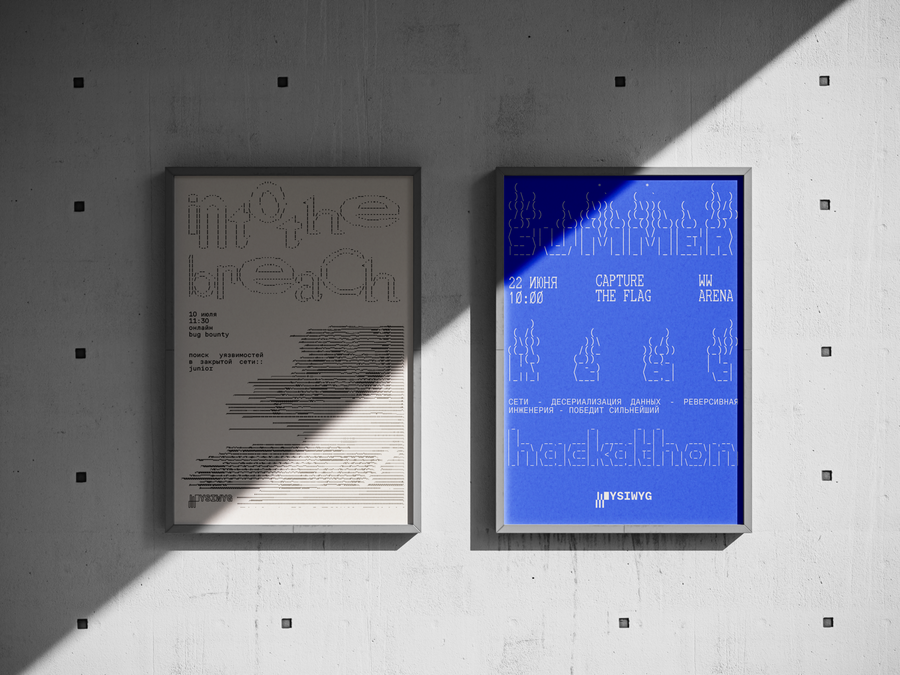

WYSIWYG is a hackathon format built on radical transparency. No hidden requirements. No unexpected technologies. No last-minute surprises.
What you see is exactly what you get.
Hackathons are often presented as opportunities for growth, networking, and experimentation. In reality, many of them function as black boxes. Participants arrive without fully understanding:
- the task format,
- the required technologies,
- the evaluation criteria.
Stories like these are common: you come motivated, ready to work — and only then discover that the task requires tools or languages you’ve never used.
Leaving early feels less like a choice and more like a failure.
For young developers, hackathons are not just competitions. They are social environments where self-confidence, reputation, and public image are at stake.
Unclear communication turns every participation into a risk.
WYSIWYG was created to eliminate this uncertainty.
We believe that transparency is not an extra feature — it is a form of respect. Before joining a hackathon, participants know what they will be working on, which tools are required, how their work will be evaluated.
Each WYSIWYG hackathon clearly communicates technology stack, difficulty level, task structure, judging logic.
Transparency gives participants agency.
You can prepare in advance, choose challenges that match your skills, decide consciously whether to participate.
No hidden complexity. No misleading promises.
When expectations match reality, anxiety decreases, confidence increases, participation becomes inclusive rather than competitive by default.
WYSIWYG uses glitch aesthetics and ASCII graphics to visually expose what is usually hidden.
Errors, systems, and processes are not masked — they are made visible.
WYSIWYG offers a hackathon experience without surprises.
Just clarity. Just honesty. Just the work.
Presentation for a Professional Audience
Professional audience: designers, educators, jury, communication specialists.
WYSIWYG is a communication-driven hackathon brand designed as a response to structural opacity in contemporary competitive programming events.
Communication challenge
Most hackathons rely on asymmetrical information distribution. Organizers retain control over task complexity, tools, and evaluation criteria, while participants are expected to adapt in real time. This creates a power imbalance and uncertainty.
For young developers, participation is tied to peer recognition, self-efficacy, professional identity formation. Communication failures therefore have social consequences. From a Uses and Gratifications perspective, participants are not passive recipients of challenges.
They engage with hackathons to: test competence, gain recognition, build social capital.
Opacity undermines these motivations.
WYSIWYG reframes the hackathon from a «test under uncertainty» to a transparent communicative system.