Contents
- Introduction
- Communication Channels
- Theoretical Framework
- Visual Analysis
- Conclusion and Recommendations
- Literature and Image Sources
*Instagram, Facebook and other Meta services are recognised as extremist organisations and are banned on the territory of the Russian Federation. This analysis refers to these platforms for academic purposes only, based on materials collected before any restrictions.

Logo LEGO
Research Concept
LEGO communicates mostly through pictures and videos. The brand has three different audiences: children, parents, and adult fans (called AFOL). Each group looks at the same posts in its own way. This allows us to see how the same visual techniques work differently depending on who is watching. ELM theory has been used in advertising before, but almost never for analysing ordinary social media posts. For LEGO this is especially important because the brand speaks to people through images rather than long texts.
The analysis uses official LEGO posts from Instagram, TikTok and YouTube over the last twelve months (June 2025 to May 2026). It also includes reposts of fan creations and comment threads. The sample was chosen on purpose to cover central cues (piece counts, technical diagrams, educational claims) and peripheral cues (franchise images, beautiful photos, humour, family scenes, social proof). Critical comments, or the lack of them, are also included to check how the brand responds. Every screenshot has a link to the original post.
LEGO’s visual communication uses both routes of persuasion from ELM at the same time, the central route and the peripheral route. Different audiences get different gratifications from the same post, which fits U&G theory. Peripheral cues bring many likes and shares but shallow processing. Central cues bring fewer likes but more thoughtful comments and long‑term loyalty. When LEGO ignores price criticism, it hurts persuasion for parents and AFOL, who are the ones willing to think carefully. All five U&G gratifications (information, entertainment, social integration, personal identity, escapism) are covered by different types of content.
The analysis moves step by step. First comes an introduction to the brand. Then the communication channels. Then the theory. Then a case‑by‑case visual analysis with screenshots. Then a comparison of how the two routes work. Finally, a conclusion with three practical recommendations. Each analytical slide has a screenshot and a short explanation. The explanation names the dominant route and the main gratification.
The main sources are Petty and Cacioppo (1986) for ELM, and Katz, Blumler and Gurevitch (1973) for U&G. Contemporary adaptations include Allison et al. (2017) on ELM in crowdfunding and Dias (2016) on U&G in multi‑screening. Quotations make up less than 20 percent of the concept text. Almost everything is written in the author’s own words.
Introduction
LEGO was founded in 1932 in Billund, Denmark. The founder, Ole Kirk Christiansen, was a carpenter. His small workshop later grew into a global company. The name LEGO comes from the Danish words «leg godt», which means «play well». This name shows how much the brand values play. Today LEGO sells products in more than 130 countries. Its yearly revenue is over nine billion dollars. About 28,000 people work for LEGO. The product range goes from simple four‑brick sets for toddlers to complex Technic models with thousands of pieces.
LEGO’s mission is «to inspire and develop the builders of tomorrow». It rests on three things: creativity for its own sake, learning through play, and high quality with safety. The last one really matters to parents. LEGO wants to be for everyone. Their slogan «for everyone who loves to build» includes adult fans, called AFOL.
LEGO’s audience splits into three groups. Kids aged 4 to 12 want fun, creativity, and to enjoy themselves. Parents decide what to buy; they care about educational value, safety, and how long the toy lasts. AFOL (18+) want mastery, community recognition, and to feel like real builders. For them, LEGO is a hobby, a status symbol, and an escape from routine.
LEGO organises its products into families. LEGO City is urban role play for younger kids. LEGO Technic focuses on gears, pneumatics, and motors. LEGO Creator lets you build three things from one set. Licensed sets like Star Wars, Harry Potter, and Marvel use people’s love for movies. LEGO Architecture turns famous buildings into collectibles for adults. LEGO Ideas is a crowdsourcing platform where fans submit designs. If a design gets 10,000 votes, LEGO may produce it, turning consumers into co‑creators.

LEGO Reels, instagram
LEGO operates in a competitive landscape that includes traditional toy manufacturers and digital alternatives. Mattel (Barbie, Hot Wheels) and Hasbro (Nerf, Monopoly, Transformers) offer similarly priced products but lack LEGO’s systemic interoperability. A brick from 1965 still fits a brick from 2025. Playmobil provides comparable construction play experiences but without the same licence driven cultural saturation. More significantly, digital platforms such as Minecraft and Roblox compete for children’s discretionary time by offering infinite virtual construction without physical mess. LEGO’s sustainable competitive advantage rests on three assets. These are premium perceived quality, a strong portfolio of intellectual property partnerships, and a deeply engaged AFOL community that generates free user generated content.
LEGO’s visual identity is one of the most recognisable in the consumer goods industry. The logo, a red square with rounded corners enclosing the white or yellow wordmark «LEGO», has remained substantially unchanged for over five decades. That long life gives it considerable brand heritage. The primary brand colours are red, yellow and white. They are applied consistently across packaging, retail environments, and digital assets. Beyond the logo, the LEGO brick itself functions as an iconic signifier. The studded rectangle instantly communicates the ideas of building, play, and Danish design quality without any accompanying text. This visual consistency reduces cognitive friction for the audience and amplifies peripheral persuasion cues.
LEGO therefore presents an ideal case for analysing visual communication strategies through the dual lens of the Elaboration Likelihood Model (ELM) and Uses and Gratifications Theory (U&G). The brand has a long history, segmented but overlapping audiences, and abundant visual output on several social media platforms. This allows a systematic investigation of how different types of images, videos, and comment interactions produce different persuasive outcomes. The following sections first map LEGO’s channel presence, then articulate the theoretical framework, and finally apply that framework to concrete visual examples.
Communication Channels
LEGO website, main page
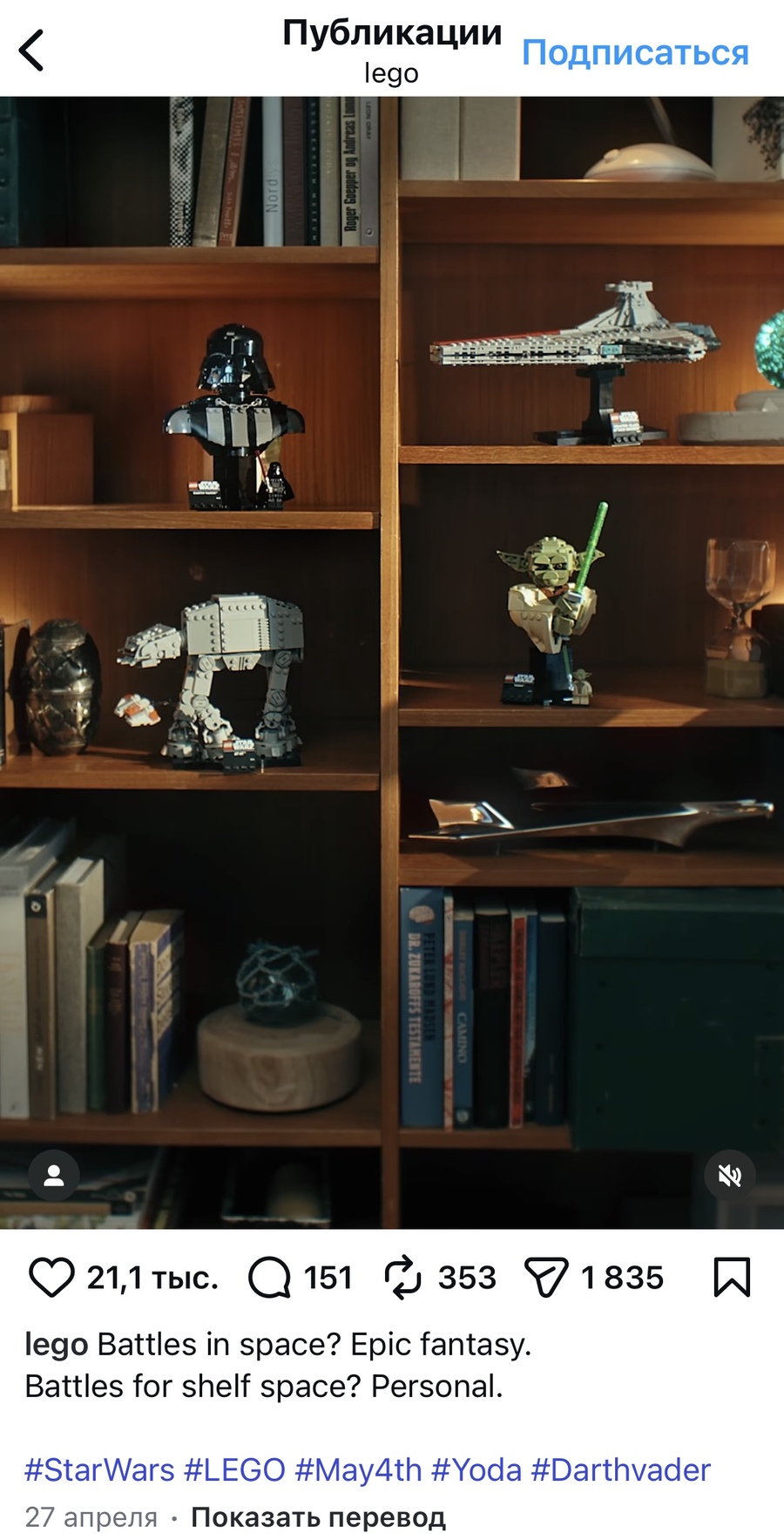
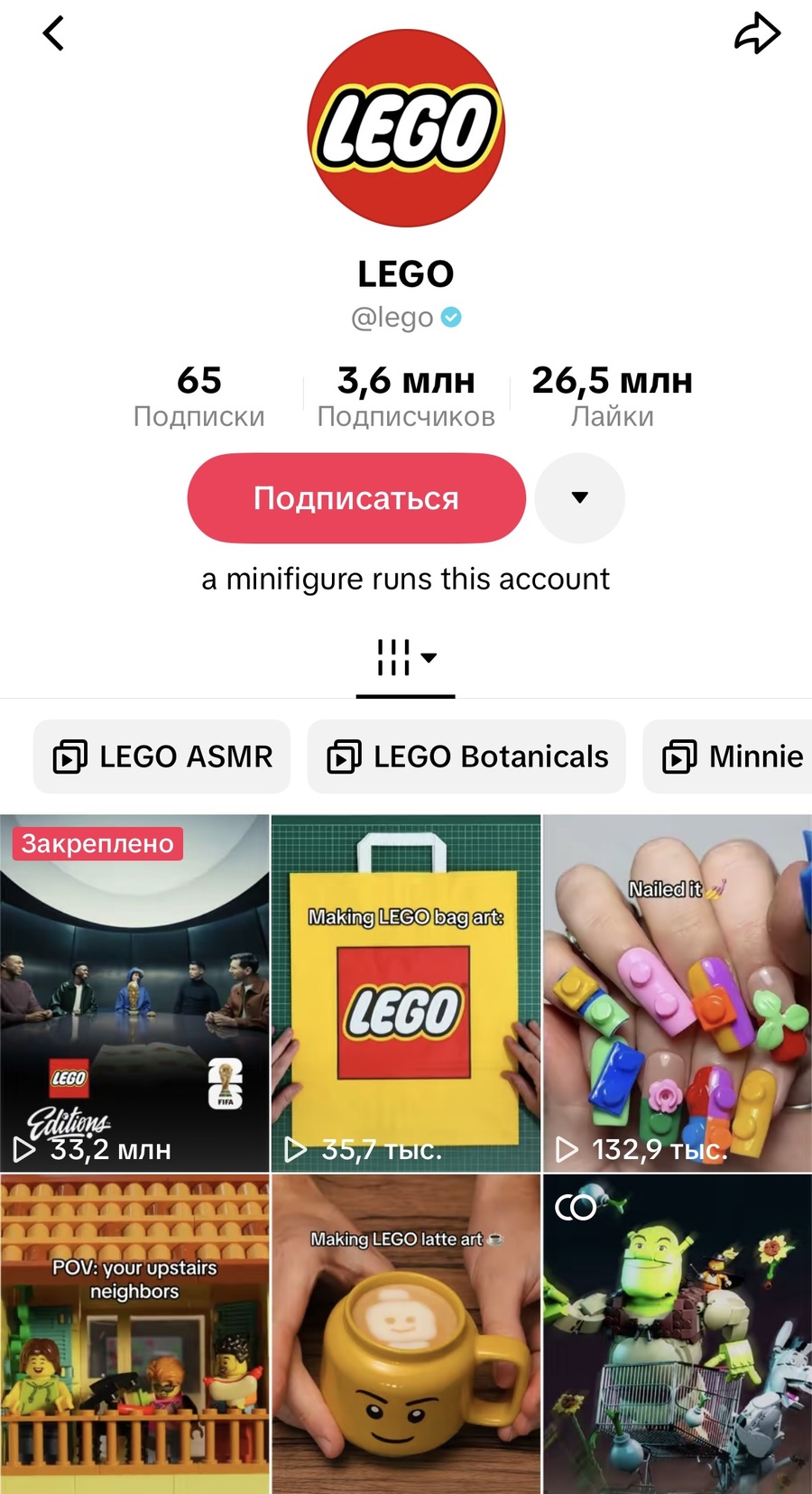
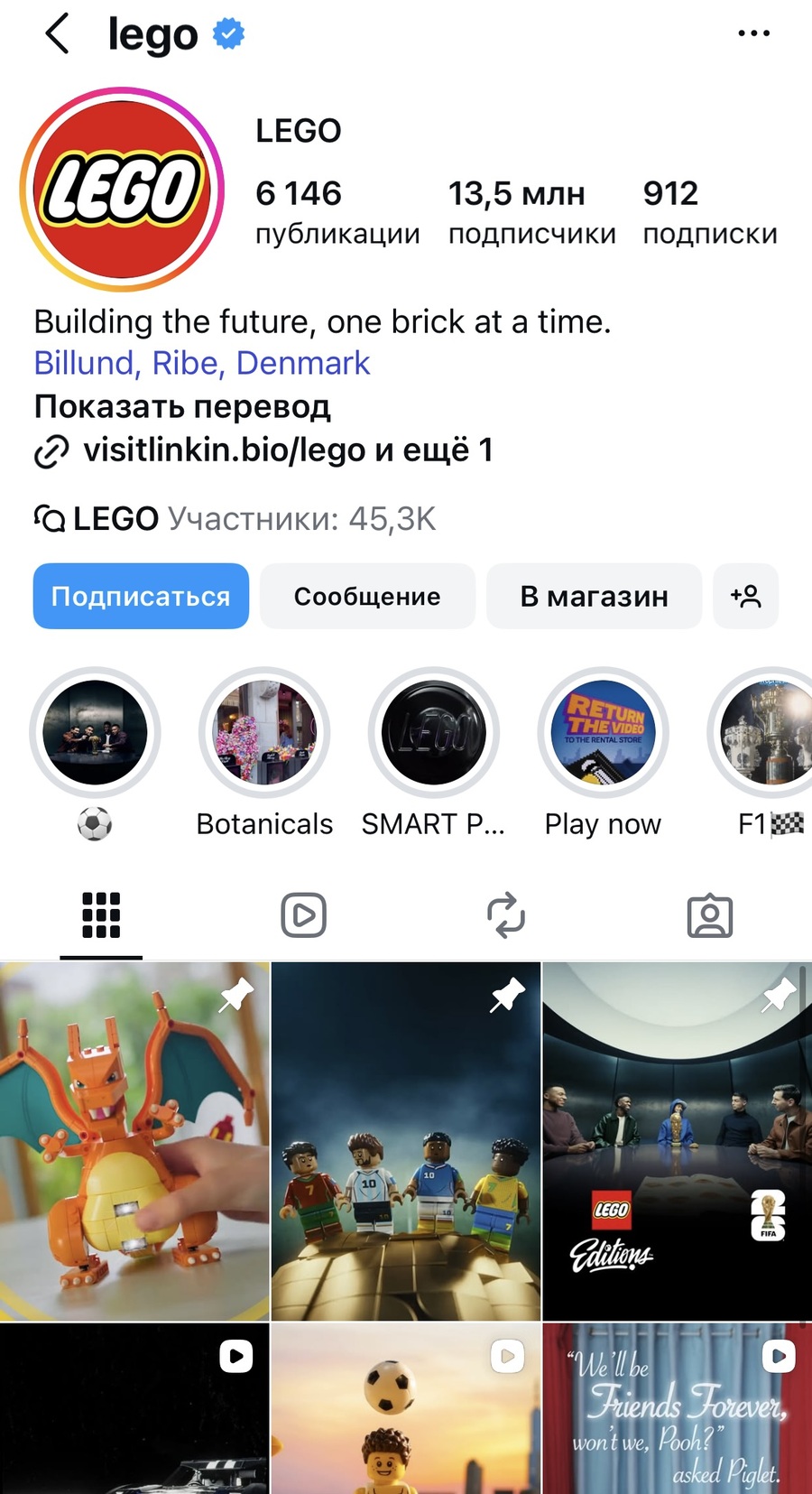
LEGO is on Instagram, they have 13,5 million followers. They post nice photos, Reels, and repost stuff fans make. They use hashtags like #LEGO to help people find things. Their style is kind of easy to spot, you know, bright light, the bricks are super sharp and clear, and the background is simple and plain.
On TikTok, LEGO has about 3,6 million followers. There, they don’t really focus on product details. They go for fun and viral stuff instead. They post build timelapses, challenges, memes with mini figures, and behind‑the‑scenes clips.
YouTube is different. LEGO has 21,7 million subscribers there. Their content can be split into animated series, product reviews, and interviews with designers. They also upload clips from LEGO Masters, which is a building show that airs in more than 25 countries.
LEGO TikTok, main page and LEGO instaram, main page
LEGO YouTube profile
LEGO has its own website, LEGO.com. You can browse products, buy stuff, and download building instructions there. There is an app called LEGO Life, which is meant to be a safe place for kids under thirteen. Another app, LEGO Builder, gives you instructions with augmented reality. Then there is LEGO Ideas. People submit their own designs, and if a project gets 10,000 votes, the company might actually make it. As for PR, the brand works with Disney, Warner, and Universal. The LEGO Foundation gives grants for learning through play. There is a TV show called LEGO Masters. And there is a network of Certified Professionals, adult builders who get official recognition and promote LEGO for free.
So, LEGO runs a fully connected multi channel strategy. Instagram and Facebook focus on visual inspiration and community management. TikTok spreads awareness through viral videos, especially among younger people. YouTube gives depth to the most loyal fans. Owned platforms like LEGO Ideas and LEGO Builder get users more involved through co creation and useful tools. PR keeps a steady flow of news and excitement about new licences. Each channel has its own job, but they all speak the same visual language. That makes the brand feel consistent even on very different platforms.
This analysis uses two theories that work well together. ELM (Petty and Cacioppo, 1986) explains how LEGO persuades people. It shows what mental processes different kinds of visuals trigger. U&G (Katz, Blumler and Gurevitch, 1973) explains why people follow LEGO on social media. It tells what psychological needs the content meets. Together, they cover both sides. The supply side, meaning brand strategy. And the demand side, meaning audience motivation.
Theoretical Framework
The LEGO Brand Framework, website
The Elaboration Likelihood Model says there are two very different ways that people get persuaded.
The first is the central route. Here, people really think about what they see or hear. They look at facts, numbers, logic, and product details. This kind of persuasion sticks. It lasts a long time and is hard to change.
The second is the peripheral route. Here, people do not think too much. They use simple clues. For example, they might like a post because a celebrity is in it, or because the music sounds nice, or just because they recognize the logo. This kind of persuasion is weaker. It depends on the situation and does not last long.
Which route someone takes depends on two things. First, their motivation. Does the topic matter to them personally? Second, their ability. Do they have enough knowledge and attention to process the message? If both are high, the central route wins. If either is low, the peripheral route takes over.
The LEGO Brand Values, website
Let me explain this without a diagram. Just imagine two people. One is a parent choosing a gift for their child. The parent cares a lot. The price matters, and the child’s happiness is at stake. The parent also knows a bit about LEGO. So they will read a post carefully, think about the arguments, and form a strong opinion. That is the central route. Now imagine a kid scrolling through TikTok after school. The kid is not planning to buy anything. They are half distracted. They will just react to bright colours, funny movements, or a familiar face. That is the peripheral route. The change in their attitude will be weak and may not last. This two‑route idea has been tested in hundreds of experiments. It works for advertising, health messages, and even politics.
What does this mean for LEGO? Central route cues are things that give real, checkable information. The viewer has to think.
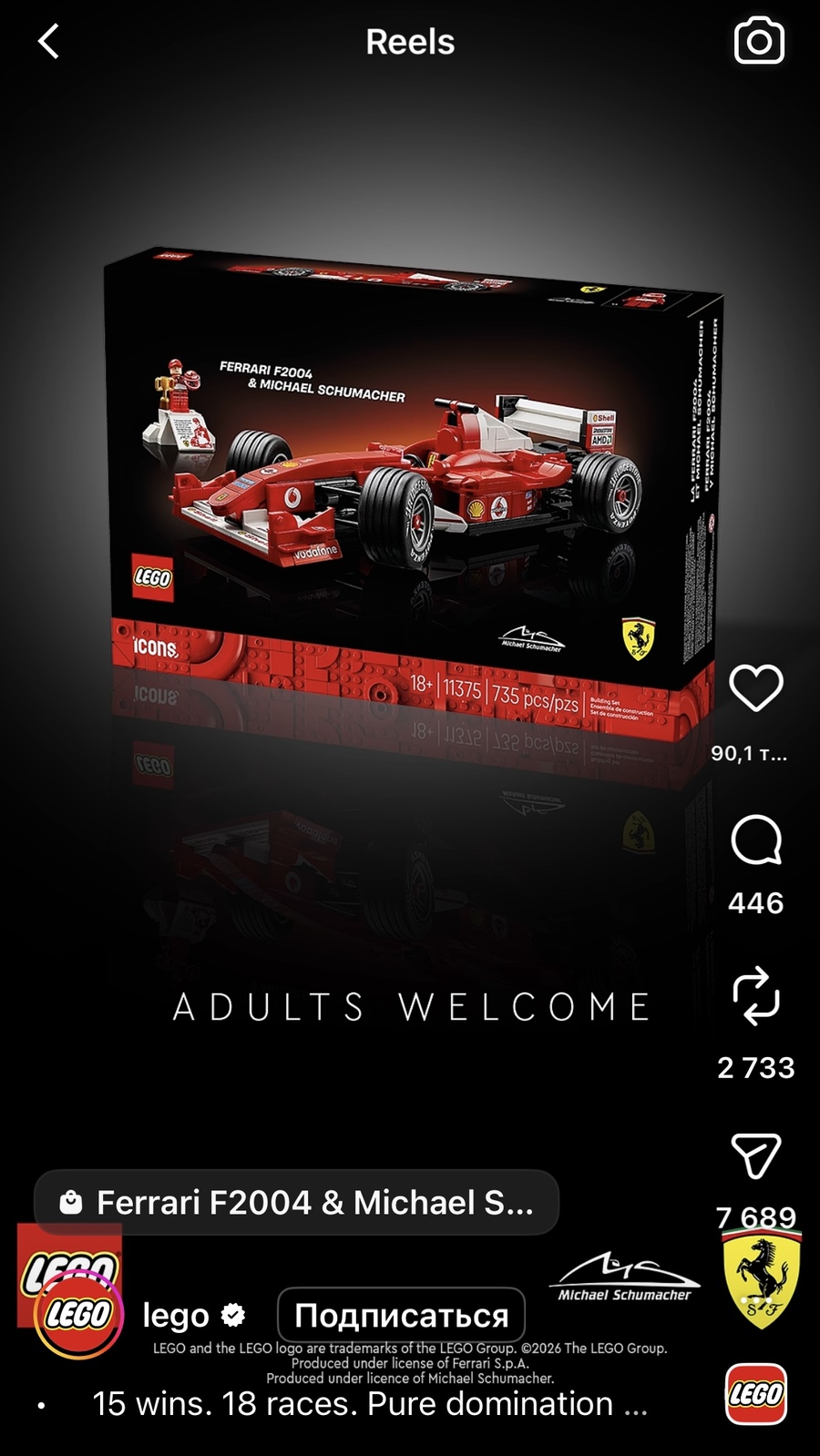
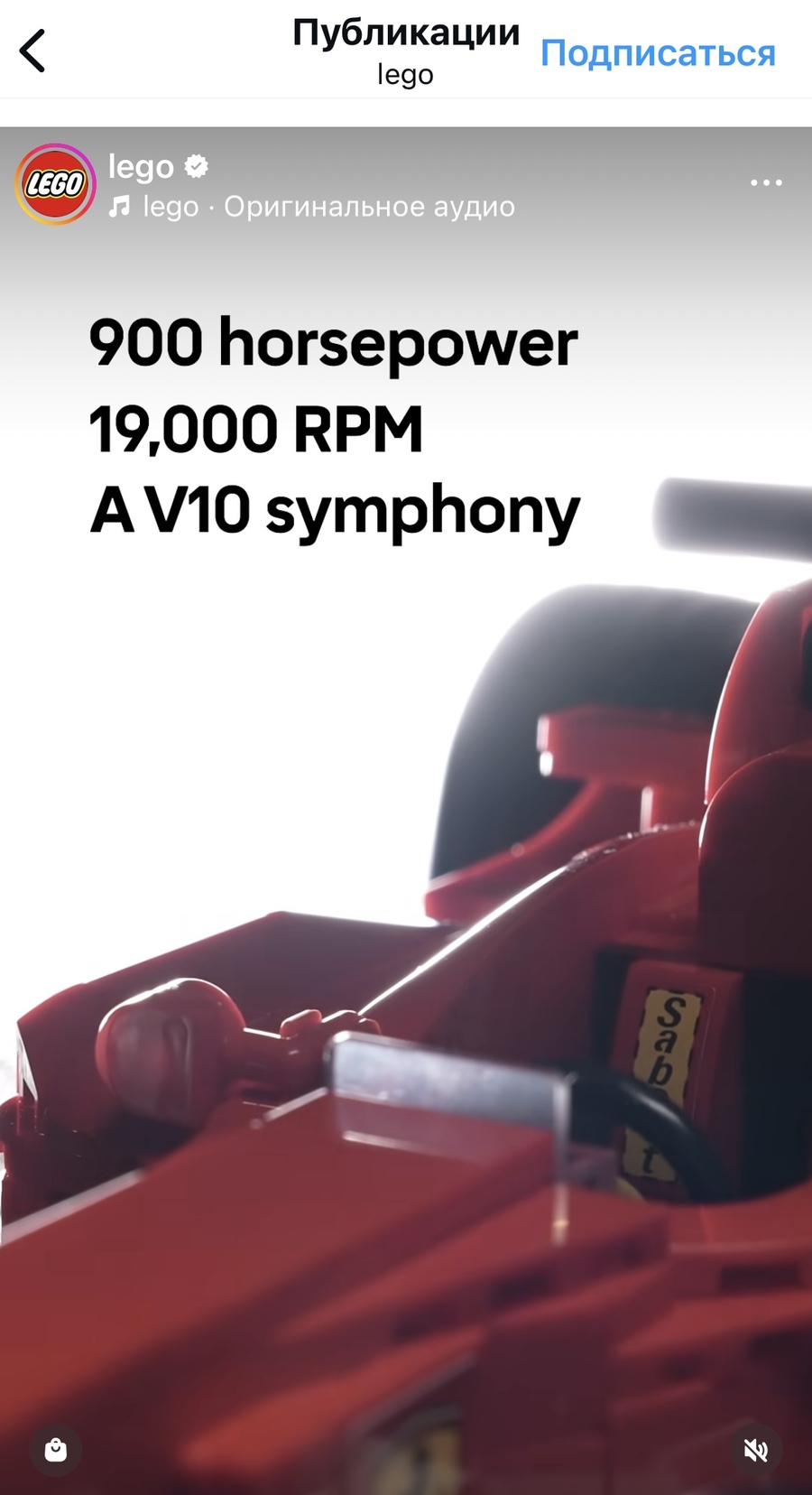
For example, LEGO posts the exact number of pieces on the box and on Instagram. Something like «2,807 pieces». They make technical videos that explain how a Technic gearbox works. They quote research that says «LEGO play improves spatial reasoning». They compare models and say «30% more engineering detail than the previous generation».
These cues are for people who are highly motivated. That means adult collectors who check every spec before buying. And parents who want proof that LEGO is good for their child’s learning.
LEGO Reels, instagram
LEGO News, Partnerships, website
Peripheral cues, by contrast, operate without requiring substantive argument processing. LEGO extensively deploys the following. Franchise images of Star Wars or Marvel characters create positive affect through mere exposure. Aesthetically polished photography of completed builds triggers pleasure in visual form. Humour and surprising animations on TikTok induce positive mood, which then transfers to brand attitude. The mere presence of the LEGO logo serves as a heuristic for quality and safety. Reposts of user generated content act as social proof. The implicit reasoning is that if other people, not just paid actors, enjoy building this, then it must be worthwhile. These cues effectively address low motivation audiences, such as children attracted by colourful characters, casual browsers, and followers seeking momentary entertainment rather than purchase information.
Uses and Gratifications Theory departs from earlier media effects models by assuming an active audience that selects media content purposefully to satisfy specific psychological needs. The five core gratifications, as consolidated from Katz, Blumler and Gurevitch (1973) and subsequent research, are as follows. Information means acquisition of news, knowledge, or product details. Entertainment means pleasure, relaxation, or escape from routine. Social integration means a sense of belonging to a community or being connected to others. Personal identity means reinforcement of self image, values, or aspirations. Escapism means temporary diversion from daily stress or boredom. In the context of brand related social media consumption, a single post can simultaneously satisfy multiple gratifications for different viewers.
If you look at the LEGO audience, kids want entertainment and escapism. Women’s parents are guided by educational values and safety. AFOL strives to be an experienced builder and belong to a global community of fans. Casual viewers follow LEGO for entertainment, as the build video works as a digital antistress.
ELM explains the mechanism of persuasion, you know, the central and peripheral processing. It says that the same message can be processed differently by different people depending on their motivation and ability. U&G explains why someone would want to engage with content in the first place, like why would someone scroll through a brand’s Instagram feed or subscribe to a YouTube channel. If you look at both theories together, when a LEGO post satisfies a strong need, for example a parent’s need for educational information, that need also makes the parent more motivated to pay attention to the message. So that pushes persuasion toward the central route. On the other hand, when a post is just for entertainment, motivation stays low, and the peripheral route takes over. So the type of gratification affects elaboration likelihood, and elaboration likelihood affects how durable the attitude change will be.
The following analysis proceeds case by case through concrete visual examples from LEGO’s social media channels. Each example is accompanied by a screenshot and a brief interpretation. The interpretation identifies the dominant persuasive route, central, peripheral, or mixed, according to ELM and the primary gratification or gratifications according to U&G.
Example 1. Central route — Technic specifications post
So this post works through the central route. It basically just gives you real facts. Like the exact number of pieces, and it is often over two thousand. Then the type of motor. Sometimes they even put a diagram of how the gears work. You really have to stop and think to get it. Who is this for? Mostly adult collectors and teenagers who are into technology. They care because this set costs a lot of money. And they already know basic mechanical terms. So they read everything carefully. What do they get from it? Information. Just numbers and specs that help them decide whether to buy or not.
Visual Analysis
LEGO YouTube, educational video «LEGO Creativity at Home Workshop with Bindi Irwin»
Example 2. Central route — educational video
This one is for parents who want to know if a toy actually helps their child, so the video shows real reasons why LEGO teaches useful skills. Parents pay attention because they care about where their money and time go, and what they get is proof that building stuff helps kids think and move better.