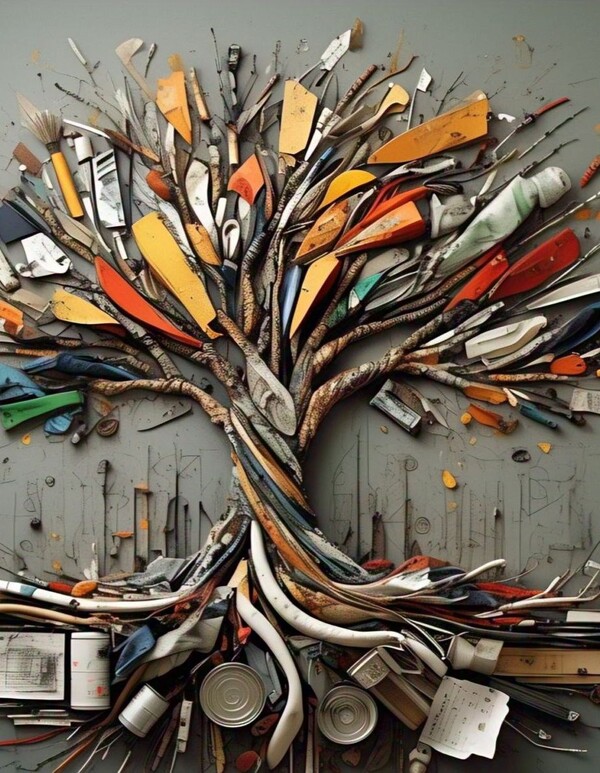
In the book «Creativocacy vs. Eco-Art», discarded materials do not mourn their fate, they rise anew, reborn as symbols of resilience, activism, and transformation. This book is not merely an exploration but a manifesto, a journey into the heart of eco-art, where waste is not an endpoint but a beginning. It beckons readers into a world where art is not simply observed, it is felt, lived, and wielded as a force of change. Has there been a true fusion of art and sustainability? Yes or no? If yes, how? If not, how can it be realized? These questions echo through each chapter like a refrain, guiding the reader from the roots of creativocacy, where art and advocacy merge to the vast landscape of recycled materials in artistic expression, where forgotten fragments of life are reimagined as agents of beauty and activism.
The structure mirrors the very materials it celebrates — a cycle of reinvention. From the opening chapter, Introduction to Creativocacy, where art is unveiled as a catalyst for action, to The Material Revolution, which breathes life into remnants of industry and excess, each section is a mosaic of stories, movements, and inspirations. In The Rise of Eco-Art and Its Movements, artists emerge as modern-day alchemists, turning waste into wonder. El Anatsui’s sprawling work, woven from bottle caps and discarded metal, challenge our perceptions of value. Olafur Eliasson’s Little Sun is more than art; it is a light in the hands of those left in darkness. Every chapter teems with such testimonies of transformation, proving that art does not merely reflect the world, it reshapes it. As the narrative unfolds, Community Engagement Through Eco-Art brings the reader to the streets, where murals rise from forgotten walls, painted by many hands, where art becomes not an individual’s creation, but a collective awakening. Socio-Ecological Innovation in Artistic Practices dares to ask, what if art did not consume, but sustain?