Motivation letter
My name is Chelbaeva Ekaterina. I graduated from the HSE School of Design in July 2025 under the <nbsp; management of <laqua; Design of Clothing». For studied design, material science, work with textile, basic jewelry and subject design. This wide range of disciplines has allowed me to truly sink into the different design aspects of — from conceptual thinking to technical implementation. In the study frame I created more than 12 mini collections, each of which addressed unique challenges — from work with color, form to creation of images on basic DNA of the brand or the principles of the apsaikling. Through these projects, I was more interested in functionality, sustainability, and applied design potential. It is in the the process of these studies that I realized that I want to move in the side of the more substantive, tangible design — where the shape meets the function, and the function, and the esthetics — with real life. By chance, I was on a second course in the course in the course in the second course in the second year; optional course in the last year in the year in which I worked as an assistant to the head of the lab. Many of my subsequent projects were born on the base of the lab. I’ve been working with the laser sharp, CPU-star, plastic processing, and scissor casting, and also doing research on the developing bioskins from the medicosomics. The experience at the laboratory was a turning point for me: it allowed me to combine my interest in science and technology with designer thinking formed in fashionable environment. I’ve learned that the intersection of science and the design of — that’s exactly what the space is in which I’m interested in developing. And in in this sense, subject design became a natural extension for me, and not a laughing direction.


Photo by Leonid Hudchenko
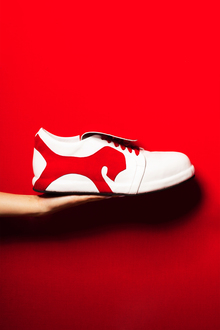
Despite to that my past projects were connected to the first line with the model, I’m increasingly focusing on the application value of products. I’m interested in designing things that aren’t just create images, but and become part of the day-to-day routine of — be it’s shoes, glasses, bags, or other functional objects on fashion binding and industrial design. I’m gonna take the admission to the the master’s program as the next logical step. I’m close to the HSE educational environment, which I’ve already developed as a designer: cross-disciplinaryity, experiments, and critical thinking are encouraged. I’m confident that I can combine experience in clothing design with new knowledge and substantive design tools — to create unique, functional and sustainable solutions. In the farthest I have wanted to create my own design laboratory — space on fashion, science, and technologies. I am familiar with the idea of working with other designers, engineers, and researchers to develop products, and future products — both aesthetically expressive, and practical.
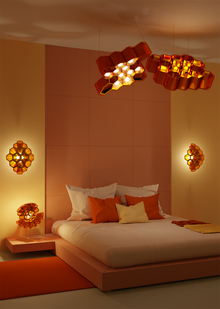
Mutual/biomaterials
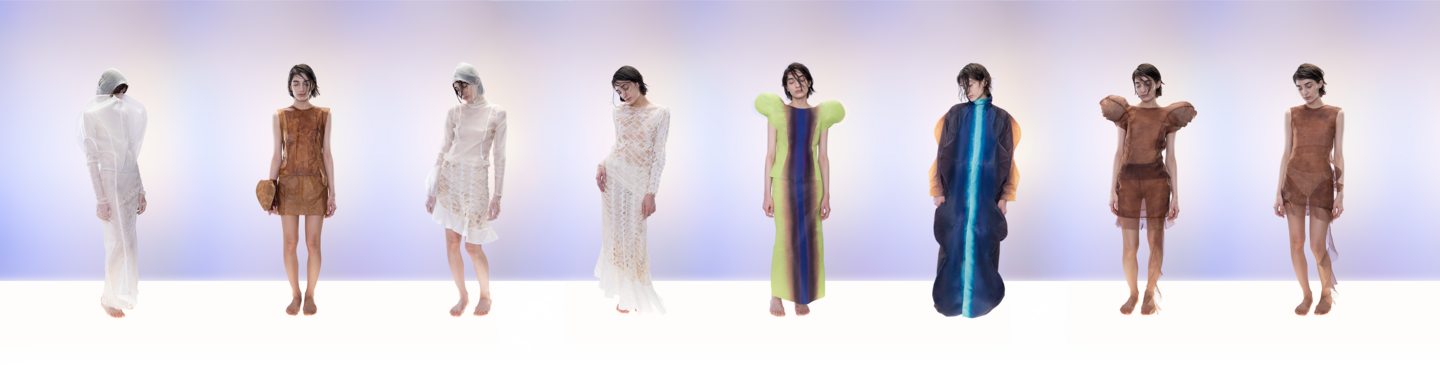
The project turns to the idea of life as a continuous process — without beginning and the end where destruction becomes a form of birth. Death in that context ceases to be the final point, turning into `nbsp; transition — into part of the general cycle that binds all living things. Based on research in bio-art areas, the project revises the boundaries between man, nature and technology. The collection rejects the anthropocentric view, in which man is an autonomous and dominant figure. Instead, a different perspective is offered: man — one of the components of a common system where organic, synthetic and digital exists in interconnects.


Photo by Leonid Hudchenko
Research activities covering biomaterials, saens-arta, and also the practical process of growing bioskins on the basic medusomics (combuchi) have become an important component of the diploma collection. This phase of work has provided valuable experience in interacting with unique, non-standard material requiring a case-by-case approach. In the process has been performed on numerous experiments, including aeration, color change, stamina, and also the search for effective and esthetic ways of connecting material fragments.


Laser cutting has become an equally important part of the work. The process included graphic search, experiments on drawing different materials, and work with shapes. It is important to note that laser cutting fundamentally changed the properties of the tissue and its behaviour, which in turn affected the shape formation of the object.
The collection shows how modern clothing can exist as an independent object for the use of innovative materials and production methods. Biocosage, laser cutting and prints on technical tissues not only expands the shape and product invoice, but and create a new visual language that goes beyond definitions of the traditional function of clothing, proposing the interpretation of the object as an art object.


curator: Maria Klavevsky
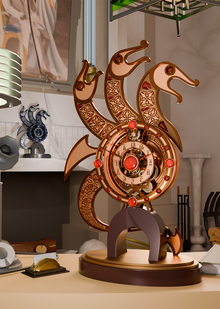
Connected / Working with metal
The project is based on rethinking the scientific theory of quantum complexity — a phenomenon in which two particles remain connected regardless of their distance. This idea came up in the foundation of artistic research, in which the language of physics becomes a metaphor for talking about human relationships, memory, and invisible threads linking us to each other. Working on the project has become a way for me to combine the scientific perception of the world with the personal reflections of the world’s proximity, separation and unity. It reflects my interest in the inter-disciplinary approach — at the intersection of art, philosophy and science, — a also the desire to create objects that do not only perform an aesthetic function, but and transmit meaning, trigger a response, tell a story.


Process


Photographer: Artem Shamraev
curator: Slava Fomin
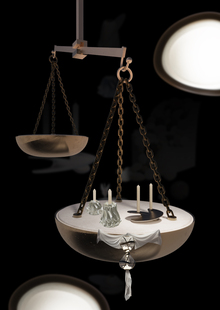
InseCURE/Shlicker Leather
The project draws attention to nbsp'; the feeling of insecurity and nbsp; the unsatisfaction that goes through as a lockdown or sanctuation. The process is becoming a metaphor for transformation: from soft, variable and living — to hard but fragile. The central place is the body, which often becomes a source of uncertainty for women. This is related to the pressure of social standards of beauty imposed by culture, media, and public opinion. Under these conditions, the body is perceived not as living and as unique experience, but as an object that must meet external expectations.
Process


curator: Anton Artemchuk