
Introduction Positioning and target audience
Pane is a casual athletic footwear brand founded in China in 2022 by designer Chen Ning. In today’s market, the brand serves as a deliberate counterweight to global sportswear conglomerates that compete through the use of provocative shapes, neon colorways and digital futurism.
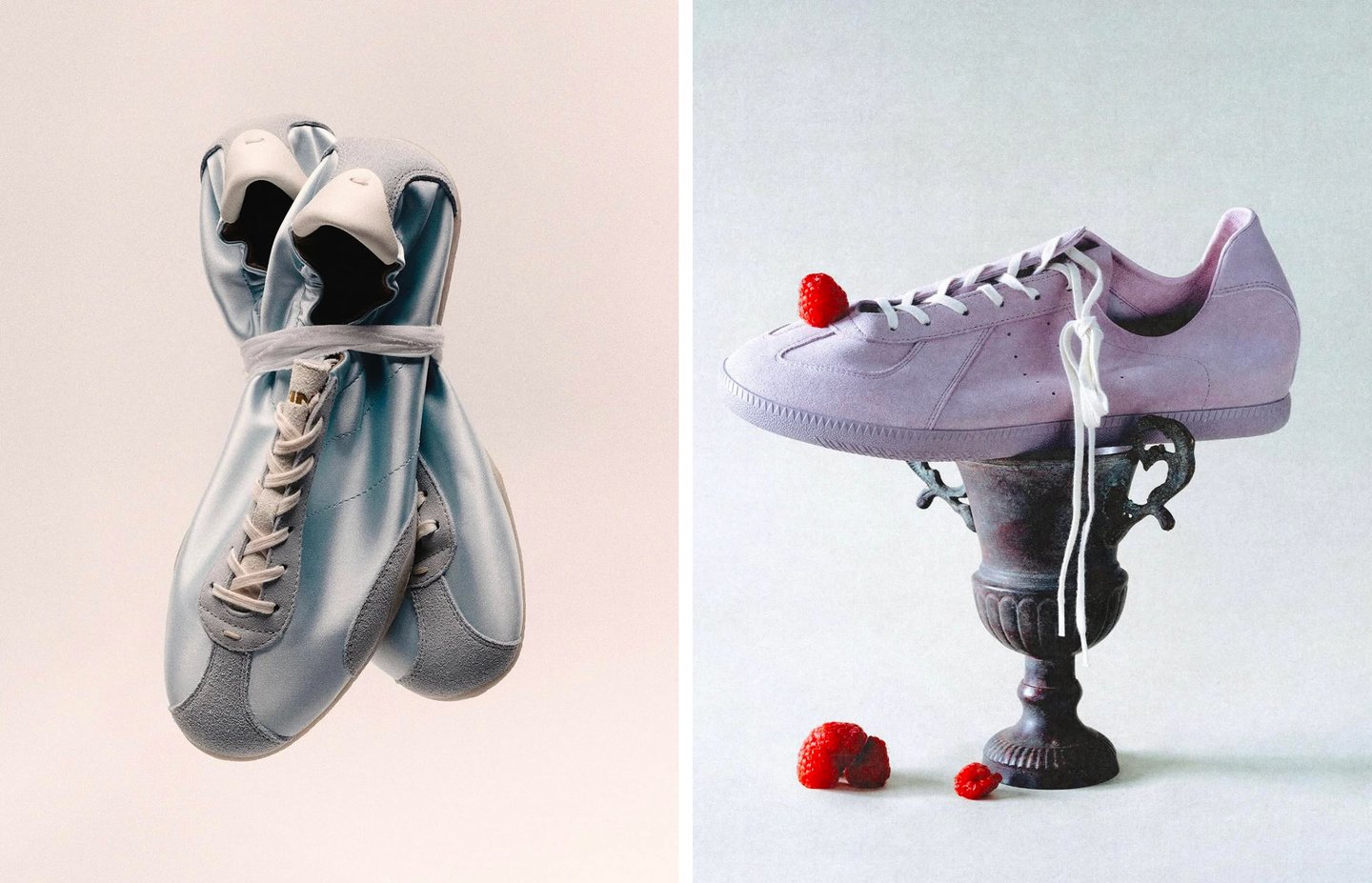
Pane Zephyr Training Pouching Series, 2025 / Pane Light Training NO-GI Series, 2025
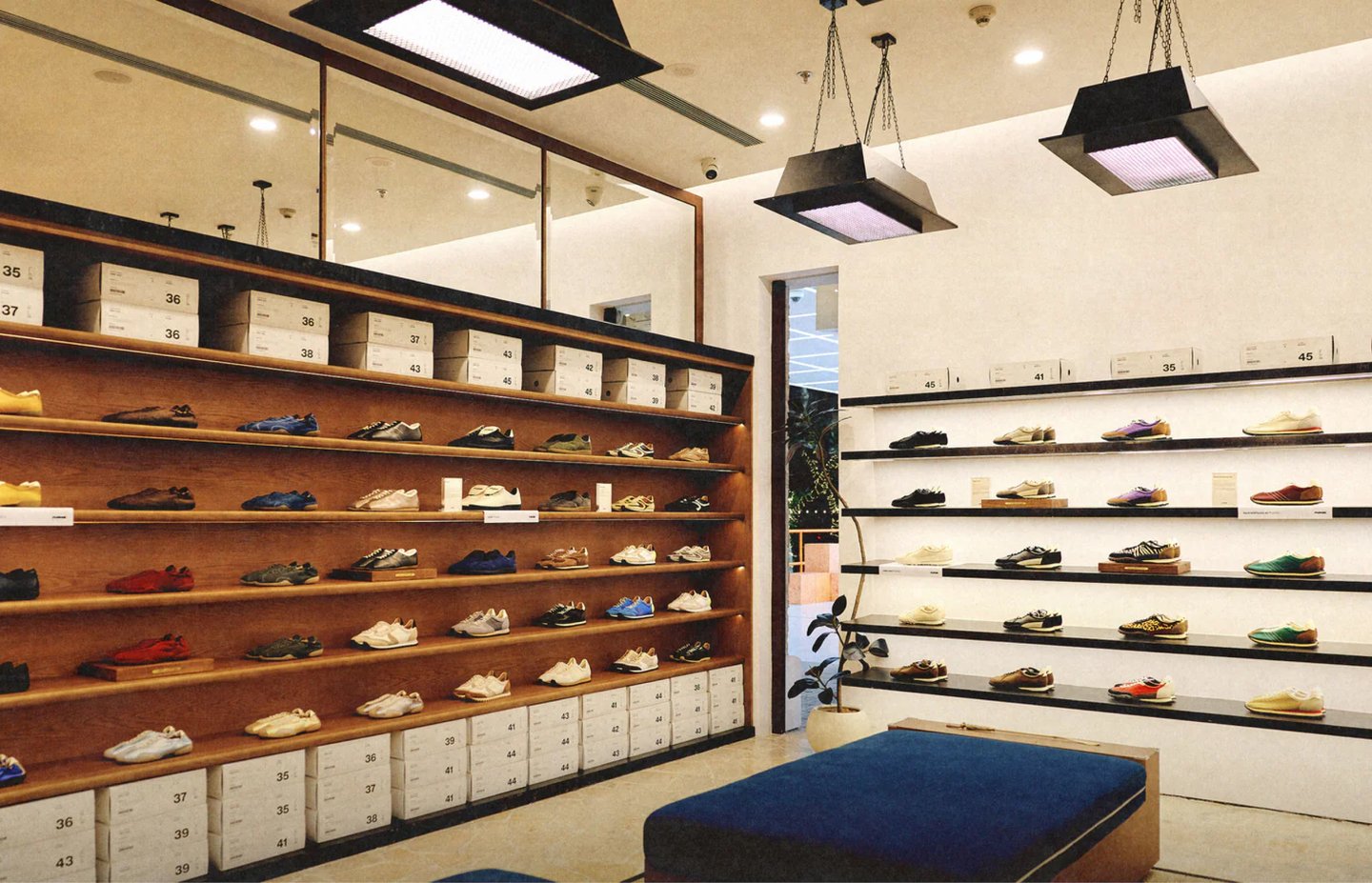
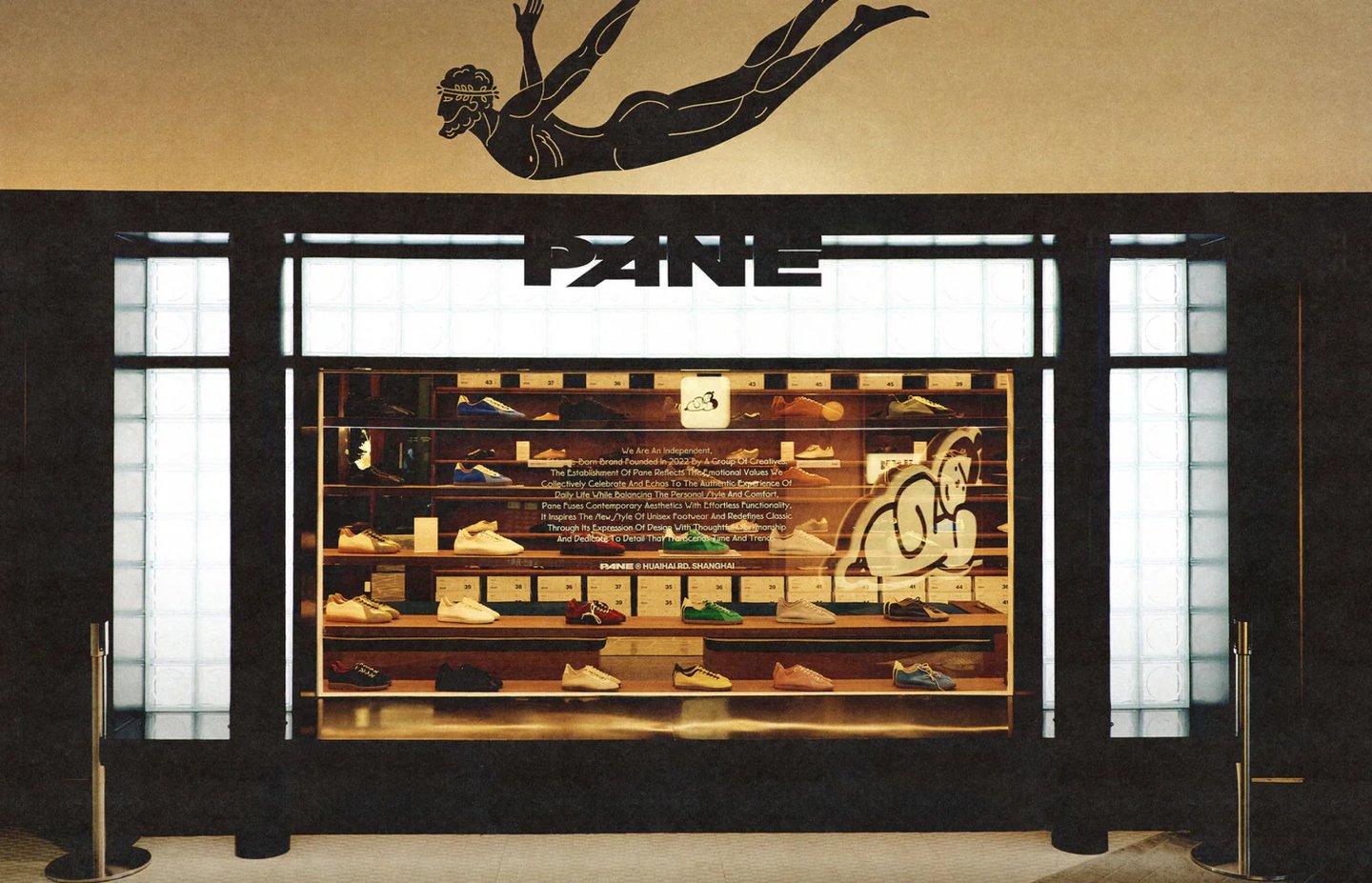
Pane Huaihai Rd.Shanghai, 2026
The visual concept of Pane is built at the intersection of three directions: classic men’s tailoring, the fluidity of contemporary dance and vintage sports of the 1970s and 1980s. The brand’s founder spent over a decade creating bespoke men’s suits and transferred this experience into footwear production. From the art of tailoring, the brand adopted an attention to neat stitching, clean lines and the geometry of pattern cutting. Pane sneakers feature precise proportions and an elegant, elongated toe shape, making them visually closer to dress shoes than to bulky athletic footwear. The brand balances this rigidity with the fluidity of dance, focusing on the anatomy of the human body, alongside the archival aesthetics of track and field, squash and varsity rugby. The result is a hybrid: the footwear possesses a refined classic silhouette while providing the foot with natural flexibility and freedom of movement.
Pane Bag, 2025 / Pane Pace Nostalgia Sweet Spot, 2025
Pane Beijing Sanlitun, 2025
The philosophical foundation of the brand is ancient Greek culture and the classical ethos, with the manifesto «Behave as mortals» serving as its key motto. This call carries a reminder of the fleeting nature of time, the acceptance of human limitations, and the value of an authentic earthly life. True beauty lies not in the pursuit of unattainable divine perfection or fleeting popularity, but in the awareness of one’s own nature and the unique moment of the here and now.
This slogan unites European antiquity with the Eastern principle of wabi-sabi, proclaiming the acceptance of time and naturalness. The natural materials of the footwear are meant to age gracefully through wear, which is why light creases and patina are considered signs of a piece’s uniqueness rather than defects, while the true nature of humanity is contrasted against soulless digital perfection.
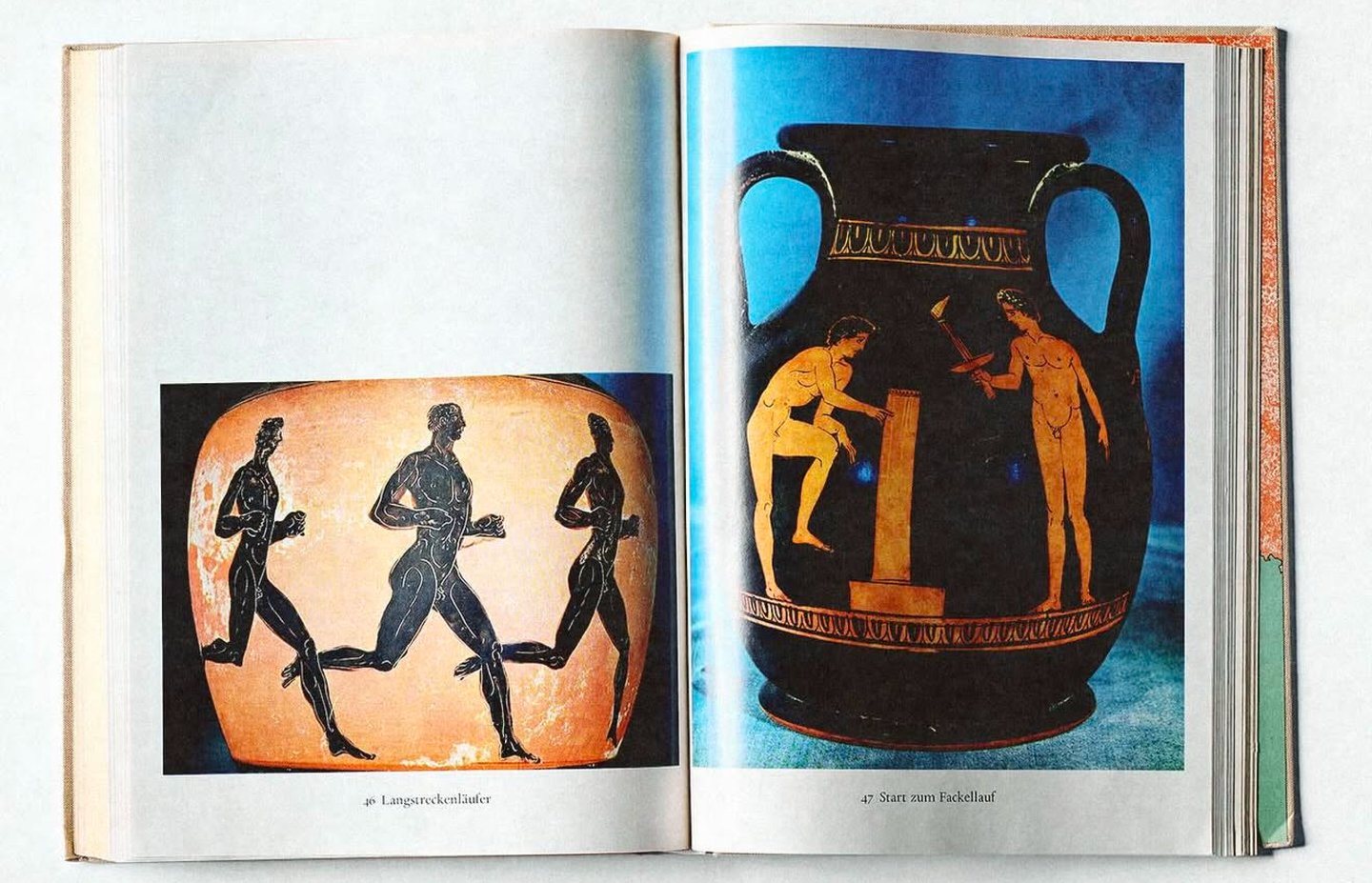
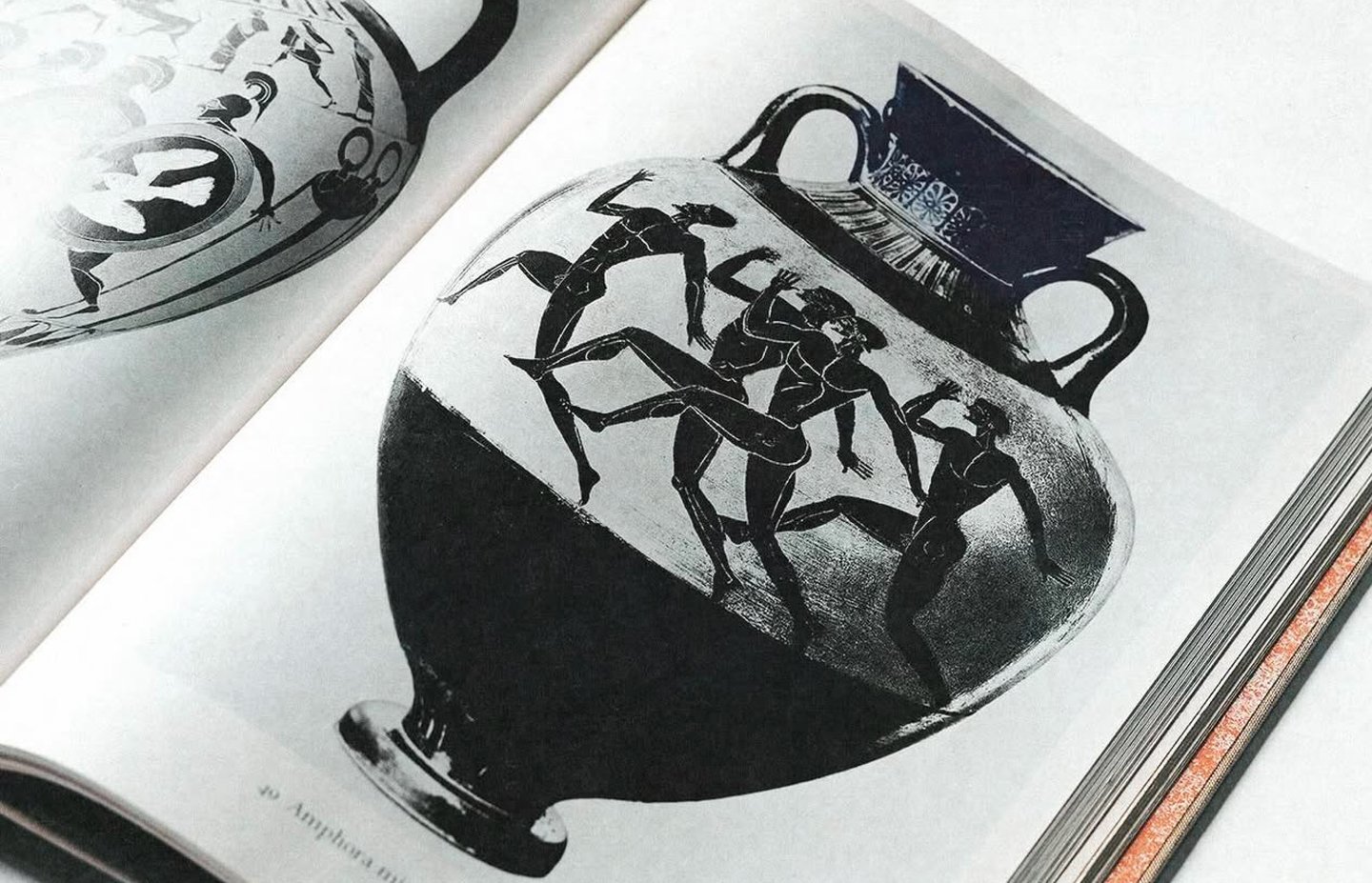
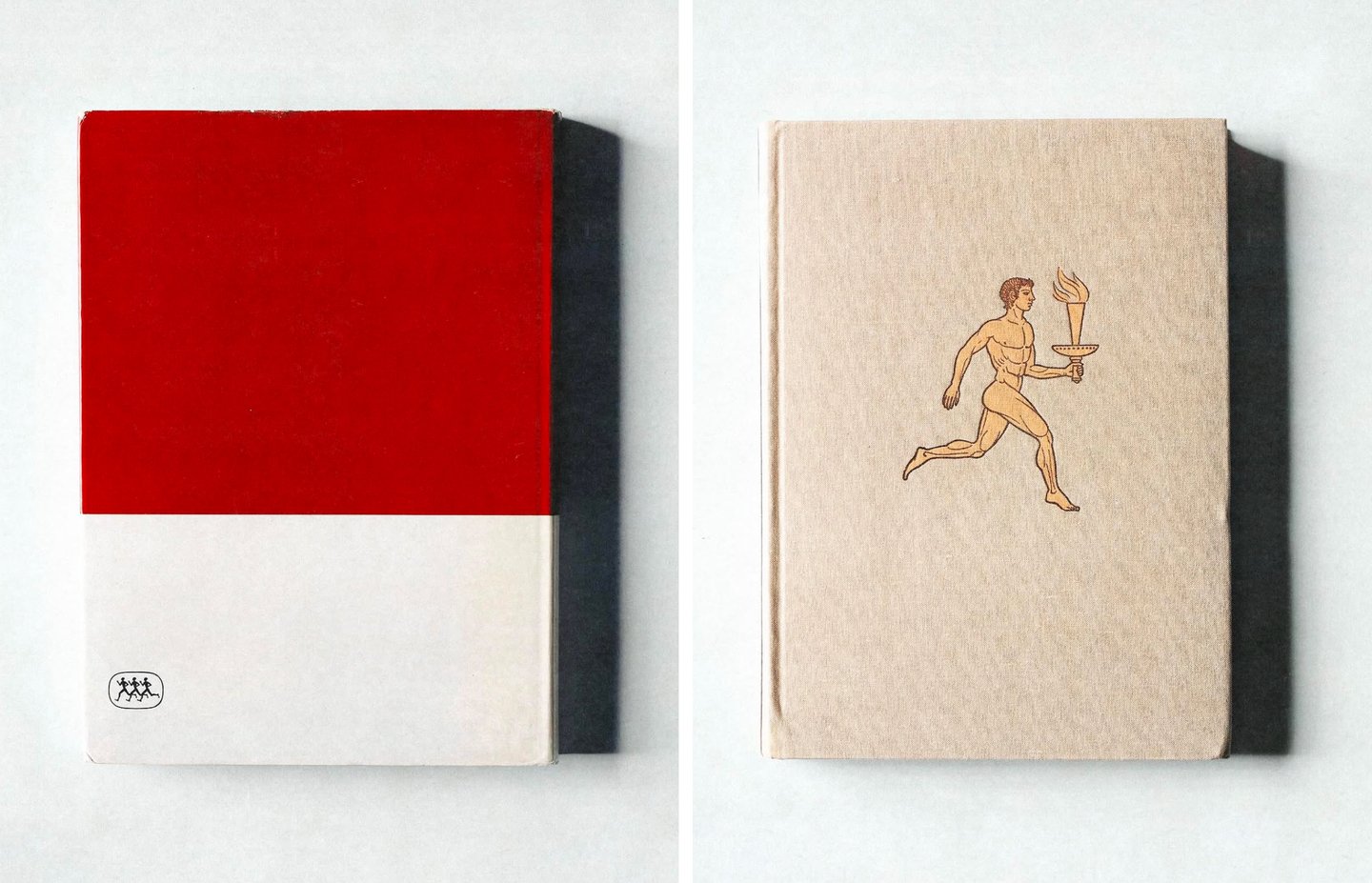
Olympia und seine Spiele, Dr. Heinz Schöbel, 1965
The brand’s target audience is defined by demographic and value-driven metrics. Its core consists of men and women aged 20 to 35 living in major megacities and cultural hubs, where Shanghai, Beijing, and Seoul serve as the primary markets, and large cities in Europe and the CIS act as secondary ones.
These individuals are united by a high level of visual awareness, a deep interest in independent brands, and the ability to distinguish passing trends from timeless style, which leads them to value clean lines and the quality of materials. They experience a conscious fatigue with the mass market, artificial scarcity, and aggressive consumerism. For these people, conceptual footwear becomes not just a wardrobe element, but a quiet marker of their individuality, good taste, and mindful attitude toward things, easily understood by like-minded peers.
Pane and Common Scents «Play Time» Pace Nostalgia II, 2026 / Pane and Common Scents «Play Time» Pace Nostalgia II, 2026
Communication Channels Overview of public space
The Pane brand builds its public space through several channels. The central digital platform is the official website paneshoes.com, where the brand presents its collections, campaigns, and concept. The site’s content focuses on minimalism, an emphasis on form, materials, and design. The commercial component is limited to a newsletter subscription and service sections covering shipping, returns, and customer support.
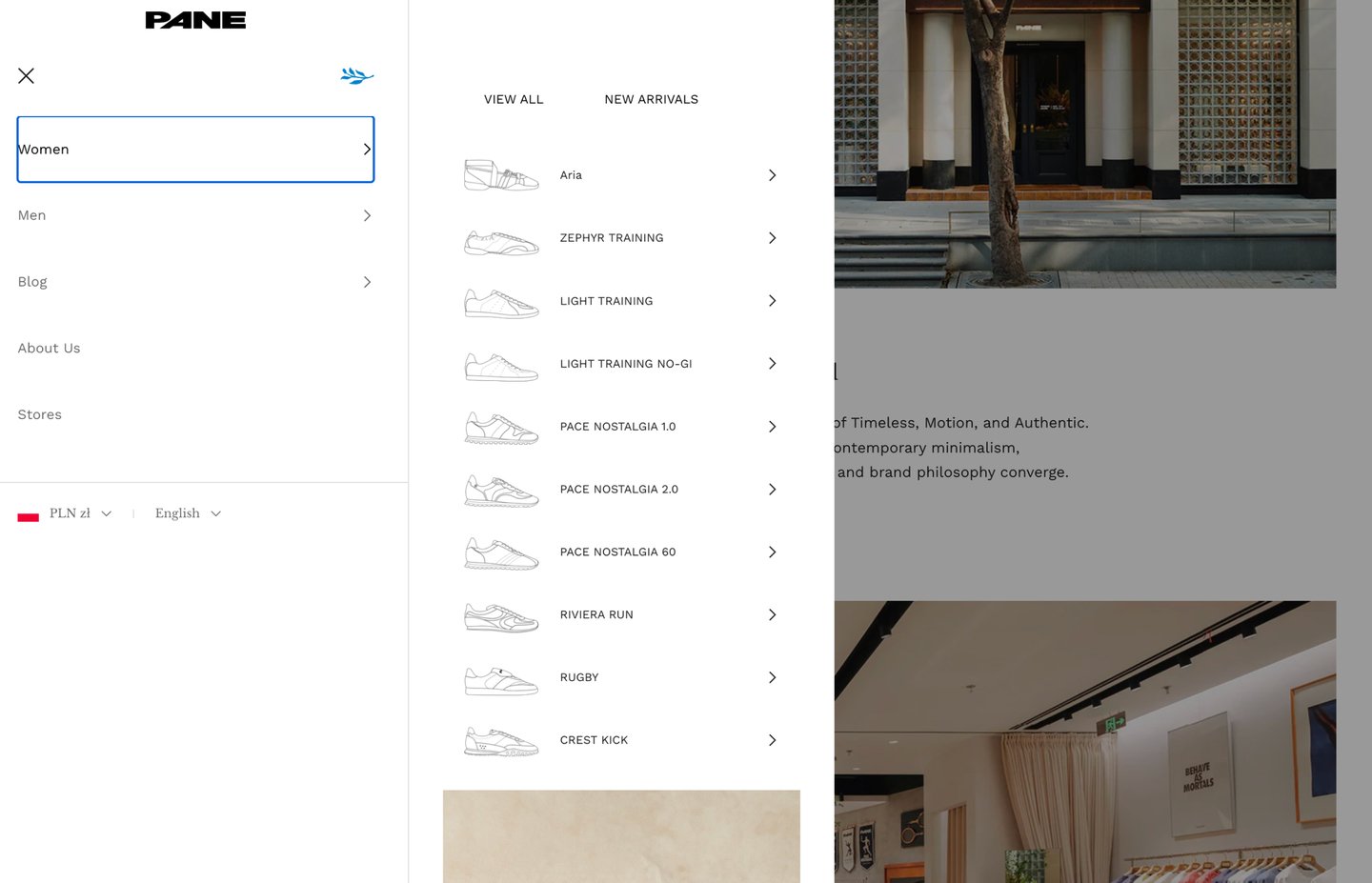
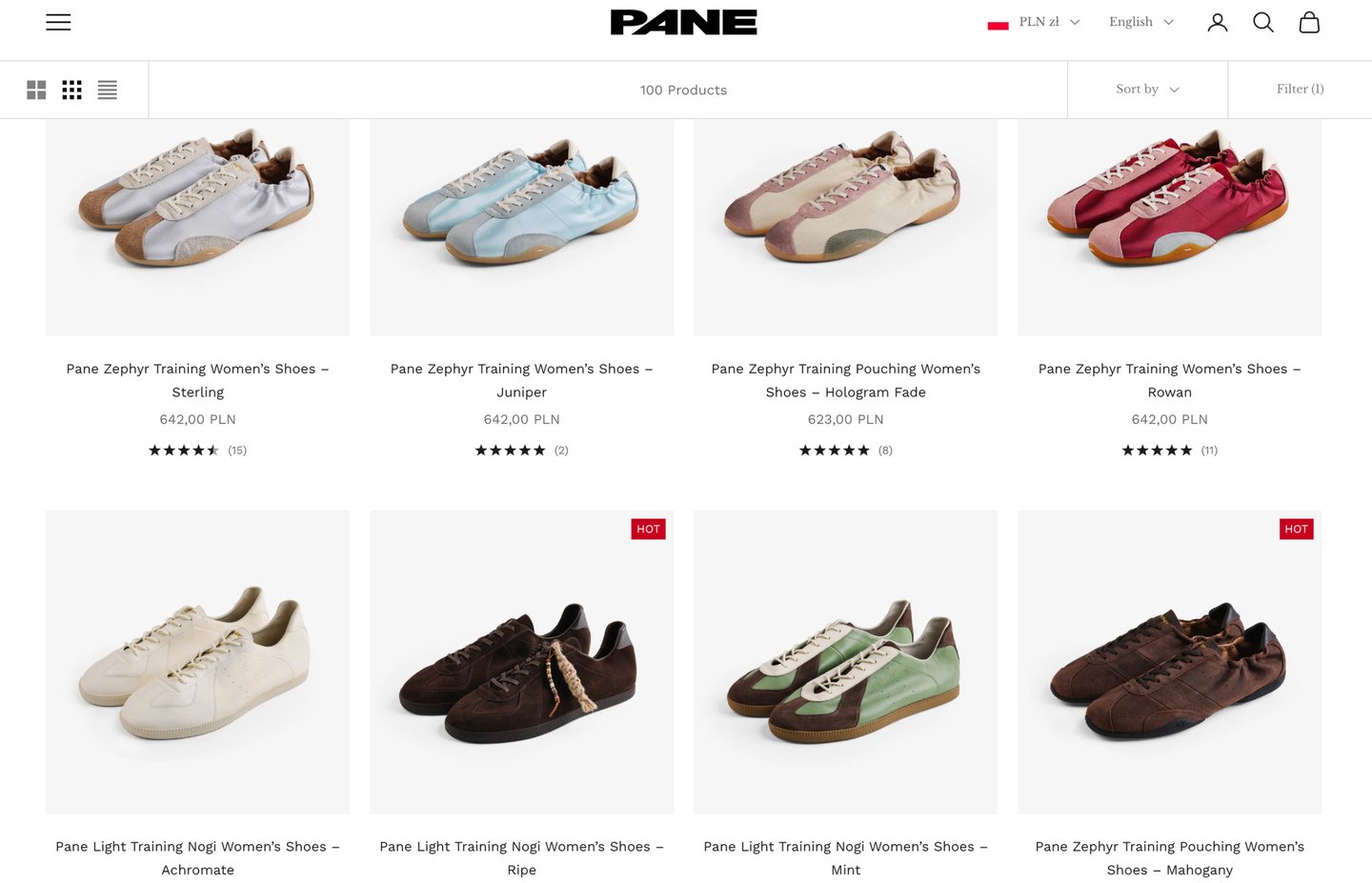
Pane’s website*, 2025
Pane Aria Series. Should we flow, 2026
An Instagram* account @pane_official serves as an external communication channel, maintaining the brand’s style and announcing collections. The profile lacks promotional content: there are no calls to purchase or information about discounts. The account functions as a digital museum or a visual journal.
For the Asian market, the primary platforms are Xiaohongshu (RED) and WeChat. Interaction with the audience on these platforms is practical in nature. The brand publishes lookbooks, showcases footwear within the context of urban architecture, and announces local, private releases.
Physical stores also play a role in Pane’s public space. On the website, the brand features an Experience Pane Offline block, which lists its locations in Shenzhen, Shanghai, Beijing, Guangzhou, and Hangzhou. Pane’s strategy combines a digital presence with an offline environment, forming a cohesive perception of the brand.
Pane’s Instagram*, 2025
Pane Shenzhen Bay Store, 2025
Theoretical Framework Elaboration Likelihood Model — ELM
For a comprehensive analysis of PANE’s visual and communication strategy, the project uses two basic academic theories.
The ELM model, developed by Richard Petty and John Cacioppo in the 1980s, explains how persuasive messages work and how a person’s attitudes change. Instead of treating everyone as equally attentive listeners, the model assumes that people process information in two different ways.: carefully or superficially.
John T. Cacioppo, Lucy Hewett, 2018 / Richard E. Petty, Jo McCulty, 2015
A path that requires high engagement and cognitive effort is called the central path. It is used when a topic is interesting and personally significant to a person, they have the time, motivation and ability to reflect on the essence of the message. The person carefully analyzes the arguments, facts, advantages and disadvantages of the proposal. Information processing takes place through objective or biased deliberation. If the arguments are strong, this leads to a steady and strong change in attitude that persists for a long time and can predict behavior.
A path that uses mental shortcuts and surface cues and requires minimal effort is called a peripheral path. It is used when a person does not have the motivation or ability to delve deeply into a topic (the topic is not interesting, there is no time, there are distractions). A person does not analyze arguments, but pays attention to peripheral signals that are not related to the essence of the message.
Four Models of Public Relations (PR) и Dialogic Theory
Four models of public relations were proposed by James Grunig and Todd Hunt in 1984. This classification not only describes the historical stages of the profession’s development, but also allows us to analyze exactly how an organization builds its communication with the public these days. The key difference between these models lies in the direction of communication: whether it is unidirectional (from the organization to the public) or bidirectional (involving dialogue), as well as how ethical and truthful this communication is.
Pane Shanghai Yongyuan Rd, 2025 / Pane Shanghai Yongyuan Rd, 2025
Dialogic Theory, which largely develops the ideas of a symmetrical model and describes in detail exactly what this ethical dialogue should look like. If the four models of Grunig and Hunt show the evolution of approaches, then the dialogic theory, authored by Pearson, Kent and Taylor, explains the components of high-quality and ethical communication between an organization and its public.
The core of dialogic theory is the idea that dialogue is not just an exchange of remarks, but a deep process based on honesty, truth and a positive attitude towards the other side. She rejects manipulation and argues that organizations should be prepared to interact with the public in such a way as to create effective common communication channels that are useful to all.
Pane Beijing Sanlitun, 2025 / Pane Shanghai Yongyuan Rd, 2025
This approach is based on five key characteristics. The first characteristic is reciprocity, which means that the organization and the public recognize their inseparable bond and the need to cooperate rather than dominate each other. The second is proximity or immediacy: the dialogue should take place in the present tense, before important decisions are made, and not when the decision has already been made and it is simply announced. The third is empathy, that is, creating an atmosphere of support and trust in which even critical remarks are met with understanding rather than aggression. The fourth characteristic is risk, because genuine dialogue always makes participants vulnerable. An organization may hear unpleasant truths or be criticized when engaging in a sincere dialogue, but without this risk it is impossible to build trust. And finally, the fifth is the commitment, that is, the sincere willingness of the organization to devote itself to this dialogue, interpret what they have heard and reach mutual understanding, and not just formally report on the conversation.
Theoretical Analysis Visual Persuasion and Attitude Change Through the Lens of the ELM Model
The Pane brand completely abandons the central route of persuasion, which requires logical analysis of facts from the consumer. There are no complex technical sole diagrams or load distribution charts on the company’s platforms. Pane’s communication is a textbook example of using the peripheral route. The brand nudges its audience toward making a purchase through emotional cues and visual context rather than technical logic.
The «Authority and Culture» Cue Through the Classical Theme
The brand’s primary motto «Behave as mortals» serves as its central cultural guidepost. Instead of evaluating the durability of materials, the buyer immediately picks up on a deep philosophical undertone. The theory explains why this technique changes the attitude toward the product: «You probably would just do what authority tells you to do because this person requires and acquires the characteristic of authority».
By linking its style with art, history, and mythology, Pane gains a unique status and authority in the eyes of consumers. Rather than spending mental energy checking the practical features of the footwear, the consumer uses a mental shortcut: if a profound philosophy stands behind an item, then the item itself must possess value.